The Newtown Tragedy and the Questions That Followed
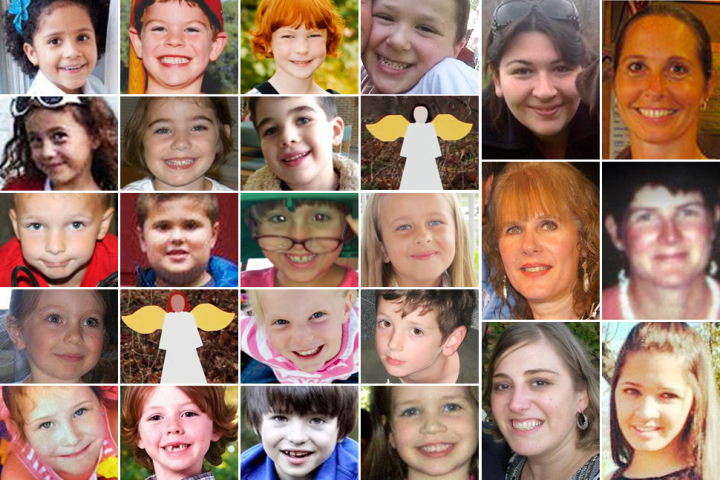
The December 14, 2012 shooting at Sandy Hook Elementary School in Newtown, Connecticut became one of the most scrutinized mass casualty events in American history. While authorities confirmed that 20-year-old Adam Lanza killed 20 children and 6 adult staff members before taking his own life, the official investigation drew intense public questioning over perceived gaps in evidence and contradictory statements from officials.
Connecticut’s chief medical examiner, H. Wayne Carver II, offered a notably cryptic remark at a December 15 press conference when he stated that he hoped the situation would not come crashing down on the people of Newtown. That comment, along with numerous other unusual aspects of the official narrative, fueled widespread debate about the thoroughness and transparency of the investigation.
The Medical Examiner’s Puzzling Press Conference
Among the most analyzed elements of the Sandy Hook aftermath was the December 15, 2012 press conference given by Dr. H. Wayne Carver II, Connecticut’s chief medical examiner. Carver was a veteran forensic pathologist with decades of experience and a reputation for confident, sometimes theatrical courtroom demonstrations. In one well-known prior case, he had reportedly processed a euthanized pig through a wood chipper to help jurors understand bone fragment evidence.
Yet at the Sandy Hook press conference, observers noted that Carver appeared hesitant, confused, and at times unable to answer basic questions about the autopsies he had overseen. When asked about the caliber of bullets used, he deferred to law enforcement. When questioned about the nature and location of wounds, he acknowledged performing only seven of the autopsies and said he lacked detailed information about the remaining victims.
Pressed on whether the children were found in one classroom, Carver redirected the question to State Police Lieutenant H. Paul Vance. Asked how many boys versus girls had died, he said he did not know. When a reporter inquired about the time of death difference between Lanza’s mother, who was killed at her home, and the school victims, Carver admitted he had no answer.
Perhaps most notably, Carver revealed that families had not been brought into direct contact with the bodies of their children. Instead, his office used photographs of facial features for identification purposes, a decision he characterized as easier on the grieving families.
Conflicting Early Reports and Shifting Details
The hours and days following the shooting produced a chaotic stream of information that changed repeatedly. Initial media reports identified the gunman as Ryan Lanza, Adam’s older brother, an error that persisted for hours before being corrected. Early accounts also described pistols as the primary weapons used, though authorities later stated that a Bushmaster .223 caliber rifle was the main firearm employed inside the school.
The timeline of Lanza’s entry into the building also evolved. Some early reports suggested that the shooting began without prior warning, with teacher Theodore Varga describing a quiet morning suddenly interrupted by gunfire. Later accounts described Lanza firing multiple rounds through the school’s glass front doors, creating enough noise to draw Principal Dawn Hochsprung and school psychologist Mary Scherlach from a nearby meeting room. Both were killed as they moved toward the entrance.
Two other staff members present at that meeting reportedly sustained injuries but managed to return to the conference room and call 911. The first dispatch recording, timestamped at 9:35:50 AM, relayed that someone believed there was a shooter inside the building.
Questions About the Shooting Timeline
The official account placed the duration of the shooting at approximately five to seven minutes. During that window, according to the medical examiner’s findings, each victim was struck between 3 and 11 times. Working with an average of 7 rounds per victim across 26 targets, and accounting for the need to reload the rifle’s 30-round magazine at least six times, analysts noted that Lanza would have needed to fire roughly once per second throughout the entire episode.
This rate of fire raised questions among commentators, particularly given that Lanza had no known military training and reportedly suffered from significant mental health challenges. The chief medical examiner’s acknowledged uncertainty about the precise circumstances of each shooting further complicated efforts to reconstruct the event.
Crime Scene Access and Medical Response
Another point of contention involved the handling of medical response at the scene. Emergency medical personnel who arrived at Sandy Hook Elementary were not permitted to enter the school building. Instead, they were directed to establish triage operations at a fire station located several hundred feet from the campus.
Emergency medical technician James Wolff, who was 44 at the time, expressed frustration to NBC News about the inability to apply his training, describing the experience of being denied the opportunity to attempt life-saving measures as deeply difficult.
This arrangement prompted questions about who had the medical authority to pronounce the victims deceased, since Carver and his forensic team did not conduct their examinations until hours after the shooting. Standard emergency protocols typically call for medical personnel to be positioned as close to a mass casualty scene as feasible.
Limited Visual Documentation
Despite the scale of the event at a school with approximately 600 enrolled students, relatively little photographic or video evidence of the evacuation emerged publicly. No surveillance footage of Lanza’s forced entry through the school’s front doors was released. A widely circulated photograph showing children walking single-file with hands on each other’s shoulders was identified by some sources as having been taken during a prior safety drill rather than on the day of the shooting itself, though this was disputed.
Aerial footage captured by news helicopters showed law enforcement officers searching the wooded area adjacent to the school and detaining at least one individual, but the identity and role of that person were never fully clarified in public reporting.
The absence of crime scene photographs showing physical evidence such as bullet casings, damaged doors, or other forensic markers was noted by independent observers, though authorities maintained that withholding such material was necessary to protect the integrity of the ongoing investigation and to respect the privacy of victims’ families.
Media Framing and Public Discourse
Political scientist W. Lance Bennett’s concept of “authority-disorder bias” in news coverage offered one analytical framework for understanding how the Sandy Hook narrative was constructed and received. Bennett’s theory suggests that major news organizations prioritize stories of authorities restoring order, even when the underlying facts remain unsettled.
In the case of Sandy Hook, the emotional weight of the tragedy and the involvement of young children created powerful pressure against questioning the official account. Connecticut State Police assigned individual officers to each of the 26 victims’ families and stated that the families had requested no media interviews, a measure that remained in place while the investigation continued over the following months.
The combination of restricted information access, evolving official statements, and the deeply sensitive nature of the event created conditions where public discourse remained sharply divided between those who accepted the official narrative and those who believed significant questions remained unanswered.
This article is based on reporting originally published by GlobalResearch.ca. All factual claims are attributed to the sources cited.