The PRISM Program Exposed Mass Surveillance on an Unprecedented Scale
In June 2013, classified documents provided to The Washington Post and The Guardian revealed the existence of a sweeping National Security Agency surveillance initiative known as PRISM. The leaked materials showed that the program gave the NSA direct backend access to data stored on the servers of major American technology companies, including Google, Facebook, Yahoo, Microsoft, AOL, and Apple. Additional reporting indicated that the agency could tap into real-time user data from approximately 50 different US-based corporations.
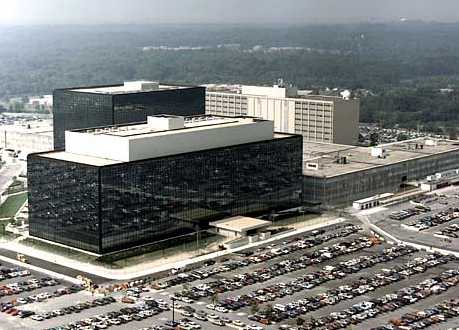
The scope of information accessible through PRISM was staggering. The NSA could collect emails, chat logs, video files, photographs, voice-over-IP calls, and other digital communications, all without submitting individual requests to service providers or obtaining court orders for each query. This represented far more than a technical violation of the Fourth Amendment’s protections against unreasonable searches and seizures. It constituted the infrastructure for a centralized monitoring system with virtually no boundaries.
Years of Warnings Preceded the Snowden Revelations
For those who had followed intelligence community overreach, the PRISM disclosures confirmed long-standing suspicions rather than introducing entirely new information. Reports dating back to the 1990s had described how Microsoft provided the NSA with backdoor access to its Windows operating system. The close working relationship between Google and the intelligence agency had been a subject of periodic reporting for over a decade. Previous whistleblowers had already come forward describing unconstitutional activities, including NSA surveillance of American military personnel stationed overseas.
What distinguished the 2013 leak was the documentary evidence. The classified materials provided granular detail about just how expansive the NSA’s data collection apparatus had become, removing any room for plausible deniability.
The Director of National Intelligence Lied Under Oath
The leaked documents also exposed a clear instance of false testimony before Congress. Director of National Intelligence James Clapper had appeared before the Senate in March 2013, where Senator Ron Wyden directly asked whether the NSA collected data on American citizens. Clapper denied it categorically.
Rather than pursuing accountability for this false statement, which constituted a potential criminal offense, the Obama administration directed its energy toward identifying the source of the leak. This response followed a pattern in which officials who engaged in questionable conduct faced no consequences while those who exposed wrongdoing were aggressively pursued.
Edward Snowden Identified Himself Voluntarily
The person responsible for the disclosures removed any suspense about his identity by coming forward on his own terms. Edward Snowden, a 29-year-old information technology specialist, had worked at NSA facilities through contractors including Booz Allen Hamilton and Dell. He had been based at an NSA office in Hawaii before traveling to Hong Kong several weeks prior to the documents’ publication.
Snowden anticipated that he would never return to the United States and reportedly considered seeking political asylum in nations such as Iceland. In extensive interviews with The Guardian conducted over several days, he elaborated on the abuses he had witnessed. He confirmed that the NSA possessed the technical capability to intercept virtually any form of digital communication, from phone records and emails to credit card transactions. He further revealed that the US government conducted hacking operations against targets worldwide and that the agency had repeatedly misled Congress about the nature and scope of its activities.
The Counter-Terrorism Justification Did Not Withstand Scrutiny
Administration officials, including President Obama, defended PRISM by asserting that bulk data collection was essential for counter-terrorism efforts and national security. Even accepting the premise that the program was designed to combat genuine threats, the methodology undermined its stated purpose.
Effective intelligence work relies on targeted collection guided by specific criteria identified through human intelligence sources. Indiscriminate mass collection of data from hundreds of millions of people creates an enormous volume of noise that makes identifying actual threats significantly harder, not easier. If the NSA’s genuine objective was detecting terrorist activity, the approach they chose was counterproductive by design.
The construction of a massive new NSA data center in Utah reinforced concerns about the program’s true purpose. Reports indicated the facility would ultimately store billions of terabytes of information. No counter-terrorism mission could plausibly require that volume of storage. The facility’s capacity only made sense if its purpose was capturing and archiving all communications, indiscriminately.
The Subway Plot Claim Fell Apart Quickly
When pressed to demonstrate PRISM’s value, officials pointed to the disruption of an alleged 2009 New York City subway bombing plot. This claim was swiftly debunked. Reporting from British media and other sources showed that conventional investigative work and cooperation with UK intelligence services were the primary factors in uncovering that plot, not bulk surveillance data.
The credibility of such claims was further eroded by extensive documentation showing that the FBI had manufactured numerous terrorism cases through elaborate sting operations, making it difficult to distinguish genuine threats from government-created scenarios.
Domestic Surveillance Exceeded Foreign Collection
An internal NSA tool called Boundless Informant, which categorized and quantified collected data by source, revealed a particularly striking detail: the agency gathered more information from domestic sources within the United States than from Russia. This metric suggested that the surveillance apparatus treated the American public as a higher intelligence priority than a major geopolitical adversary.
The implication was difficult to avoid. A system ostensibly built to monitor foreign threats was, in practice, primarily aimed inward. Rather than serving as a shield against external dangers, the infrastructure appeared designed to identify domestic dissent, functioning in a manner disturbingly reminiscent of the surveillance state depicted in George Orwell’s novel Nineteen Eighty-Four, where independent thought itself was treated as a criminal act.
What the PRISM Revelations Ultimately Proved
The Snowden disclosures transformed years of so-called conspiracy theories about government surveillance into documented fact. The scale of the NSA’s operations, the deception of congressional oversight, and the disproportionate focus on domestic rather than foreign data collection painted a picture of an intelligence apparatus that had far exceeded any reasonable interpretation of its mandate. The revelations forced a global reckoning with the reality that privacy in the digital age was not being eroded gradually but had been systematically dismantled behind a wall of classification and official denial.
This article is based on reporting originally published by The Guardian, The Washington Post, The New York Times, Wired, and other outlets covering the 2013 NSA surveillance disclosures.