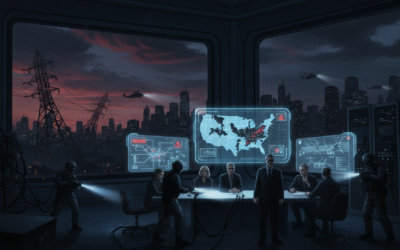
The intersection of hacktivist movements and military institutions creates one of the more fascinating contradictions in modern information warfare. Anonymous — the decentralized collective known for digital activism, data leaks, and cyber operations against governments and corporations — has maintained a quiet but persistent presence within the ranks of the United States military. This overlap between institutional power and anti-establishment digital culture reveals important truths about how information-age dissent operates from within the very structures it challenges.
Hacktivism Inside the Military-Intelligence Complex
The presence of Anonymous sympathizers and participants within the U.S. military is less surprising than it might initially appear. Military intelligence and cyber operations attract precisely the kind of technically skilled, intellectually curious individuals who gravitate toward hacker culture. Bases specializing in signals intelligence and cyber warfare concentrate people with the skills, clearances, and motivations that make hacktivist participation both possible and appealing.
For many service members drawn to intelligence work, the initial motivation is access to information — understanding how systems of power actually function behind the veil of classification. This drive to understand overlaps significantly with the hacker ethos of exposing hidden systems and challenging information asymmetries. When individuals motivated by transparency enter institutions built on secrecy, the tension between institutional loyalty and personal conviction becomes a defining feature of their service.
Identification between sympathizers operates through cultural signals rather than formal membership structures. Anonymous has no membership rolls, dues, or organizational hierarchy. Recognition relies on shared cultural references, technical vocabulary, and demonstrated participation in operations. Within military settings, these identification rituals occur cautiously — a reference dropped in conversation, a reaction gauged, trust built incrementally through shared cultural fluency before any substantive discussions occur.
Operations That Resonate With Military Personnel
Not all Anonymous operations carry equal weight among military-connected participants. Operations targeting human trafficking networks and child exploitation material have historically generated the broadest support, appealing to service members whose professional identity centers on protecting vulnerable populations. These operations align military values with hacktivist methods, creating a moral framework that justifies participation even within an institution that officially opposes it.
Operations with direct geopolitical implications — supporting pro-democracy movements during the Arab Spring, for example — occupy more complicated ethical territory for military personnel. Service members who facilitated communications infrastructure for activists in authoritarian states operated in a gray zone where hacktivist goals and stated U.S. foreign policy objectives partially aligned, but the methods employed would never have been sanctioned through official channels.
The facilitator role proves particularly significant in these contexts. Military-connected Anonymous participants often serve as bridges between technically skilled hackers and the organizational resources or contacts needed to achieve specific objectives. This broker function leverages the unique position of military personnel — possessing both technical knowledge and institutional connections — without requiring them to directly execute operations that could trigger criminal prosecution or military discipline.
The Whistleblower Effect on Military Culture
High-profile prosecutions of military whistleblowers have had a complex and sometimes counterintuitive effect on dissent within the armed forces. The severe consequences imposed on individuals who leaked classified information — lengthy prison sentences, public vilification, and the destruction of military careers — were intended to deter future leaks. The actual effect has been more nuanced.
For some service members, these prosecutions confirmed that the system punishes truth-telling and protects institutional interests over public accountability. Rather than deterring dissent, aggressive prosecution radicalized individuals who might otherwise have pursued concerns through official channels. When internal reporting mechanisms are perceived as ineffective or dangerous, external disclosure becomes the only remaining option for those who believe the public has a right to know what their government is doing.
The classification system itself contributes to this dynamic. When vast quantities of information are classified not because disclosure would harm national security but because it would embarrass officials or reveal policy failures, the legitimacy of secrecy itself erodes. Service members who observe this pattern — classification used as a shield against accountability rather than a genuine security measure — develop a fundamentally different relationship with their obligation to protect classified information.
Gray Hats and Ethical Ambiguity
The traditional hacker taxonomy of white hats (defensive security), black hats (malicious hacking), and gray hats (ethically ambiguous) maps poorly onto the reality of military-connected hacktivism. The same individual might protect military networks during duty hours and participate in Anonymous operations during personal time, applying identical skills for purposes that their employer would classify very differently.
This ethical duality reflects broader tensions within cybersecurity culture. The skills required to defend systems are identical to those needed to attack them. The knowledge that makes someone an effective military cyber operator also makes them capable of independent action that military authorities cannot control. This fungibility of expertise is a permanent feature of the information age, and no institutional structure has successfully resolved the tension it creates.
Military institutions face a fundamental dilemma: they need people with hacker mentalities to staff cyber operations, but the same intellectual independence and anti-authoritarian instincts that produce excellent hackers also produce individuals inclined to challenge institutional authority. Screening for technical skill while filtering out oppositional tendencies is effectively impossible because these traits are deeply intertwined.
Implications for Information Warfare and Institutional Trust
The presence of hacktivist sympathizers within military ranks raises questions that extend beyond individual cases of leak or protest. If significant numbers of technically skilled service members maintain dual loyalties — to their institutional obligations and to decentralized movements that challenge those institutions — the implications for operational security are profound.
More fundamentally, this phenomenon reflects a generational shift in how individuals relate to large institutions. Service members who grew up in internet culture carry assumptions about information freedom, institutional transparency, and individual agency that conflict with military hierarchy and classification systems. These assumptions do not disappear upon enlistment; they persist as a permanent source of tension between institutional demands and personal values.
The military’s response to this tension will shape its effectiveness in the information domain for decades to come. Approaches that rely solely on punishment and surveillance may suppress visible dissent while driving it deeper underground, making it harder to detect and potentially more damaging when it surfaces. Approaches that acknowledge legitimate concerns about transparency and accountability — creating genuine channels for internal dissent that produce meaningful results — have a better chance of maintaining both security and institutional legitimacy in an era when information wants to be free and the people who manage it increasingly agree.