What Is the Golden Ratio?
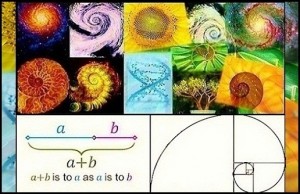
The golden ratio, approximately 1.61803399, is represented by the Greek letter Phi. It is a mathematical constant that has captivated thinkers across nearly every discipline for millennia. Two quantities are in the golden ratio when their ratio equals the ratio of their sum to the larger quantity. When visualized in two dimensions, this relationship produces a characteristic spiral defined by a series of squares and arcs forming what are known as “Golden Rectangles.”
The ratio’s significance extends far beyond mathematics. Astrophysicist Mario Livio noted that the greatest mathematical minds across the ages — from Pythagoras and Euclid through Leonardo of Pisa and Johannes Kepler to modern physicists like Roger Penrose — devoted considerable attention to this number. Biologists, artists, musicians, architects, and psychologists have all studied its properties, making it arguably the most examined number in the history of mathematics.
Ancient Origins: Egypt and Greece
The golden ratio’s known history stretches back at least 2,400 years. The earliest monuments believed to incorporate the ratio are the structures of the Parthenon in Athens, dating to between 490 and 430 BC. However, substantial evidence suggests its use extends further into antiquity, with researchers arguing that the ancient Egyptians understood and deliberately employed the ratio in their construction practices.
According to historians who have studied Egyptian mathematics, the Egyptians regarded this proportion as sacred. They applied it in the design of temples and funerary structures, in their writing systems, and in architectural arrangements. The Egyptians referred to it as the “sacred ratio,” and its use appears to have been both practical and religious in nature.
The first formal mathematical definition came from the Greek mathematician Euclid (c. 325-265 BC), who described what he called the “extreme and mean ratio.” The concept would remain an object of study throughout subsequent centuries, but its properties gained particular cultural prominence during the Renaissance when geometry served both practical and symbolic purposes in art and architecture.
The mathematician and astronomer Johannes Kepler (1571-1630) placed the ratio alongside the Pythagorean theorem as one of geometry’s two greatest treasures, writing: “The first we may compare to a measure of gold, the second we may name a precious jewel.”
Architectural Applications Across Centuries
Architects and designers have proportioned their work around the golden ratio for centuries, operating on the principle that the resulting compositions will be more aesthetically harmonious. The ratio enables a designer to create relationships of proportion at every scale — a door handle relating to its door, which relates to its wall, which relates to the building facade.
This principle has been applied to structures spanning from the ancient Parthenon to the Great Mosque of Kairouan, and continuing through modern landmarks including the Sydney Opera House and the National Gallery in London. Whether the architects of all these structures consciously employed the golden ratio or whether the proportion naturally emerges from intuitive aesthetic judgment remains a subject of scholarly discussion.
The Golden Ratio in the Natural World
Perhaps the most remarkable aspect of the golden ratio is its prevalence in natural systems. The proportion appears in the arrangement of branches along plant stems, the patterns of veins in leaves, the skeletal structures of animals and humans, the branching patterns of veins and nerves, the proportions of chemical compounds, and the geometry of crystal formations.
German psychologist Adolf Zeising (1810-1876), who conducted extensive studies of the ratio’s appearance in nature and art, described it as a universal law containing “the ground-principle of all formative striving for beauty and completeness in the realms of both nature and art.” He argued that the ratio pervades all structures and proportions — cosmic and individual, organic and inorganic, acoustic and optical — finding its fullest expression in the human form.
A Bridge Between Mathematics and Meaning
The golden ratio occupies a unique position at the intersection of mathematics, aesthetics, and natural science. Its spiral shape mirrors growth patterns observed throughout the natural world, and its proportions echo the dimensions of the human body. These properties have led many across cultures and centuries to view the ratio not merely as a mathematical curiosity, but as evidence of an underlying order connecting the structures of nature, the principles of beauty, and the patterns of the cosmos.
Whether understood as a fundamental constant of nature, a tool for achieving visual harmony, or simply a fascinating mathematical property, the golden ratio continues to inspire investigation and wonder across every field it touches.