
Cold War Rivals Poured Billions Into Psychotronic Weapons Research
Throughout the Cold War, both the Soviet Union and the United States invested enormous resources into unconventional weapons programs that explored behavior modification, remote influence, and parapsychological phenomena. A comprehensive survey published through Cornell University Library, authored by researcher Serge Kernbach of the Research Center of Advanced Robotics and Environmental Science in Stuttgart, Germany, documented these parallel programs using declassified materials and open scientific publications covering the period from 1917 to 2003.
Soviet Psychotronics: A Half-Billion Dollar Secret Program
The Soviet research effort, broadly categorized under the term “psychotronics,” encompassed investigations into the effects of weak and strong electromagnetic emissions on biological systems, quantum entanglement in macroscopic systems, nonlocal signal transmission based on the Aharonov-Bohm effect, and what researchers termed “human operator” phenomena. According to Kernbach estimate, the Soviet Union spent between $500 million and $1 billion on this research over several decades.
Many of these programs remain classified even decades after their inception. Documents related to experiments conducted under the OGPU (Joint State Political Directorate, the Soviet secret police) and the NKVD (The People Commissariat for Internal Affairs, later restructured into the Interior Ministry and eventually the KGB) are still sealed more than 80 years after the work was carried out.
The American Parallel: MKUltra and Beyond
The research interests of both superpowers frequently mirrored each other despite the Iron Curtain limiting knowledge of the other side work. The CIA MKUltra program, which employed drugs, psychological manipulation, and various technical methods to alter brain function and mental states, was at least partially motivated by intelligence about corresponding NKVD programs that used similar approaches combining psychotropic substances with specialized equipment.
Electromagnetic Weapons and Neurological Effects
During the 1960s and 1970s, Soviet researchers conducted extensive investigations into how electromagnetic fields affected human physiology and psychology. American researchers subsequently confirmed many of the Soviet findings. A 1982 article in the Soviet journal Nauka (Science) summarized the state of knowledge, noting that weak electromagnetic fields could produce acoustic hallucinations (a phenomenon called “radiosound”), alter brain activity in the hypothalamus and cortex, and disrupt information processing and memory storage.
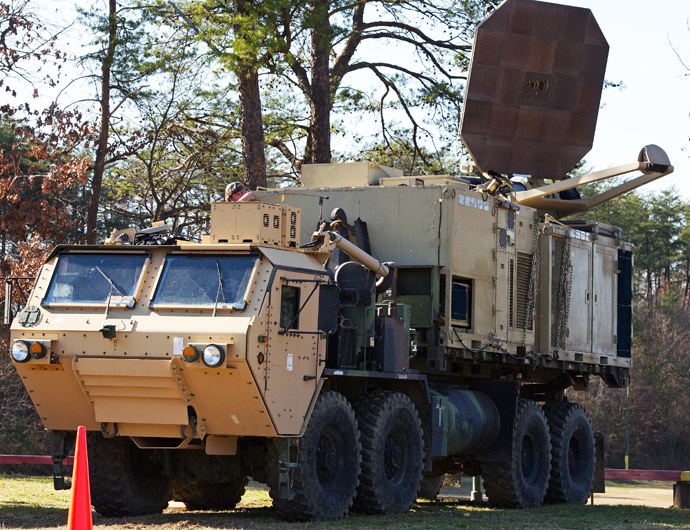
These research directions eventually led to the development of directed-energy weapon systems. The US military Active Denial System, for example, projects a beam of millimeter-wave energy that creates an intense heat sensation on human skin at distances up to 1,000 meters, designed as a non-lethal crowd dispersal tool.
The Mysterious Cerpan Torsion Generator
Among the more enigmatic devices to emerge from Soviet research was the “Cerpan” torsion generator, invented by scientist Anatoly Beridze-Stakhovsky. The seven-kilogram metal cylinder was designed based on what its creator described as the “shape effect” produced by torsion fields. According to some accounts, the device was used therapeutically, including on senior Kremlin officials. Beridze-Stakhovsky reportedly withheld the full technical specifications of his invention out of concern it would be applied unethically.
Post-Soviet Developments and Modern Continuation
Following the collapse of the Soviet Union in 1991, government-funded psychotronic research programs were gradually scaled back and officially closed by 2003. However, the field did not disappear entirely. Kernbach estimated that between 200 and 500 researchers in Russia continued work in instrumental psychotronics, sometimes referred to as “torsionics,” through academic and independent channels.
Government interest was not entirely extinguished either. Former Defense Minister Anatoly Serdyukov stated publicly that weaponry based on “new physics principles,” including direct-energy weapons, geophysical weapons, wave-energy weapons, genetic weapons, and psychotronic weapons, was included in the Russian state arms procurement program for 2011 through 2020.
Putin Writings on Future Weapons
Vladimir Putin himself addressed the topic in a series of presidential campaign articles focused on national security. He wrote that space-based systems and information technology tools would play decisive roles in future armed conflicts, and that weapon systems using fundamentally different physical principles, including beam, geophysical, wave, genetic, and psychophysical technologies, would eventually provide new instruments for achieving political and strategic objectives alongside nuclear weapons.
The trajectory of Cold War psychotronic research illustrates how geopolitical competition drove both superpowers into scientific frontiers that blurred the boundaries between established physics and speculative investigation, with consequences that continue to ripple through military research programs today.