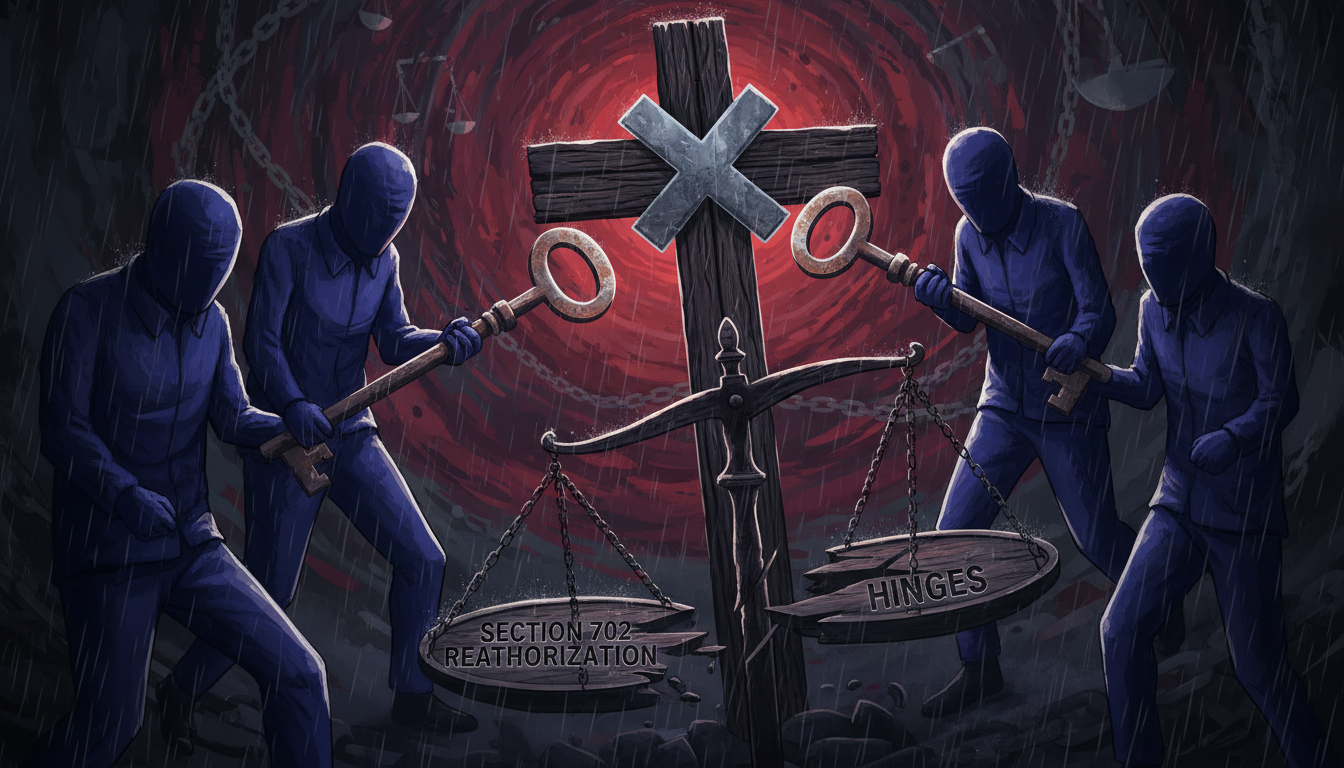
A critical vote on expanding domestic surveillance capabilities under a second Trump administration may come down to the decisions of four Democratic representatives who previously broke ranks with their party leadership. The outcome could determine whether the government maintains its ability to conduct warrantless searches of American citizens’ communications under Section 702 of the Foreign Intelligence Surveillance Act.
The Crucial Four Who Crossed Party Lines
Representatives Josh Gottheimer of New Jersey, Tom Suozzi of New York, Marie Gluesenkamp Perez of Washington, and Jared Golden of Maine emerged as pivotal figures after they voted for a procedural motion to advance Section 702 reauthorization, directly contradicting instructions from House Democratic leadership. Their previous support for the surveillance program places them at the center of House Speaker Mike Johnson’s efforts to secure passage of a three-year extension.
The significance of their position cannot be overstated. With hard-right Republican lawmakers expressing skepticism about expanded surveillance powers, Johnson needs every available vote to push through the reauthorization. As Hajar Hammado, a senior policy adviser at Demand Progress, explained, “It all comes down to those four and where they are going to land, and if they are going to continue to try to hand Trump and Stephen Miller warrantless surveillance authorities without any sort of checks or reforms.”
Section 702’s Controversial Scope
Section 702 authorizes the collection of foreign intelligence information from non-United States persons believed to be located outside the United States. However, the program’s implementation has raised significant constitutional concerns among civil liberties advocates. The law permits intelligence agencies to search through communications collected under the program for information about Americans without obtaining a warrant, a practice critics call the “backdoor search loophole.”
According to the American Civil Liberties Union, the program enables “mass, warrantless surveillance of Americans’ and foreigners’ phone calls, text messages, emails, and other electronic communications.” Information collected without warrants can subsequently be used in criminal prosecutions, even for offenses unrelated to national security.
The intelligence community defends Section 702 as a targeted collection program rather than bulk surveillance. Official government descriptions emphasize that “every Section 702 targeting decision is individualized and documented, approved pursuant to a multi-step process embodied in specific targeting procedures.”
Limited Reforms in Johnson’s Latest Proposal
House Speaker Johnson’s most recent proposal extends Section 702 for three years while adding what he describes as additional oversight and auditing layers. However, the plan fails to address reformers’ primary concern: implementing a warrant requirement for searches involving American citizens’ communications.
Under Johnson’s proposal, searches would be reviewed after completion by a privacy officer at the Office of the Director of National Intelligence and potentially by an inspector general. Civil liberties advocates argue these measures provide inadequate protection.
Kia Hamadanchy, senior policy counsel at the ACLU, criticized the approach as merely “adding layer after layer of oversight” without addressing fundamental constitutional issues. He expressed particular skepticism about relying on intelligence community inspectors general to check potential abuses, stating, “The idea that the inspector general of the intelligence community is going to stand up to Trump on any sort of abuses is just not going to happen.”
Broader Implications for Civil Liberties
The debate over Section 702 reauthorization reflects deeper concerns about surveillance state expansion under successive administrations. The ACLU has documented multiple problems with the current program, including its use for examining communications “flowing in and out of the U.S. in bulk” and the lack of meaningful judicial oversight.
Civil liberties organizations warn that Section 702’s broad scope creates potential for abuse against “critics, activists, religious minorities, or communities of color.” The program’s secrecy makes it difficult for targeted individuals to challenge surveillance in court, while the government has “deliberately chosen to hide the impact of the program from the public.”
Reform advocates have proposed several changes to address these concerns, including closing the backdoor search loophole, narrowing the program’s scope, prohibiting mass searches of Americans’ communications, and ensuring individuals can challenge surveillance in court. None of these reforms appear in Johnson’s current proposal.
Political Dynamics and Timeline Pressures
The legislative battle over Section 702 illustrates the complex political dynamics surrounding surveillance policy. Johnson faces pressure from multiple directions: hard-right Republicans skeptical of expanded government power, Democrats opposed to warrantless surveillance, and intelligence agencies arguing for program continuation.
The Speaker’s reliance on the four Democratic crossover votes highlights the challenging arithmetic he faces. With Representative Golden not seeking reelection this year, his vote may be less influenced by electoral considerations than his three colleagues, who must weigh their positions against potential primary challenges or general election consequences.
The three-year extension proposed by Johnson would carry Section 702 well into the next presidential term, regardless of the 2028 election outcome. This timeline adds urgency to reform efforts, as civil liberties advocates recognize that changes made now could shape surveillance policy for years to come.
The Surveillance State Crossroads
The Section 702 reauthorization debate represents a critical juncture for American surveillance policy. The outcome will determine whether intelligence agencies maintain broad warrantless search capabilities or face new restrictions designed to protect constitutional rights.
For the four Democratic representatives holding swing votes, the decision involves balancing national security arguments against civil liberties concerns while considering their political futures. Their choice will either enable continued expansion of domestic surveillance capabilities or force meaningful reforms to a program that affects millions of Americans’ communications.
As the vote approaches, the fundamental question remains whether Congress will impose meaningful constraints on government surveillance power or continue authorizing programs that civil liberties advocates argue violate Fourth Amendment protections. The answer may depend on how four Democrats choose to cast their votes when the moment arrives.
This article draws on reporting from The Intercept, American Civil Liberties Union, Office of the Director of National Intelligence, Fox News, and Associated Press.