A peer-reviewed study linking mRNA COVID-19 vaccines to rare blood cancers faced an unprecedented two-year publication struggle, rejected 16 times by 15 journals before finally appearing in print. The case highlights a growing crisis in scientific publishing where research challenging mainstream narratives encounters systematic suppression, potentially withholding critical health information from the public.
The Case That Couldn’t Find a Publisher
In February 2026, Oncotarget published a case study examining a previously healthy, athletic woman in her late 30s who developed dual blood cancers after receiving her second Pfizer COVID-19 vaccination. The morning after her injection, she experienced severe symptoms including locked jaw, tinnitus, and diffuse pain. Her condition deteriorated over months, culminating in an extraordinary diagnosis: acute lymphoblastic leukemia and lymphoblastic lymphoma occurring simultaneously, a highly unusual medical occurrence.
The woman endured years of intensive treatment, including a bone marrow transplant. The researchers also reviewed 30 similar published cases where blood-related cancers appeared shortly after mRNA vaccination, with several noting initial disease signs at or near injection sites.
Proposed Biological Mechanism Raises Red Flags
While the authors stopped short of claiming definitive causation, they outlined plausible biological pathways that warrant investigation. The study highlighted how lipid nanoparticles used to deliver mRNA have “unfettered access” throughout the body, including bone marrow where blood cells are produced.
The researchers theorized that synthetic spike proteins produced by vaccines may persist longer than natural variants and could disrupt cellular processes. Combined with potential weakening of immune surveillance, such disruption might allow abnormal cells to proliferate unchecked. They referenced global reports of rising aggressive cancers as a trend that “cannot be ignored.”
Access to Critical Tissue Raises Concerns
The study’s focus on lipid nanoparticle distribution represents a significant concern previously underexplored in mainstream vaccine safety discussions. These delivery vehicles can cross biological barriers and accumulate in organs throughout the body, potentially carrying mRNA instructions to tissues where spike protein production was never intended.
A Publishing Gauntlet: 16 Rejections Over Two Years
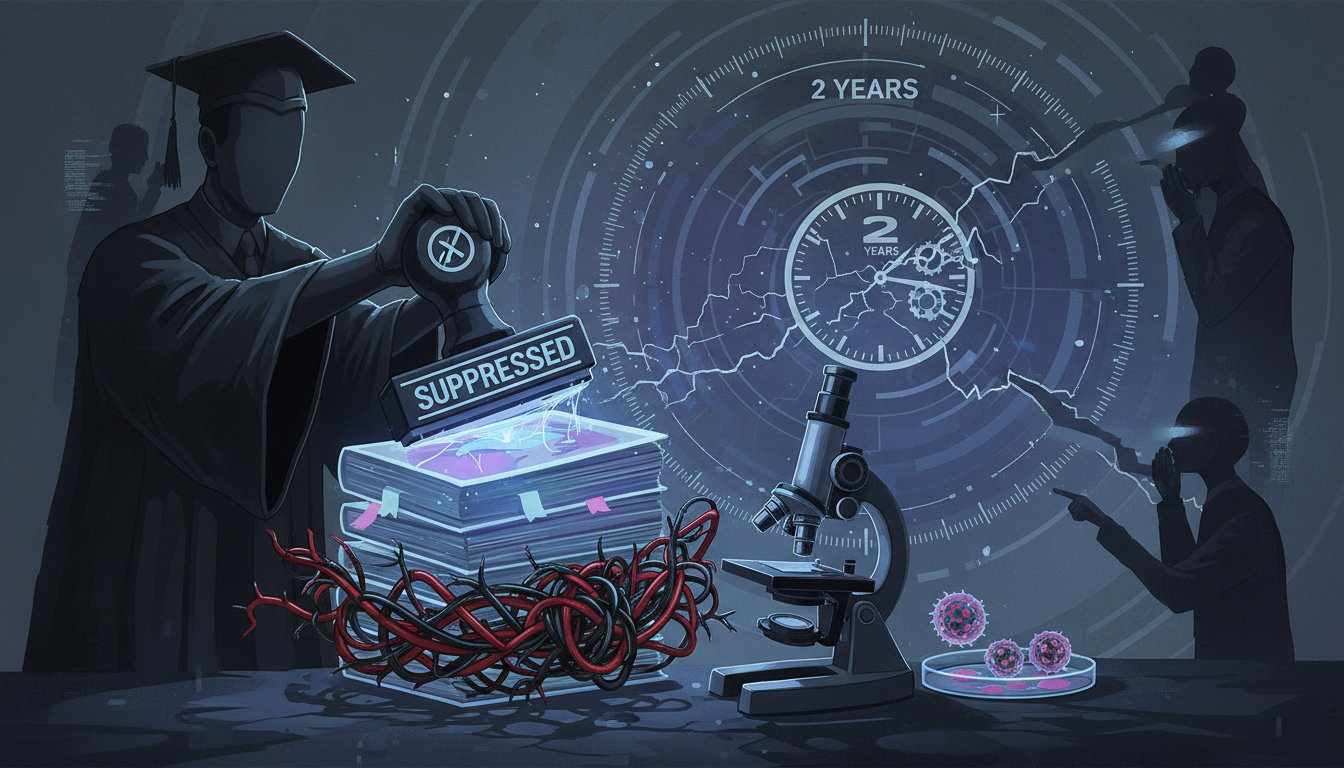
Lead author Dr. Panagis Polykretis documented what he termed “censorship” in a companion paper detailing their publication struggle. The original manuscript was submitted to 15 journals and rejected 16 times over two years. Most rejections came from editors without undergoing peer review, a departure from standard scientific practice.
In one particularly troubling incident, a journal initially accepted the paper after revisions, then suddenly reversed course, rejecting it for alleged “experimental flaws”, despite the work being a case report rather than an experimental study. This pattern suggests coordinated resistance to publishing findings that challenge vaccine safety narratives.
Editorial Barriers Without Scientific Justification
The repeated editorial rejections without peer review represent a fundamental breakdown in scientific publishing standards. Peer review serves as the cornerstone of scientific validation, allowing qualified experts to evaluate research methodology and conclusions. When editors bypass this process to reject papers based on topic alone, they effectively become censors rather than facilitators of scientific discourse.
The Broader Pattern of Scientific Suppression
This case reflects a historical pattern of scientific censorship that has plagued human knowledge advancement for centuries. From Galileo’s house arrest for supporting heliocentrism to Roger Bacon’s imprisonment for advocating empirical methods, institutional powers have repeatedly suppressed inconvenient scientific truths.
Modern scientific censorship operates more subtly but perhaps more effectively than historical examples. Rather than dramatic public trials or book burnings, contemporary suppression works through funding restrictions, publication barriers, and professional ostracism. Researchers who challenge dominant narratives face career consequences that can effectively silence entire fields of inquiry.
The Stakes for Public Health
The suppression of vaccine safety research carries particular significance given the global scale of mRNA vaccine deployment. Billions of individuals received these experimental treatments based on limited long-term safety data. Any potential risks, however rare, could affect millions of people worldwide.
When publishing systems systematically exclude research suggesting adverse effects, they create dangerous knowledge gaps. Public health decisions require complete information, not carefully curated data that supports predetermined conclusions.
Questions About Long-Term Safety Data
The emergence of cases linking mRNA vaccines to blood cancers raises fundamental questions about the completeness of safety monitoring systems. Traditional vaccine development requires years of safety testing, yet mRNA vaccines received emergency authorization based on months of clinical trials.
The case study’s documentation of 30 similar published cases suggests these incidents may represent a broader pattern rather than isolated occurrences. However, systematic investigation of such patterns becomes impossible when journals refuse to publish relevant research.
The Role of Scientific Literature in Public Health
Scientific journals serve as the primary mechanism for sharing medical knowledge and identifying potential health risks. When these systems fail to function objectively, they compromise the entire foundation of evidence-based medicine. Healthcare providers and patients depend on complete, unbiased information to make informed decisions about medical interventions.
The Integrity Crisis in Scientific Publishing
The systematic rejection of mRNA vaccine safety research represents a broader crisis threatening scientific integrity. When journals operate as gatekeepers protecting preferred narratives rather than platforms for open scientific discourse, they undermine the fundamental principles that make science trustworthy.
This case demonstrates how quickly scientific institutions can abandon their core mission when facing political or economic pressures. The two-year struggle to publish a simple case report reveals the extent to which ideological considerations now influence supposedly objective scientific processes.
The implications extend far beyond COVID-19 vaccines. If publishing systems can suppress research on one controversial topic, they can do so for any subject that threatens powerful interests. This precedent endangers the entire enterprise of scientific inquiry and public access to critical health information.
As scientific censorship becomes increasingly sophisticated and pervasive, the public’s ability to access complete health information hangs in the balance. The battle over mRNA vaccine safety research may determine whether scientific publishing can recover its independence or will continue serving as a tool for narrative control rather than truth discovery.
This article draws on reporting from Activist Post, PMC/NCBI, and EMJ Reviews.