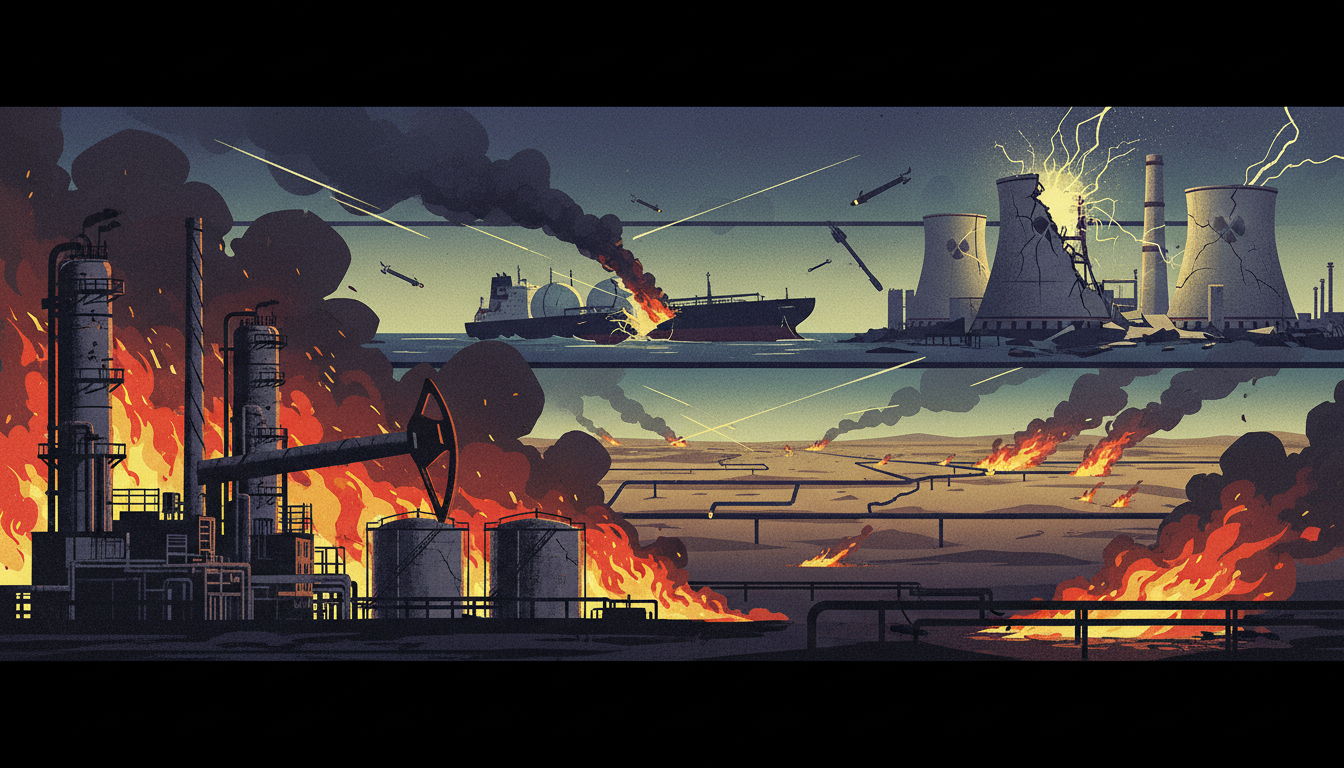
A pattern of attacks on critical energy infrastructure has emerged across multiple continents, with oil refineries, pipelines, and processing facilities experiencing an unprecedented wave of disruptions that have sent shockwaves through global energy markets.
Ukrainian Campaign Against Russian Energy Infrastructure
Ukraine has conducted over 20 strikes on Russian oil infrastructure since the beginning of 2026, according to analysis by The Washington Post. These coordinated attacks have targeted refineries, export terminals, and pipelines, resulting in estimated losses exceeding $7 billion for Russia’s energy sector.
The most significant damage occurred during late March and early April strikes on major Russian oil terminals, including Ust-Luga and Primorsk on the Baltic Sea, and Novorossiysk on the Black Sea. These operations cost Russia approximately $2.2 billion in lost revenue due to multi-week facility shutdowns and reduced export volumes.
Borys Dodonov, head of the Centre for Energy and Climate Studies at the Kyiv School of Economics, noted that attacks on Rosneft’s Tuapse facility caused such extensive damage that Russia may need to completely rebuild the refinery, potentially requiring $5 billion in reconstruction costs.
Middle Eastern Energy Infrastructure Under Siege
The Saudi Aramco Ras Tanura refinery became a focal point of regional tensions on March 2, 2026, when drone attacks targeted the critical facility. While the drones were intercepted, debris caused fires that led to immediate spikes in global oil prices and forced Saudi Arabia to halt propane and butane exports for multiple weeks.
The attack highlighted the vulnerability of energy infrastructure in a region already destabilized by broader Middle Eastern conflicts. Saudi Arabia alleged Iranian involvement, while Iran denied responsibility and suggested Israeli involvement in the operation.
Pipeline Sabotage in Europe
European energy security faced its own challenges when saboteurs targeted the Transalpine Pipeline (TAL) in northern Italy during late March 2026. The attack damaged the power supply system of a pumping station near Terzo di Tolmezzo in the Italian Alps, temporarily disrupting crude oil supplies to Germany.
Germany’s largest oil refinery in the Karlsruhe area was forced to operate on reserve stocks for several days, while a Bavarian refinery also had to compensate using internal reserves. The German Federal Criminal Police Office (BKA) joined Italian authorities in investigating the incident, though it remains unclear whether the attack was politically motivated.
Economic Impact and Market Disruption
The coordinated nature of these infrastructure attacks has created significant economic ripple effects. Despite Ukrainian strikes reducing Russian oil production by approximately 300,000-400,000 barrels in April 2026, Russia’s oil export revenues actually increased due to price surges driven by regional conflicts.
Russian oil revenues reached $19 billion in March compared to $9.8 billion in February, demonstrating how geopolitical tensions can offset production losses through higher commodity prices. However, Harvard University researcher Craig Kennedy warned that global oil prices would need to average $115 per barrel by year-end for Russia to meet its 2026 budget targets without implementing cuts.
Insurance Industry Response
The frequency of attacks on energy infrastructure has prompted insurance companies to quietly revise their coverage policies. Industry sources indicate that insurers are rewriting refinery exclusion clauses, reflecting growing concerns about the systematic targeting of energy facilities.
Strategic Implications
The pattern of infrastructure attacks extends beyond simple economic warfare. These coordinated strikes appear designed to disrupt global energy supply chains at multiple critical nodes, from production facilities to transportation networks.
The targeting of refineries across different geopolitical contexts – from Ukraine’s campaign against Russian facilities to mysterious attacks on European pipeline infrastructure – suggests a broader understanding of energy systems’ vulnerabilities.
Energy security experts warn that continued attacks on refining capacity could force countries to rely more heavily on imported refined products, potentially creating new dependencies and vulnerabilities in global supply chains.
Escalating Tensions
The escalation in infrastructure attacks coincides with broader geopolitical tensions, including the ongoing Middle Eastern crisis and heightened sanctions pressure on major energy exporters. These attacks have forced energy companies to implement enhanced security measures while governments reassess the protection of critical infrastructure.
The systematic nature of these operations – targeting facilities across multiple continents within compressed timeframes – raises questions about coordination and strategic planning behind what might otherwise appear as isolated incidents.
As global energy markets continue to experience volatility from these infrastructure disruptions, the long-term implications for energy security and international stability remain unclear. The attacks demonstrate how critical infrastructure has become a primary target in modern conflicts, with effects that extend far beyond the immediate geographic regions involved.
This article draws on reporting from Ukrainska Pravda, Wikipedia, and Militarnyi.