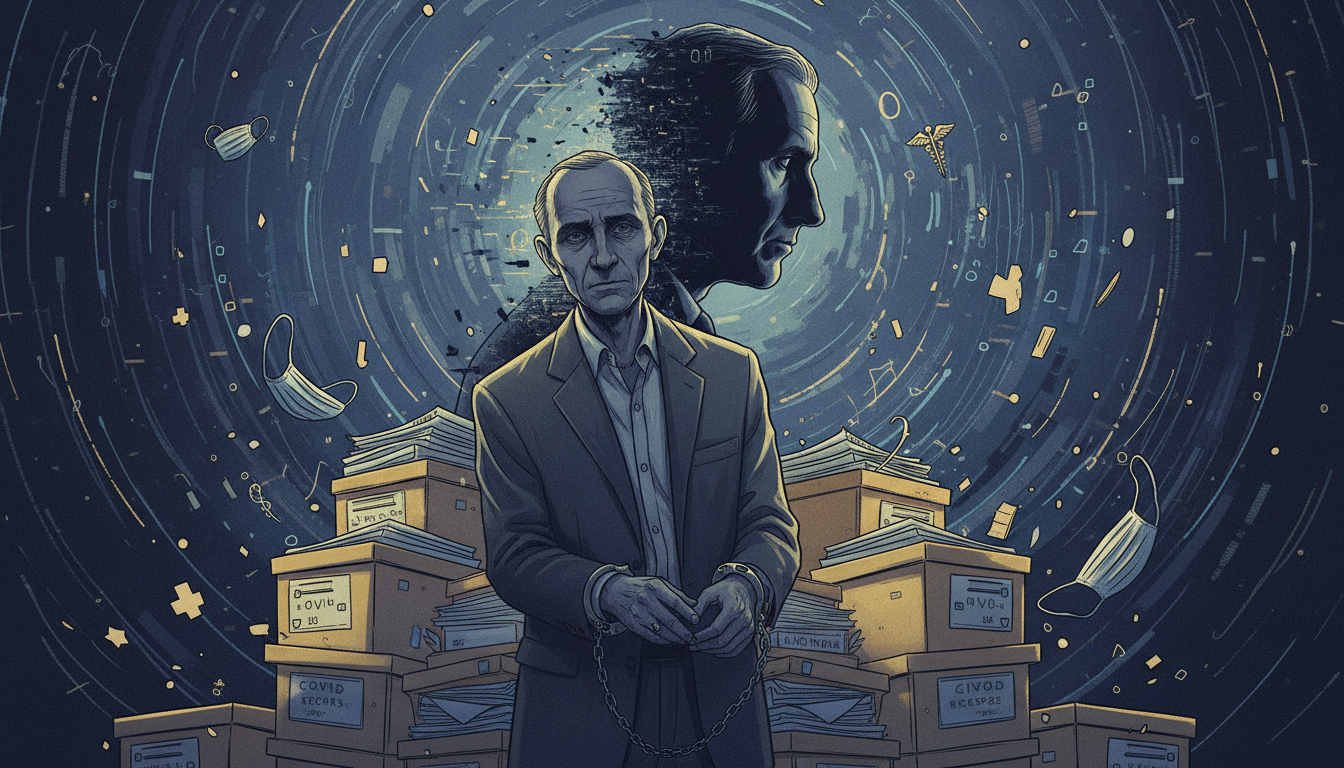
A federal indictment unsealed this week has thrust the shadowy world of pandemic-era government communications into the spotlight. David Morens, a 78-year-old former senior advisor to Dr. Anthony Fauci, faces serious criminal charges for allegedly orchestrating a scheme to conceal federal records related to COVID-19 research and the pandemic’s origins.
The Charges Against Morens
The Department of Justice has charged Morens with conspiracy against the United States, destruction and falsification of records in federal investigations, concealment of records, and aiding and abetting. These charges stem from his alleged efforts to evade Freedom of Information Act (FOIA) requests while serving as a senior advisor in the National Institute of Allergy and Infectious Diseases (NIAID) from 2006 through 2022.
According to the indictment, Morens used his position to systematically circumvent federal transparency laws. In a revealing email to colleagues in early 2021, Morens wrote: “I learned from our foia lady here how to make emails disappear after i am foia’d but before the search starts, so i think we are all safe.” He added that he had “deleted most of those earlier emails after sending them to gmail” and assured collaborators that he had spoken to FOIA officials and should be “safe from future FOIAs.”
The Broader Context of Government Secrecy
The charges against Morens illuminate long-standing concerns about transparency during the COVID-19 pandemic response. Acting Attorney General Todd Blanche stated that the allegations “represent a profound abuse of trust at a time when the American people needed it most—during the height of a global pandemic.” The Justice Department alleges that Morens and unnamed co-conspirators “deliberately concealed information and falsified records in an effort to suppress alternative theories regarding the origins of COVID-19.”
The indictment specifically mentions efforts to conceal discussions about gain-of-function research—a controversial field that involves genetically altering organisms to study how viruses might spread to new species. This research has been at the center of debates about the potential laboratory origins of SARS-CoV-2, the virus that causes COVID-19.
Financial Incentives and Corruption
The charges extend beyond mere record-keeping violations. FBI Director Kash Patel noted that Morens “allegedly engaged in the illegal obfuscation of his communications, but he received kickbacks for doing so.” According to the indictment, one co-conspirator provided Morens with two bottles of wine and promised other valuable items, including meals at expensive restaurants, in exchange for his cooperation in the alleged scheme.
Implications for Pandemic Transparency
The Morens case represents a significant development in ongoing investigations into the federal government’s pandemic response. The charges come at a time when questions persist about the origins of COVID-19 and the role of federally-funded research in potentially contributing to the pandemic’s emergence.
The indictment alleges that Morens promised to help restore a canceled grant related to studying COVID-19’s origins, suggesting that financial considerations may have influenced decisions about pandemic research funding. This raises broader questions about how scientific priorities were set during the crisis and whether transparency took a backseat to other considerations.
The Fauci Connection
While Fauci himself is not charged in this indictment, the case casts new light on the operations of his inner circle during the pandemic. Fauci received a presidential pardon from Joe Biden for any potential crimes committed in the previous decade, effectively shielding him from prosecution. However, the charges against his former advisor suggest that the Justice Department is willing to pursue accountability for pandemic-era misconduct among federal health officials.
Congressional Investigations and Public Records
The indictment follows extensive congressional investigations that scrutinized Morens’ email communications and accused him of intentionally concealing records. During congressional testimony, Morens had denied attempting to evade federal transparency laws by using his personal email accounts. The criminal charges now suggest prosecutors believe they have evidence contradicting those denials.
House Republicans have long maintained that the federal government covered up key information about COVID-19’s origins and the role of federally-funded research. The Morens indictment provides the first criminal validation of some of these concerns, though it focuses specifically on records management rather than the underlying scientific questions.
Legal and Political Ramifications
If convicted on all charges, Morens could face decades in prison. The case represents a rare instance of criminal prosecution for alleged FOIA violations by a high-ranking federal health official. U.S. Attorney Kelly O. Hayes emphasized that “when public officials deliberately circumvent the law to hide their communications from the public, they undermine the public’s trust and the integrity of our institutions.”
The timing of the indictment, coming during the Trump administration’s return to power, adds a political dimension to the proceedings. The new administration has been critical of the previous pandemic response and has created government websites dedicated to promoting laboratory origin theories for COVID-19.
Broader Questions About Government Accountability
The Morens case highlights fundamental questions about government transparency during national crises. The allegations suggest that at the highest levels of the federal health bureaucracy, officials may have prioritized controlling information flow over maintaining public trust through openness.
Special Agent in Charge Marcus L. Sykes of the Department of Health and Human Services Office of Inspector General noted that “public officials who disregard their legal obligations undermine the transparency that keeps our federal programs strong.” The case serves as a reminder that even during emergencies, federal officials remain bound by laws designed to ensure public accountability.
As this case proceeds through the courts, it may provide unprecedented insight into the decision-making processes that shaped America’s pandemic response and the extent to which transparency was compromised in service of other priorities.
This article draws on reporting from the Department of Justice, Scientific American, PBS NewsHour, and Activist Post.