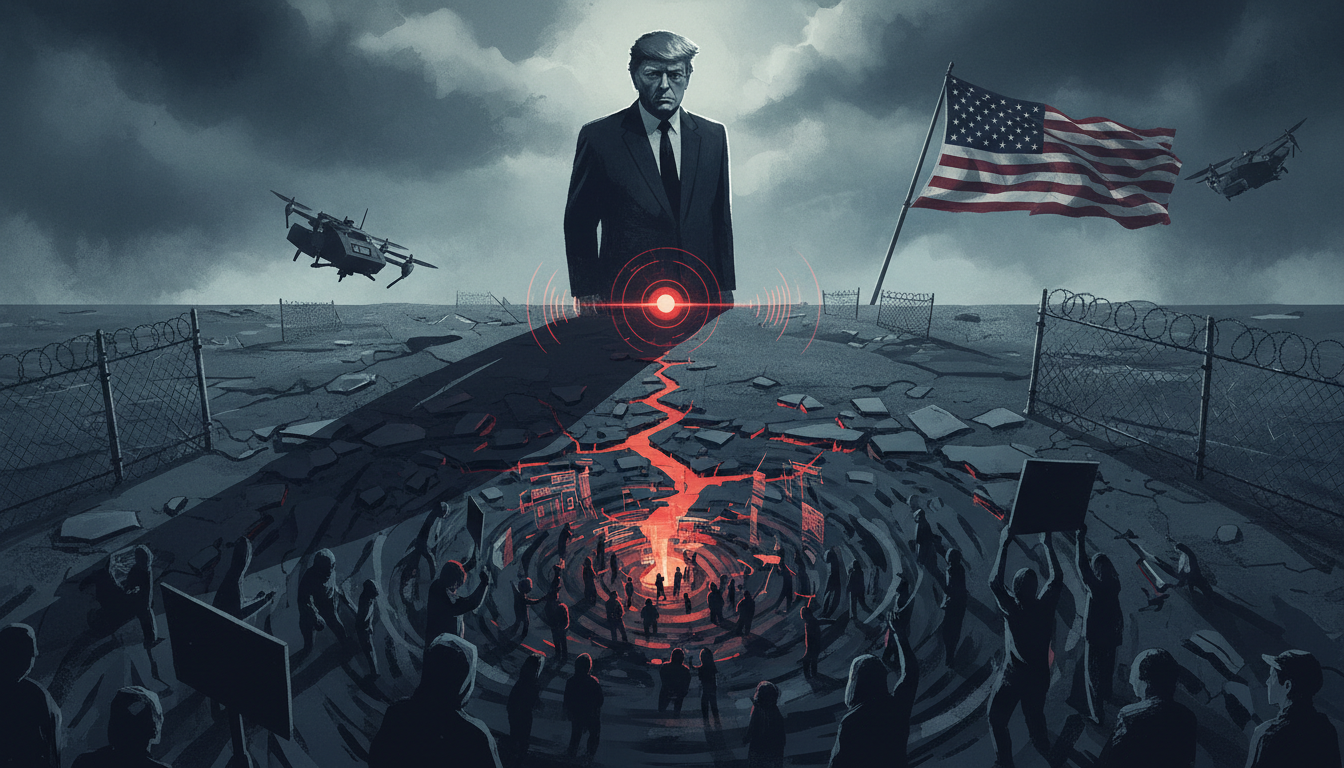
The Trump administration’s newly released 16-page counterterrorism strategy document represents a dramatic expansion of who qualifies as a terrorist threat, encompassing everyone from anti-fascist activists to traditional foreign adversaries under a single operational framework that promises: “We will find you, and we will kill you.”
According to reporting from The Intercept, this strategy memo officially designates a broad spectrum of domestic and international actors as terrorist targets, creating what researchers describe as “a new declaration of war by the Trump administration on its enemies both foreign and domestic, both real and imagined.”
Expanding the Definition of Terrorism
The strategy document lumps together vastly different categories of targets under the terrorism umbrella. Anti-fascist activists find themselves classified alongside ISIS operatives and so-called “narco-terrorists” in what federal law enforcement experts characterize as an unprecedented broadening of counterterrorism scope.
“Fundamentally, this document is a list of the administration’s enemies and a promise of what they’re going to do to them,” explains Noah Hurowitz, who covers federal law enforcement for The Intercept. “This anti-terror imperative makes for a very flexible and useful means of tamping down on dissent.”
The strategy explicitly identifies “a new type of domestic terrorism” driven by “violent extremists who have adopted ideologies antithetical to freedom and the American way of life,” language that legal scholars note could be interpreted to encompass a wide range of political opposition.
From Rhetoric to Lethal Action
The administration has already moved beyond policy documents to operational implementation. Maritime strikes in the Caribbean and Pacific targeting alleged “narco-terrorists” have resulted in nearly 200 deaths as of early May 2026, according to The Intercept’s reporting.
“The actual legal justification for the strikes is, like so much else, secret,” notes senior reporter Nick Turse, who has extensively covered these operations. “We’re talking about a fake war in which the enemies aren’t even read into the fact that they’re in an armed conflict with the United States.”
These operations represent what Turse describes as an evolution of post-9/11 counterterrorism authorities: “It’s really built on a quarter-century of executive overreach and targeted killings around the world. It took this legally dubious, at best, post-9/11 drone war and laid the groundwork for a completely illegal one in the Caribbean and the Pacific Ocean.”
Constitutional and Legal Concerns
The strategy’s broad language raises significant constitutional questions about the targeting of domestic political opposition. While the document states that counterterrorism powers “will not be used to target our fellow Americans who simply disagree with us,” the actual classifications within the strategy suggest a much more expansive interpretation of terrorist threats.
The administration’s approach builds on what government documents describe as addressing “individuals at the highest level of the U.S. Government” who allegedly “used their significant powers to politically target individuals” during the previous administration—language that appears to justify expanded surveillance and enforcement powers.
Historical Context of Political Targeting
This expansion of counterterrorism authorities occurs within a broader pattern of political polarization that has transformed opponents into enemies. Research from the Pew Research Center shows that 45 percent of Republicans now say Democratic policies “threaten the nation’s well-being,” while 41 percent of Democrats view Republican policies in equally stark terms.
The shift from viewing political rivals as opponents to viewing them as existential threats has deep implications for democratic governance. As political scientist research has documented, when political competitors are framed as enemies rather than legitimate opposition, it becomes easier to justify extraordinary measures against them.
Operational Implementation
The strategy’s implementation extends beyond traditional foreign counterterrorism operations. The Department of Homeland Security has been “mobilized to remove illegal alien criminals and Jihadist sympathizers,” while the document boasts of designating “key chapters of the Muslim Brotherhood as the terrorist groups they have always been.”
Most significantly, the strategy promises the use of military force against cartels designated as terrorist organizations, with the document claiming successful operations including “capturing the narco-terrorist outlaw Venezuelan dictator Nicolás Maduro.”
Implications for Civil Society
Legal experts and civil liberties advocates express concern about the strategy’s potential impact on legitimate political dissent and civil society organizations. The broad categorization of domestic “violent extremists” combined with expanded executive authorities creates what critics describe as a framework for targeting political opposition under the guise of counterterrorism.
“Say what you will about the people around President Trump,” observes Hurowitz, “but they have proved very adept at finding levers of power and levers of pain to go after their enemies.”
The strategy represents a significant departure from traditional counterterrorism approaches that maintained clearer distinctions between foreign threats, criminal organizations, and domestic political opposition. By collapsing these categories under a single operational framework, the administration has created what amounts to a unified theory of threat that encompasses anyone deemed opposed to its agenda.
This article draws on reporting from The Intercept and official documents from The White House.