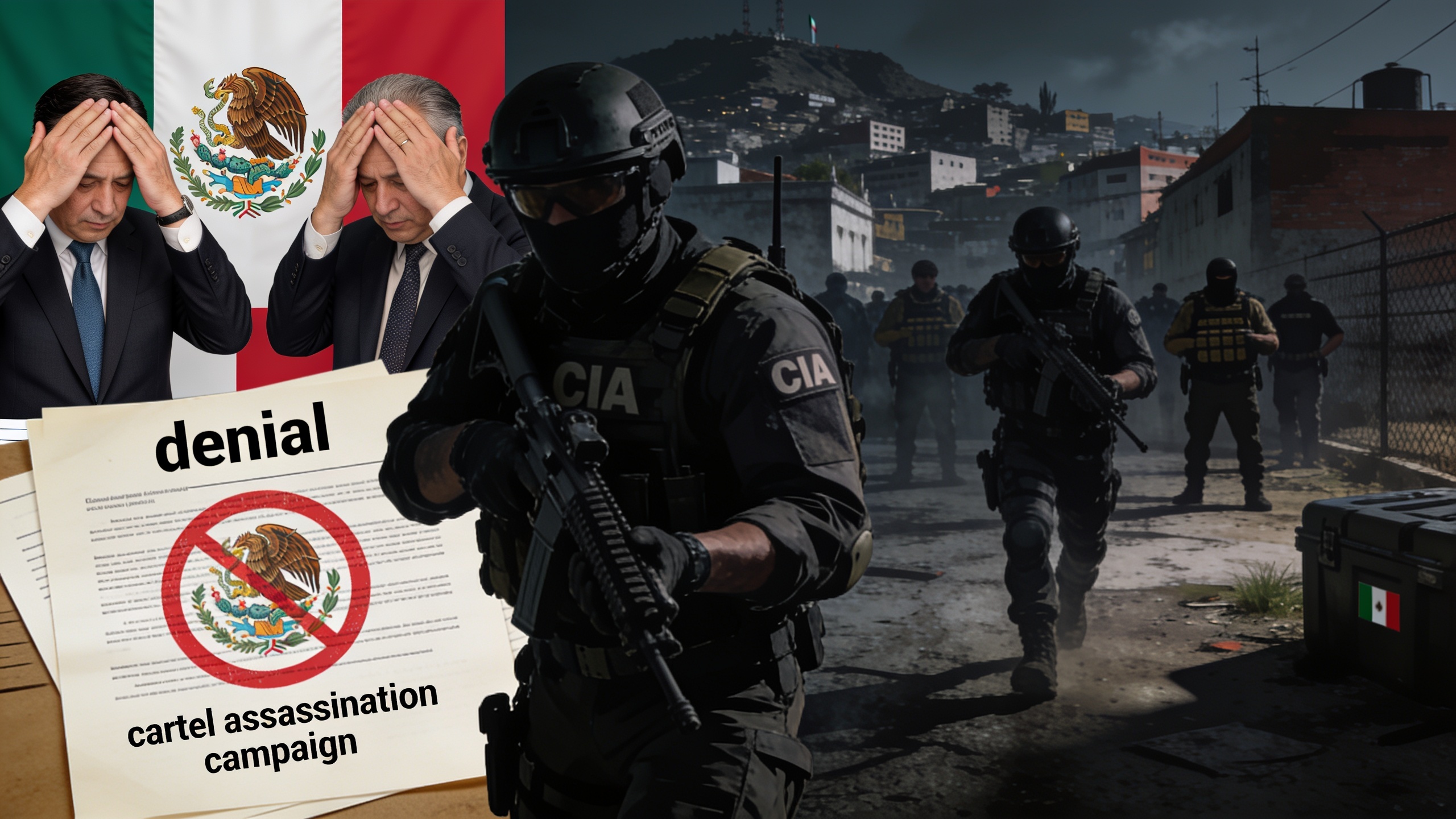
A CNN investigation published May 12, 2026, alleged that the Central Intelligence Agency’s elite Ground Branch unit has escalated covert operations inside Mexico to include direct participation in lethal attacks against cartel members. The report, citing multiple anonymous U.S. intelligence sources, claimed CIA operatives facilitated targeted assassinations of mid-level cartel figures without Mexican government authorization, marking a significant expansion from traditional intelligence-gathering roles.
The allegations center around a March 28, 2026 car bombing that killed Francisco “El Payin” Beltran, an alleged Sinaloa Cartel member, and his driver on a highway near Mexico City. According to CNN’s sources, an explosive device hidden inside the vehicle was part of a CIA-facilitated operation targeting cartel networks designated as foreign terrorist organizations by the Trump administration.
Details of Alleged Operations
The CNN report described how CIA Ground Branch officers have “directly participated in deadly attacks on several, mostly mid-level cartel members” since 2025. Sources told CNN that “the lethality of their operations has been seriously ramped up,” representing “a significant expansion of the kind of thing the CIA has been willing to do inside Mexico.”
The level of CIA involvement allegedly varied across operations, ranging from intelligence sharing and general support to direct participation in assassination missions. The Beltran operation exemplified this escalation, with the State of Mexico’s Attorney General confirming to CNN that an explosive device had been concealed within the target’s vehicle.
These alleged lethal operations build upon previously reported CIA surveillance activities in Mexico. In February 2025, reports emerged that the agency had deployed MQ-9 Reaper drones over Mexican territory for intelligence gathering on cartel operations, including fentanyl laboratory locations. The new allegations suggest some surveillance assets may have been repurposed for strike missions.
Official Denials and Diplomatic Tensions
Both the CIA and Mexican government categorically rejected the CNN report’s claims. CIA spokesperson Liz Lyons released a statement calling it “false and salacious reporting that serves as nothing more than a PR campaign for the cartels and puts American lives at risk,” though the agency did not specify which aspects of the reporting were disputed.
Mexican Security Minister Omar Garcia Harfuch responded via social media, stating that “the Mexican government categorically rejects any versions that seek to normalize, justify or suggest the existence of lethal, covert or unilateral operations by foreign agencies on Mexican soil.”
The denials came amid existing diplomatic friction over CIA presence in Mexico. In April 2026, two U.S. officials died in a vehicle crash in Chihuahua state following a Mexican security operation to dismantle a drug laboratory. Three sources confirmed to Reuters that the deceased officials were CIA officers, though the Mexican government stated it was unaware of U.S. participation in the operation.
Presidential Positions on Cross-Border Operations
Mexican President Claudia Sheinbaum has maintained that while her administration welcomes intelligence sharing and security cooperation, it will not accept U.S. agents or forces participating in operations on Mexican territory. She warned that unauthorized U.S. participation in anti-cartel operations should not be repeated.
This position contrasts sharply with President Donald Trump’s approach to Mexican cartels. Trump has repeatedly called for greater use of U.S. military force against cartel networks and has threatened unilateral action if Washington considers Mexico’s efforts insufficient. The Trump administration issued a classified directive in August 2025 ordering the Department of Defense to prepare for possible lethal operations inside Mexico.
Strategic Context and Implications
The alleged CIA operations occurred within the broader context of Trump’s designation of several Mexican cartel groups as foreign terrorist organizations, declaring them to be “at war with the United States.” This classification potentially provides legal justification for expanded military and intelligence operations against these groups.
The presence of U.S. intelligence personnel conducting operations on Mexican soil represents a particularly sensitive issue for bilateral relations. Mexico has historically maintained strict sovereignty over its territory, making unauthorized foreign military or intelligence operations a potential diplomatic flashpoint.
If confirmed, the alleged lethal operations would represent a significant escalation in the CIA’s role in Mexico’s drug war. The agency’s traditional involvement has focused on intelligence gathering, training, and equipment provision to Mexican security forces rather than direct kinetic operations.
Questions of Accountability and Oversight
The CNN investigation raised questions about oversight mechanisms for CIA operations abroad, particularly regarding lethal actions conducted without host country authorization. The report’s anonymous sources suggested that some operations occurred without prior approval from Mexican authorities, potentially violating international law and bilateral agreements.
The timing of these alleged operations coincides with escalating cartel violence in Mexico, particularly in Sinaloa state, where factional warfare has intensified. Mexican journalist Jose Cardenas noted following the Beltran assassination that “we have been living in anarchic war for many months in Sinaloa,” while questioning whether such sophisticated attacks might signal new dimensions of cartel-on-cartel warfare.
The allegations underscore broader questions about the effectiveness and legality of covert lethal operations in addressing transnational criminal organizations. Critics argue that such tactics may escalate violence and complicate diplomatic relationships, while supporters contend they represent necessary tools against organizations threatening U.S. national security.
As investigations continue into the alleged operations and the April 2026 deaths of CIA officers in Mexico, the incidents highlight the complex intersection of counter-narcotics efforts, intelligence operations, and sovereignty concerns in U.S.-Mexico relations.
This article draws on reporting from CNN, Reuters, and Activist Post.