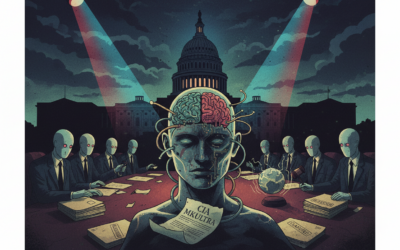
In the pre-dawn hours of June 29, 2026, federal agents from the FBI and the Department of Homeland Security descended on a residential neighborhood in Midlothian, Texas — a suburb in the Dallas–Fort Worth metropolitan area — deploying flash-bang grenades and armored vehicles to execute a federal search warrant. Within days of that raid, according to the resident targeted, agents returned to her home with a very different kind of offer: up to $200,000 to become a paid informant tasked with infiltrating antifascist networks.
The account, reported by The Intercept, raises pointed questions about the federal government’s escalating use of surveillance, paramilitary-style raids, and financial recruitment to build cases against left-wing activists — and whether those tactics are a legitimate law enforcement response or a calculated political campaign against constitutionally protected dissent.
The Raid: Flash-Bangs, Armored Vehicles, and No Indictment
The resident targeted by the raid, known publicly only by her social media handle “Doberman,” asked that her full identity be withheld due to ongoing threats to her personal safety. According to documents reviewed by The Intercept, the federal search warrant issued for her home was connected to an ongoing investigation into an alleged bomb plot targeting a June 14 Ultimate Fighting Championship event held at the White House. The Justice Department has characterized that broader case as an assassination plot involving explosive drones and sniper rifles, aimed at high-ranking government officials.
Doberman has not been indicted on any charges in connection with the raid or the investigation. Despite the absence of formal charges, federal agents reportedly visited her home weeks before the raid as well — this time from the FBI and the Secret Service — suggesting she had been under scrutiny for some time before the heavily armed operation was authorized.
First Amendment advocates contacted by The Intercept characterized the Midlothian raid as part of a wider pattern of aggressive policing being applied specifically to left-wing activists — a pattern that also includes documented attempts to flip other activists into informants in separate, unrelated cases.
The Offer: $200,000 and a Federal Handler
According to Doberman’s account, in the days following the raid, federal agents returned to her home and offered her up to $200,000 to serve as a paid informant for federal law enforcement, with her role focused on antifascist activist communities. The Intercept reported the offer directly from Doberman’s account; federal agencies have not publicly confirmed or denied the recruitment attempt.
The offer fits a documented trend. The Intercept has separately reported on other FBI attempts to flip activists into informants, including efforts connected to protests at the Delaney Hall detention facility. Civil liberties observers have described these recruitment campaigns as a pressure tactic — leveraging the fear and disruption caused by a raid to coerce individuals into cooperation, regardless of whether those individuals face actual criminal exposure.
One source quoted in The Intercept’s broader reporting on this trend offered a stark assessment of what these tactics represent: “They are stress-testing the limits of NSPM-7.”
The Legal Architecture: NSPM-7 and the Antifa Designation
To understand the context of the Midlothian raid, it is necessary to examine the policy architecture the Trump administration has constructed around antifascist activism. In September 2025, President Trump issued an executive order designating “antifa” as a domestic terrorist organization. That same month, he signed National Security Presidential Memorandum-7 — NSPM-7 — formally titled “Countering Domestic Terrorism and Organized Political Violence.”
NSPM-7 directs the Attorney General, the Secretary of Homeland Security, and other senior officials to develop and implement a national strategy targeting what the memo describes as organized campaigns of “targeted intimidation, radicalization, threats, and violence.” The memo specifically frames self-described anti-fascist movements as a central threat, arguing that such groups “portray foundational American principles… as ‘fascist’ to justify and encourage acts of violent revolution.”
The American Civil Liberties Union has published a detailed analysis of NSPM-7, noting a critical legal distinction that the administration’s public framing tends to obscure: unlike foreign terrorist organizations, there is no statutory domestic terrorism designation regime in the United States. Congress has passed no law creating one. As the ACLU’s analysis states, the president “does not cite any authority” for the designation because no such legal authority exists for domestic groups. The ACLU further noted that the label, while “dangerously stigmatizing,” does not in itself carry legal force.
What the designation and the accompanying memorandum do accomplish, civil liberties advocates argue, is create an atmosphere of institutional permission for aggressive law enforcement action against activists, even when those activists are engaged in constitutionally protected speech and assembly. The ACLU’s analysis concluded that NSPM-7 “is a deliberate attempt to sow fear and intimidate and silence opposition” and does not create new federal crimes or powers.
The Broader Crackdown: Hundreds of Years in Prison
The Midlothian raid did not occur in isolation. It took place approximately 20 minutes from the Prairieland Detention Facility in Alvarado, Texas — the site of a July 4, 2025 protest that has since resulted in some of the most severe sentences handed down to left-wing activists in recent American history.
On June 23, 2026, the Justice Department announced that eight individuals identified as members of what prosecutors called a “North Texas Antifa Cell” had been sentenced for their roles in the Prairieland incident, which the government characterized as a terrorist attack on an ICE facility. Benjamin Hanil Song, convicted of the attempted murder of a law enforcement officer, received a sentence of 100 years in prison. The remaining seven defendants received sentences ranging from 30 to 70 years each. In total, the eight defendants received a combined 550 years in prison — sentences that The Intercept described as “centuries’ worth of combined prison sentences.”
Acting Attorney General Todd Blanche stated at the time: “The sentences handed down today make clear that Antifa terrorists who attack law enforcement and federal facilities will face swift and uncompromising justice.” FBI Director Kash Patel similarly framed the sentencings as part of the bureau’s commitment to “identifying, locating, and dismantling Antifa and its funding networks across the country.”
Critics of the prosecutions have argued that the sentences are disproportionate and reflect the political climate surrounding the antifa designation rather than the specific conduct of individual defendants.
A Pattern of Pressure
The combination of elements in the Midlothian case — a pre-dawn raid with military-grade equipment against a person not subsequently charged, preceded by preliminary surveillance visits, followed almost immediately by a six-figure financial recruitment offer — has drawn scrutiny from First Amendment attorneys and civil liberties organizations who see it as a deliberate playbook.
The sequence mirrors documented tactics used in earlier eras of domestic surveillance: establish contact, surveil the target, deploy a show of overwhelming force, then offer an exit ramp in the form of cooperation. The financial scale of the reported offer — up to $200,000 — is notable and reflects the federal government’s stated commitment under NSPM-7 to investigate not just individual actors but the “organized structures, networks, entities, organizations, funding sources, and predicate actions” behind left-wing political activity.
Doberman remains uncharged. The investigation that brought armored vehicles and flash-bang grenades to her door in Midlothian continues. And the legal framework that made the raid possible — built on executive orders, presidential memoranda, and a domestic terrorism designation that the ACLU says has no statutory foundation — remains in place.
What that framework ultimately permits, and what it is designed to suppress, is a question that courts, civil liberties organizations, and the public are only beginning to fully reckon with.
This article draws on reporting from The Intercept, official press releases from the U.S. Department of Justice, the full text of NSPM-7 via WhiteHouse.gov, and legal analysis from the American Civil Liberties Union.