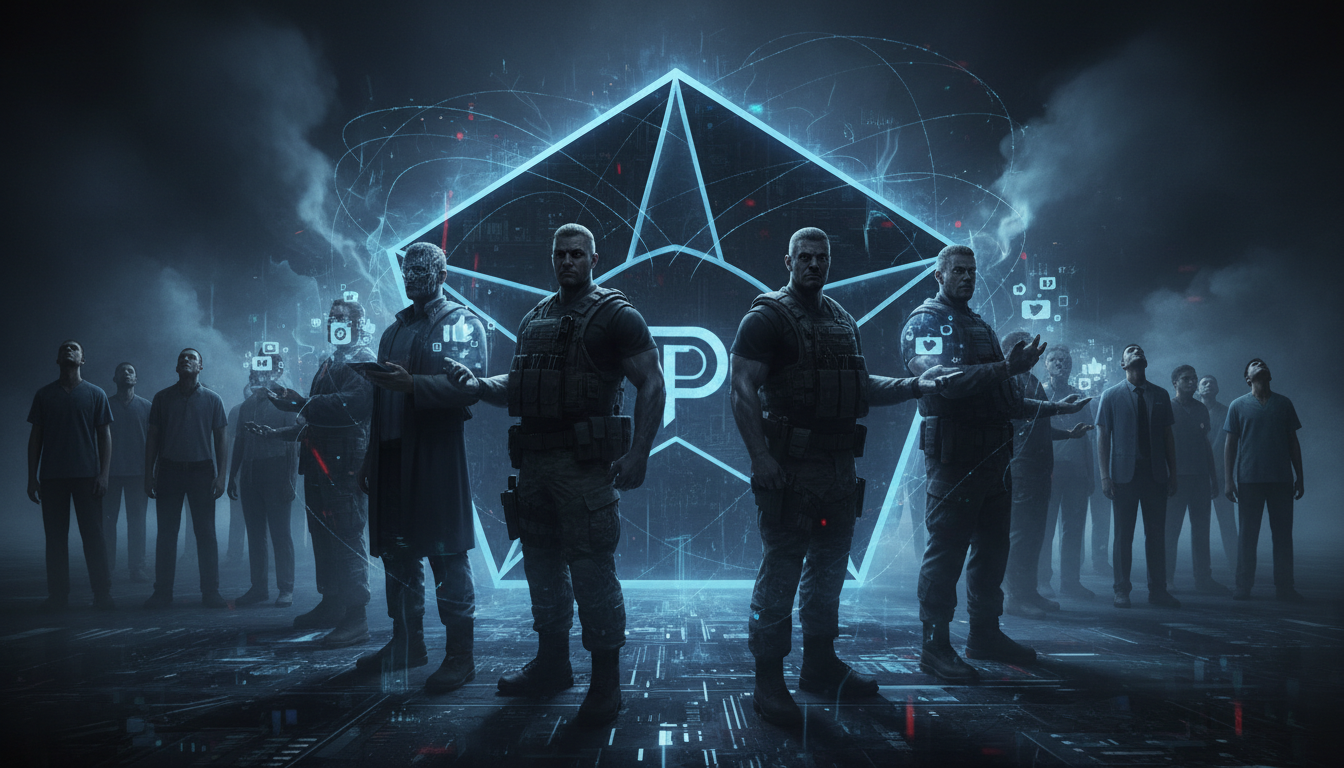
The United States Department of Defense has quietly placed several conservative military veterans with substantial social media followings into undisclosed government positions, where they have been amplifying Defense Secretary Pete Hegseth’s messaging while targeting critics of the Trump administration. The arrangement, first reported by The Washington Post on August 30, 2026, raises pointed questions about the use of public resources to shape domestic political narratives — and about the transparency obligations that the Pentagon’s own official social media policy explicitly demands.
Who Was Hired and Where They Were Placed
According to The Washington Post’s reporting by national security correspondents Dan Lamothe and Tara Copp, the individuals placed in these roles include retired Air Force Colonel Rob Maness and retired Army Colonels Kurt Schlichter and Thomas Anderson. All three are described as conservative online personalities with significant followings, and all three reportedly received official civilian email accounts as part of their assignments.
The Post reports that the three were assigned to the office of Pentagon personnel chief Anthony Tata — a team that has been tasked with addressing what the administration describes as culture-war issues inside the military, including reviewing military colleges for so-called “woke” ideology. The nature and scope of their assignments have not been publicly disclosed by the Pentagon, though the newspaper cites anonymous sources familiar with the matter who suggest some of their work could influence policy decisions.
Amplifying the Secretary, Targeting Critics
The Post’s investigation describes the influencers as actively promoting Defense Secretary Pete Hegseth’s viewpoints through their online platforms while simultaneously attacking individuals and institutions that scrutinize the Trump administration. The arrangement, as described, blurs a meaningful line: the distinction between an independent commentator expressing personal views and a government employee conducting public affairs activities on behalf of a federal agency.
The Pentagon’s own stated social media policy, published on the Department of War’s official website, requires that official social media activity be accurate, appropriate, timely, and in the appropriate tone — and explicitly prohibits the use of official accounts to undermine the department’s role as a steward of public trust. The policy also states that only designated personnel may authorize the release of information on official social media accounts. Whether the influencers’ activities fall under that framework — and whether disclosures required by federal ethics rules have been made — has not been publicly addressed by the Pentagon.
The Jennica Pounds Episode
The Washington Post highlights a late August episode involving conservative influencer Jennica Pounds as illustrative of the Pentagon’s social media environment. Pounds publicly accused a State Department official of attempting to entrap her into publishing government secrets as a journalistic scoop. US Undersecretary of State for Public Diplomacy Sarah Rogers subsequently acknowledged that she had approached Pounds and had herself released the documents in question. Pounds later apologized for, in her words, making a public spectacle of the episode. The incident drew attention to the porous and often opaque relationships between government officials and ideologically aligned online commentators during this period.
A Broader Pattern of Information Control
The influencer hiring program does not exist in isolation. The Pentagon tightened press access rules in September of the prior year as part of a broader crackdown on unauthorized disclosures following a series of reports about internal turmoil within the department. The department has also reportedly considered using polygraph examinations to identify officials leaking information to journalists.
President Trump and Secretary Hegseth have repeatedly clashed with mainstream media organizations over reporting based on leaked documents and anonymous sources. Following reports that military operations against Iran had significantly depleted US stockpiles of critical missiles and air defense interceptors, Trump posted on Truth Social that those responsible for the leaks were being hunted down and that long prison sentences would be sought. The administration has consistently framed unauthorized disclosures as acts of treachery rather than as journalism or whistleblowing.
The Pentagon also made news separately when it dismissed the leadership of Stars and Stripes, the longstanding military-run news outlet, following a censorship dispute — a decision that drew criticism from press freedom advocates and former military journalists.
Historical Context: Military Influence Operations Online
The Pentagon’s interest in shaping online narratives is not a new phenomenon. In 2011, The Guardian revealed that the US military had developed software enabling service personnel to operate multiple fake online personas — so-called sock puppets — to spread pro-American messaging on foreign-language websites. That program, known as Operation Earnest Voice and administered through US Central Command, was explicitly designed to counter extremist ideology abroad. Centcom’s spokesman at the time stated clearly that the technology would not be used to address US audiences, describing such domestic use as unlawful.
The current arrangement differs structurally: rather than anonymous fake personas, the Pentagon appears to be working with real, named individuals who carry their own established audiences and credibility. The effect, however, raises parallel concerns about the use of government resources to manufacture or amplify particular viewpoints in public discourse — only this time directed at domestic audiences and administered through identifiable personalities rather than anonymous accounts.
Questions of Transparency and Accountability
The core concern raised by the Post’s reporting is one of disclosure. Federal employees are generally required to identify their government affiliations when acting in official capacities, and federal law governs the use of appropriated funds for publicity or propaganda purposes. Whether the Pentagon’s arrangements with these influencers meet applicable disclosure requirements — or whether their social media activities during their government tenure constitute official public affairs work subject to DoD regulations — has not been publicly adjudicated.
The Pentagon’s own official social media policy explicitly calls for transparency as a governing principle, stating that social media account managers must not take actions that could be construed as misleading the public or stifling discussion of controversial topics. Whether privately contracted or appointed influencers operating outside the formal public affairs structure are bound by the same standards remains an open and unresolved question.
The broader context — a military department simultaneously tightening press access, considering polygraphs for leak detection, dismissing the leadership of its own independent news outlet, and quietly installing ideologically aligned commentators in undisclosed roles — presents a coherent, if troubling, picture of an institution working to control the information environment surrounding it.
What Comes Next
Neither the Pentagon nor the named influencers have publicly addressed the specifics of their arrangements as reported by the Post. The Washington Post’s investigation was published August 30, 2026, and cited people familiar with the matter along with corroborating material. Congressional oversight committees, press freedom organizations, and government ethics watchdogs have not yet publicly responded to the reporting as of the time of this article’s publication. Whether formal inquiries follow will likely depend on the degree to which the public and lawmakers press for answers about the scope, funding, and legal basis of these assignments.
What the record establishes is this: the Pentagon has placed individuals with public online followings in government roles without publicly disclosing those roles, while those individuals have used their platforms to advance the positions of the sitting Defense Secretary. The mechanisms of accountability that would normally apply — public disclosure, press access, oversight — are precisely the mechanisms the department has been working, by multiple accounts, to restrict.
This article draws on reporting from The Washington Post (Dan Lamothe and Tara Copp), RT World News, The Guardian, and the Department of War Official Social Media Policy.