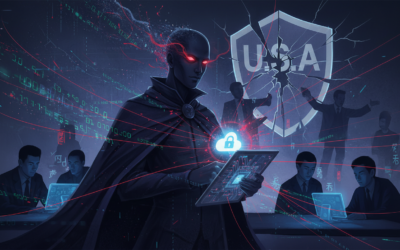
The Cyber Intelligence Sharing and Protection Act, known as CISPA, rapidly emerged as the internet’s most controversial proposed law following the defeat of SOPA. Critics warned it posed severe threats to online privacy and civil liberties under the guise of cybersecurity.
What Was CISPA and Why Did It Matter?
Following the successful grassroots campaign that killed the Stop Online Piracy Act (SOPA) through unprecedented website blackouts and mass online protests, a new legislative threat surfaced in the United States House of Representatives. House Resolution 3523, officially titled the Cyber Intelligence Sharing and Protection Act of 2011, was introduced by Representatives Mike Rogers (R-MI) and C.A. “Dutch” Ruppersberger (D-MD). Though marketed as a cybersecurity measure, digital rights organizations saw something far more troubling beneath its surface.
The legislation sought to modify the National Security Act of 1947 by expanding how “cyber threat intelligence” could flow between federal agencies and private corporations. Under CISPA’s framework, this intelligence encompassed virtually any data related to network vulnerabilities, system threats, efforts to compromise digital infrastructure, or the theft of proprietary information — including intellectual property.
A critical provision shielded companies from legal consequences when they gathered and handed over qualifying data to Washington or to other businesses. The bill also tasked the Privacy and Civil Liberties Oversight Board with yearly audits of how the government utilized shared information.
Massive Corporate and Congressional Support Behind CISPA
Unlike SOPA, which struggled to maintain industry backing, CISPA attracted an enormous coalition of supporters. The bill boasted 106 co-sponsors in the House — more than double what SOPA had secured at its peak. Ten of those co-sponsors chaired congressional committees, signaling deep institutional support.
Major technology and telecommunications firms lined up behind the proposal. Internet service providers AT&T and Verizon endorsed it. Facebook expressed support. Hardware giants IBM and Intel signed on as well. This broad corporate backing represented a stark contrast to the tech industry’s unified opposition to SOPA just months earlier.
Arguments From CISPA Proponents
Representative Rogers framed CISPA as a tool enabling American businesses to defend against sophisticated cyber threats without new federal mandates or regulatory burdens. He also argued it would generate private sector cybersecurity jobs and safeguard American intellectual property from foreign hackers, particularly those based in China.
Representative Ruppersberger emphasized the urgency of the legislation, warning that without immediate policy changes, the nation remained vulnerable to catastrophic attacks on critical infrastructure — power grids, water systems, and essential services that millions depended on daily.
Corporations favored the measure because it eliminated regulatory barriers that complicated the sharing of threat data. From their perspective, fewer restrictions on information exchange meant stronger collective defenses against cyberattacks.
Privacy Concerns and Civil Liberty Threats
Digital rights groups identified several alarming problems with the bill’s language. The Center for Democracy and Technology highlighted four major issues: the nearly limitless scope of data that could be funneled to government agencies regardless of existing privacy protections; the likely expansion of government surveillance over private communications; the potential transfer of cybersecurity authority from civilian oversight to military control; and the absence of restrictions on how shared data could be repurposed once it reached federal hands.
The Electronic Frontier Foundation (EFF) raised additional red flags. They argued the bill’s sweeping definition of cybersecurity threats could justify censoring any online speech a corporation deemed harmful to its network. The intellectual property clause, the EFF warned, handed both companies and government agencies fresh powers to surveil and suppress communications suspected of copyright infringement.
Perhaps most concerning was the immunity provision. Under CISPA, private companies could harvest and distribute user data without facing lawsuits or criminal charges. The EFF characterized this as creating a blanket cybersecurity exception to every existing law on the books.
As the EFF explained, any company — whether a search engine, social media platform, telecommunications provider, or messaging service — could theoretically intercept private emails and texts, share copies with other corporations and federal agencies, and even alter or block those communications, provided they claimed a cybersecurity justification.
Growing Online Opposition to the Bill
While the backlash had not yet reached the fever pitch of the SOPA protests, momentum was building. Technology journalist Mike Masnick at TechDirt published an influential warning urging readers to shift their attention from the defeated SOPA to this new cybersecurity proposal. The article catalyzed awareness across the internet.
Reddit, the online community that had played a pivotal role in organizing anti-SOPA activism, saw a surge of posts analyzing and criticizing CISPA. The hacktivist collective Anonymous also entered the fight, releasing personal information about Representative Rogers and publishing a video denouncing the legislation.
Could CISPA Survive a Vote?
The bill’s legislative prospects appeared strong. It had sailed through the House Intelligence Committee in December 2011 with a lopsided bipartisan vote of 17 to 1. Combined with its 106 co-sponsors and ten committee chairs among its backers, CISPA seemed positioned for passage.
However, no legislation becomes law until it reaches the president’s desk. If internet users organized the same kind of massive coordinated resistance that had demolished SOPA and its Senate companion PIPA, congressional support could evaporate quickly — especially during an election year when lawmakers were particularly sensitive to public opinion.
The Broader Cybersecurity Legislation Debate
Regardless of CISPA’s fate, the underlying reality was that cyber threats posed genuine and escalating dangers, and Congress was determined to address them through new laws. Privacy advocates would inevitably scrutinize any bill that risked compromising personal freedoms or concentrating power in the hands of corporations and intelligence agencies.
CISPA’s critics were not dismissing the need for better cybersecurity. Their objection was to the specific mechanisms and broad authorities this particular bill proposed. Supporters in Congress, however, were expected to characterize any opposition as indifference to national security — a framing that digital rights organizations were prepared to push back against forcefully.
The fundamental tension between security imperatives and privacy rights that CISPA embodied would continue to shape internet policy debates for years to come.
This article is based on reporting originally published by Digital Trends. All factual claims are attributed to the sources cited.