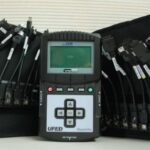
Michigan State Police were found to be using a handheld forensic device capable of extracting the entire contents of a smartphone in under two minutes — including deleted data — during routine traffic stops, raising serious Fourth Amendment concerns about warrantless searches of personal devices.
The CelleBrite UFED: A Pocket-Sized Surveillance Tool
The device in question was the CelleBrite UFED (Universal Forensic Extraction Device), a handheld tool compatible with over 3,000 models of mobile phones. Michigan officers had been deploying it since August 2008 to copy data from phones belonging to motorists pulled over for minor traffic violations.
The UFED’s capabilities were extensive. It could bypass password protections and extract call history, text messages, contacts, images, geotags, and other media content. Critically, the device could recover deleted data as well, meaning information a phone owner believed they had erased could still be captured and analyzed.
The device’s built-in Physical Analyzer could map both existing and deleted location data onto Google Earth, plotting image geotags and location history on Google Maps to create a detailed picture of a person’s movements.
ACLU Demands Transparency
The American Civil Liberties Union filed freedom of information requests demanding that Michigan State Police disclose what data had been collected and whether the searches of motorists’ phones were legally justified.
The state police responded that they would comply — for a fee of $544,680. ACLU staff attorney Mark P. Fancher pushed back, noting the irony: “Law enforcement officers are known, on occasion, to encourage citizens to cooperate if they have nothing to hide. No less should be expected of law enforcement.”
Fourth Amendment Implications
The core legal issue was whether police could search the contents of a personal phone without a warrant during a routine traffic stop. The Fourth Amendment protects against unreasonable searches, and under established law, a search generally requires a warrant issued by a judge who has determined probable cause exists.
The ACLU argued that a device enabling “immediate, surreptitious intrusion into private data” created enormous risks that officers would bypass constitutional requirements. The ability to copy an entire phone’s contents — including deleted files, location history, and private communications — during a traffic stop for a minor violation represented a significant expansion of police search capabilities far beyond what the stop itself would justify.
A Precursor to Larger Debates
The Michigan case foreshadowed the broader national debate over digital privacy and law enforcement that would culminate in the Supreme Court’s 2014 ruling in Riley v. California, which unanimously held that police generally need a warrant to search a cell phone seized during an arrest. The Court recognized that modern smartphones contain “the privacies of life” and cannot be treated like a wallet or cigarette pack found during a search.
The incident illustrated how rapidly advancing forensic technology was outpacing the legal frameworks designed to protect individual privacy, a tension that continues to shape digital rights law.