
A CIA Contractor in Lahore
On January 27, 2011, a 36-year-old American named Raymond Allen Davis shot two Pakistani men dead on a crowded street in Lahore, triggering what would become the most severe intelligence crisis in the history of U.S.-Pakistan relations. A botched rescue attempt by his backup team killed a third man, and Davis’s arrest opened a window into the CIA’s covert operations in Pakistan that neither government wanted exposed.
Davis operated as an independent contractor for the CIA, working alongside the agency’s Special Activities Division, its paramilitary wing. His official cover identified him as a “technical consultant” to the American consul general, but his actual mission was to surveil Lashkar-e-Taiba (LeT), the terrorist organization responsible for the 2008 Mumbai attacks that killed nearly 200 people across three days of coordinated assaults.
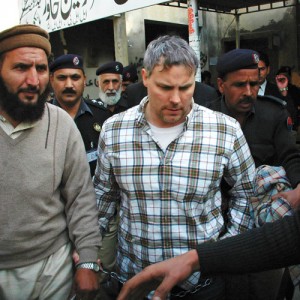
The Making of a Covert Operative
Davis’s path to the CIA began in Big Stone Gap, Virginia, a small town in the southwestern corner of the state built on long-vanished coal mining money. The son of a bricklayer and a cook, Davis grew up poor in a place called Wampler Hollow, where hunting and shooting were the primary activities for young people. He was known for his quiet demeanor, physical strength, and loyalty to friends.
After high school, Davis enlisted in the Army, completed basic training in Georgia, and served with a United Nations peacekeeping force in Macedonia. He eventually joined the Army’s Special Forces, the Green Berets, based at Fort Bragg, North Carolina, where he specialized in weapons. After a decade of military service, he formed his own security company, Hyperion Protective Services, and began working as a private contractor. He briefly worked through Blackwater Worldwide before contracting directly with the CIA in Pakistan at a salary of $200,000 per year.
Davis first arrived in Pakistan within a month of the November 2008 Mumbai bombings. He was initially stationed in Peshawar, near the Afghanistan border, before being reassigned to Lahore, a city of 10 million people near the Indian border that Pakistani intelligence considered firmly within its own sphere of influence.
Lashkar-e-Taiba: The Target
Understanding what brought Davis to Lahore requires understanding the organization he was tracking. Lashkar-e-Taiba, meaning “Army of the Pure,” was originally created during the 1980s Afghan war against the Soviet Union, planted and cultivated jointly by the CIA and Pakistan’s Inter-Services Intelligence (ISI). After the Soviet withdrawal, Pakistan repurposed the group as a proxy force against India in the disputed Kashmir region.
LeT distinguished itself from other militant groups through the extreme brutality of its operations. In 1998, its members killed 23 Kashmiri villagers in their homes, including four children, shooting a one-year-old 18 times. The group’s capabilities reached a new level with the November 2008 Mumbai attacks, when 10 operatives arrived by speedboat and conducted a three-day rampage of shooting, bombing, and torture. Investigations revealed the attackers had trained at an LeT camp with at least partial support from Pakistani authorities.
Post-Mumbai analysis uncovered that LeT maintained a list of more than 300 potential targets across India and the Western world. The group operated almost openly in Lahore’s suburbs, maintaining a sprawling headquarters of nearly 200 acres that included a mosque, a religious school, and a farm. This was the landscape into which Davis was inserted.
The Shooting on Jail Road
On January 27, Davis loaded his white Honda Civic with operational equipment including a GPS unit, a Glock handgun, ammunition, first aid supplies, a telescope, and a camera containing photographs of military installations near the Indian border. His mobile phone held contacts for apparent sources within terrorist groups across Pakistan.
At approximately 2:15 that afternoon, while driving along Jail Road in a rough section of the city, Davis realized he was being followed by two men on a black Honda motorcycle. Both were young, both armed with pistols. Their identities were Faizan Haider and Faheem Shamshad, and their exact affiliation remains disputed. Pakistani authorities initially identified them as ISI employees, then reversed course to describe them as innocent young men. Their families said they sold mobile phones and vended fruit. The truth of who sent them, if anyone did, has never been established.
At a congested intersection, the motorcycle pulled ahead of Davis’s car. Shamshad, seated on the back, turned toward Davis, raised his pistol, and cocked it.
Davis responded instantly. He raised his Glock and fired five rounds through his windshield, striking Shamshad in the stomach, behind the right ear, in the back, the left arm, and the left thigh. When Haider ran toward the intersection, Davis stepped from his car and shot him five times, including twice in the back, at a distance of about 50 feet.
Lahore’s police chief, Aslam Tareen, who initially described the shootings as cold-blooded murder, later expressed professional admiration in private. “The shooting was expert,” he said.
The Failed Rescue
After the shooting, Davis photographed both bodies with methodical calm, then radioed his backup team for extraction. When the gathering crowd became violent, smashing his rear window, Davis maneuvered through dense traffic trying to reach the American consulate.
Meanwhile, his backup team responded in a black Land Cruiser, driving at high speed on the wrong side of the road toward the intersection. The vehicle struck a motorcyclist named Ibad-ur Rehman head-on, killing him. The Land Cruiser’s driver continued toward the scene, at one point pressing a weapon to the head of a bystander who opened the vehicle’s door. The team eventually reached the American consulate, jettisoning bullets, batteries, gloves, and a cloth bearing an American flag along the way. The two occupants were spirited out of Pakistan before authorities could detain them.
Davis was less fortunate. Despite his driving skills, he was eventually blocked by traffic police and a crowd. Authorities took him into custody at a nearby station, where part of his interrogation was recorded and leaked to Pakistani media.
Incarceration and the Diplomatic Crisis
Davis was placed in Kot Lakhpat prison in a section normally reserved for terrorists, isolated from other prisoners and monitored by video cameras around the clock. His jailers faced an unprecedented security challenge: they feared the Pakistani public might demand his execution, religious extremists might infiltrate the prison to kill him, and the CIA itself might want to silence him permanently. Guards in Davis’s section had their weapons confiscated. His food was tasted by dogs before being served.
Outside the prison walls, thousands took to the streets across Pakistan demanding Davis’s execution. Protesters hung him in effigy and printed posters showing him wearing a noose. The crisis deepened when Shamshad’s widow, Shumaila, swallowed insecticides in protest. Before dying at the hospital, she told television cameras: “The killer is being treated as a guest at the police station. I need justice and blood for the blood of my husband.”
The U.S. government initially invoked the 1961 Vienna Convention on Diplomatic Relations, with President Obama himself calling Davis “our diplomat.” The claim that an obvious CIA operative deserved diplomatic immunity only intensified Pakistani outrage.
The Blood Money Resolution
The solution came from an unlikely source. Pakistan’s ambassador to the United States, Husain Haqqani, an Islamic legal expert, suggested invoking shari’a law, specifically the concept of diyah, or blood money, which allows an accused person to compensate victims’ families in exchange for forgiveness.
On March 16, 2011, representatives from both governments, along with a judge and 18 relatives of the three dead men, met at Kot Lakhpat prison. The families accepted approximately $750,000 each and formally forgave Davis. The judge fined him $235 for carrying an unregistered firearm and closed the case. Davis went directly from the prison to the airport, where a jet flew him to a U.S. air base in Afghanistan and then home.
The Strategic Consequences
The price of Davis’s freedom extended far beyond the blood money payments. In parallel negotiations conducted in phone calls and at a luxury hotel in Oman, senior military and intelligence officials from both countries hammered out a broader agreement. Pakistan demanded that the CIA withdraw its contractors and significantly reduce its personnel and operations in the country. According to the New York Times, the U.S. withdrew more than 330 CIA and Special Operations personnel.
Pakistan insisted that future human intelligence gathering be routed through the ISI rather than conducted independently, a demand that essentially gave Pakistan’s intelligence service veto power over CIA operations on its soil. The withdrawal left the agency increasingly dependent on drones and satellites for intelligence collection.
Former CIA officers described the entire episode as an exercise in opportunism by the ISI, which had grown weary of American drone strikes and used the Davis affair as leverage to curtail the CIA’s independent operations. During the six weeks Davis spent in prison, the CIA suspended all drone strikes in Pakistan, recognizing that Davis had come to symbolize the agency’s presence in the country.
In the days following Davis’s arrest and the confiscation of his mobile phone, Pakistani newspapers reported that militant groups had rounded up and assassinated several locals identified as CIA cooperators, a devastating blow to the agency’s human intelligence network.
Two days after Davis’s release, the drone strikes resumed. In Pakistan, the cycle of violence and recrimination continued unabated.