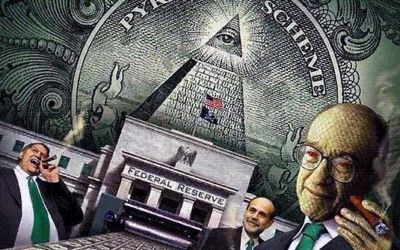
The Illuminati may be the most enduring conspiracy theory in modern culture. It connects eighteenth-century Bavarian secret societies to twenty-first-century pop stars, weaves together global finance with music video symbolism, and somehow manages to implicate both the Pope and Jay-Z in the same shadowy organization. But what is the actual history behind the theory, and why has it proven so resilient across vastly different subcultures?
The Historical Illuminati
The original Illuminati was a real organization: the Bavarian Illuminati, founded in 1776 by Adam Weishaupt, a professor of law at the University of Ingolstadt. It was a secret society of freethinkers, humanists, and Enlightenment-era academics who opposed superstition, religious influence over public life, and abuses of state power. The group attracted intellectuals and minor aristocrats across Europe before Bavarian authorities infiltrated and disbanded it roughly a decade after its founding.
As a functioning organization, the Illuminati existed for barely ten years. As a conspiracy theory, it has thrived for more than two centuries.
How a Defunct Society Became a Global Conspiracy
Almost immediately after its dissolution, the Illuminati became a convenient explanation for political upheaval. Monarchists, religious conservatives, and right-wing movements attributed events like the French Revolution to the secret machinations of Illuminati survivors working behind the scenes. Over the following centuries, the theory evolved and expanded, absorbing other conspiracy narratives about the Freemasons, the Knights Templar, the Rosicrucians, and eventually organizations like the Bilderberg Group and the Council on Foreign Relations.
The modern version of the theory holds that a shadowy cabal of political, financial, and cultural elites secretly controls world affairs. Their alleged goal: the establishment of a one-world authoritarian government, commonly referred to as the New World Order.
The Pop Culture Crossover
What makes the contemporary Illuminati theory distinctive is its unlikely migration into hip-hop and pop music culture. By the 1990s, books about secret societies and elite conspiracies were circulating widely in African-American communities, particularly through independent bookstores. Works exploring hidden power structures resonated with communities that had experienced systematic disenfranchisement.
Columbia University professor Marc Lamont Hill has noted that conspiracy theories represent a natural response by marginalized communities to their exclusion from power. Questions about the true nature and structure of authority found fertile ground in hip-hop, a genre already predisposed to challenging official narratives.
By the 2000s, Illuminati symbolism had become a recurring motif in mainstream music. Artists like Jay-Z, Kanye West, Lady Gaga, Rihanna, and Beyonce were accused of embedding occult imagery in their work, from pyramid hand gestures and goat-head references to color schemes and stage designs allegedly loaded with Masonic and Satanic symbolism.
The Paradox of Visible Secrecy
One of the more puzzling aspects of modern Illuminati theory is the claim that members of the most powerful secret society in history constantly advertise their membership. Music videos, award show performances, and even the naming of celebrity children are cited as evidence of Illuminati affiliation.
Madonna’s Super Bowl halftime performance, for instance, was interpreted by some as an overt Satanic ritual based on its color palette, choreographic formations, and timing relative to lunar cycles. Similar analyses have been applied to virtually every major pop cultural event of the last two decades.
This raises an obvious logical tension: why would an organization dedicated to secrecy and control repeatedly broadcast its existence to billions of viewers?
Who Believes and Why
The modern Illuminati theory draws adherents from a remarkably broad demographic spectrum. Its believers span political libertarians, religious conservatives, hip-hop enthusiasts, and social media communities. The theory functions as a flexible framework that can accommodate nearly any unexplained event, from celebrity deaths to financial crises to geopolitical shifts.
For some, it provides a coherent narrative in a world that often feels chaotically governed by invisible forces. For others, it represents a genuine attempt to understand how concentrated power operates beyond the reach of democratic accountability. And for many, it exists in a gray zone between genuine belief and cultural entertainment.
Separating Signal from Noise
The challenge with Illuminati conspiracy theories is that they intermingle legitimate concerns about concentrated power, elite networks, and democratic accountability with unfounded claims about occult rituals and supernatural agendas. Organizations like the Bilderberg Group do hold closed-door meetings attended by political and financial leaders. Wealth inequality has increased dramatically. Corporate and governmental power does operate through opaque channels.
But the leap from acknowledging these realities to concluding that a single, coordinated secret society orchestrates all of human civilization requires evidence that has never been produced. The Illuminati theory persists not because the evidence supports it, but because the underlying anxieties it addresses, about power, accountability, and the gap between public narratives and private realities, remain unresolved.