First American Arrested Using Predator Drone Surveillance
The small town of Lakota, North Dakota, became an unexpected battleground over domestic drone use in 2012 when one of its residents became the first known American citizen to be arrested with the assistance of a Predator surveillance drone. The case raised fundamental legal questions about whether unmanned aerial vehicles could be used by police within U.S. borders and what that meant for Fourth Amendment protections.
The Standoff That Triggered Drone Deployment
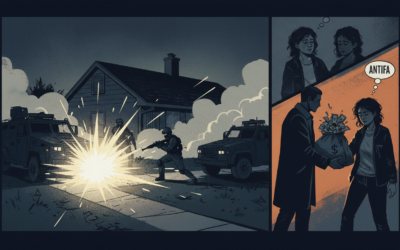
The incident began when six cows wandered onto the 3,000-acre farm owned by Rodney Brossart. Brossart, described as holding anti-government views, reportedly believed he was within his rights to keep the animals. When law enforcement arrived to investigate, Brossart and two family members allegedly confronted officers with high-powered rifles, forcing police off the property.
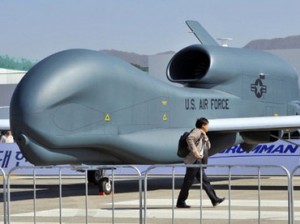
What followed was a 16-hour standoff. The Grand Forks police department SWAT team, armed with a search warrant, activated an existing arrangement with the Department of Homeland Security that had been in place for approximately three years. Through this agreement, they requested an unmanned aerial vehicle to identify Brossart’s precise location on the large ranch property.
Using the drone’s surveillance feed, the SWAT team moved in and arrested Brossart on multiple charges including terrorizing a sheriff, theft, and criminal mischief. Brossart later said he had no idea a drone had been used during the standoff until months after his arrest.
Legal Arguments on Both Sides
Brossart vowed to fight the charges and the legality of the drone deployment. He filed court motions challenging the use of the unmanned aircraft, calling the surveillance operation illegal.
The prosecution took a different position. Douglas Manbeck, representing the state of North Dakota, argued that the alleged crimes had been committed long before anyone considered using a drone. The aircraft was deployed solely to ensure safety during the arrest operation — confirming whether weapons were present and reducing risk for both the Brossart family and law enforcement officers.
Legal Precedent and Expert Analysis
At the time, no direct legal precedent existed for domestic drone use by law enforcement. However, legal experts pointed to two relevant Supreme Court decisions. In California v. Ciraolo (1986) and Florida v. Riley (1989), the Court held that law enforcement could use public navigable airspace in a physically nonintrusive manner to gather evidence for an arrest.
John Villasenor, a drone policy expert at the Brookings Institution, argued that legally, using a drone was functionally no different from using a helicopter. He predicted the court would not dismiss the case on the basis of the drone deployment and noted that while this may have been the first drone-assisted arrest, it would certainly not be the last.
The Broader Expansion of Domestic Drone Use
The Brossart case arrived at a pivotal moment in U.S. drone policy. Approximately 300 law enforcement agencies and research institutions held temporary FAA licenses to operate drones at the time, with most domestic drone activity concentrated along the nation’s borders under Homeland Security operations.
A significant policy milestone was approaching: by May 14, 2012, the federal government was required to begin issuing permits for broader law enforcement drone use. This deadline signaled a potential rapid expansion of aerial surveillance capabilities available to local and state police departments.
Bill Macki, head of the Grand Forks SWAT team, confirmed that the Brossart arrest was the first and only time his unit had used a drone operationally. With Grand Forks County having a population under 70,000, the department could not justify the expense of maintaining a helicopter. Access to drones through the Homeland Security partnership offered similar aerial capabilities at a fraction of the cost — a model that other small departments across the country were watching closely.