The Myth of Choice in Seed Markets
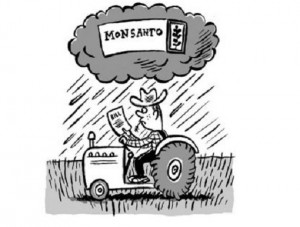
A common response to farmers who complained about Monsanto’s aggressive business practices was simple: just don’t buy their seeds. In reality, the situation was far more complicated. Through a combination of corporate acquisitions, legislative manipulation, regulatory capture, and legal intimidation, Monsanto had constructed a system that made it increasingly difficult for American farmers to access, save, or share traditional non-GMO seeds.
The company’s strategy operated on multiple fronts simultaneously, creating a web of legal and economic pressures that left farmers with fewer options each year.
Buying Up the Seed Supply
Monsanto’s first and most straightforward tactic was acquiring seed companies across the Midwest. By purchasing the businesses that had historically supplied conventional seeds, Monsanto steadily reduced the number of sources available to farmers who wanted to plant non-genetically-modified crops. Each acquisition further consolidated the seed market under corporate control.
Engineering Seed Laws to Crush Independence
Beyond market consolidation, Monsanto invested heavily in legislative efforts. The company drafted model seed laws and worked with legislators to enact them at the state level. These laws imposed onerous requirements on the cleaning, collecting, and storing of seeds, including extensive fees, paperwork, testing protocols, and tracking requirements for every variety. The cumulative regulatory burden made it nearly impossible for farmers to maintain their traditional practice of saving seeds from one harvest to plant the next season.
In Illinois, where such a seed law was enacted, the staff of the Speaker of the House reportedly included Monsanto lobbyists. Before these laws existed, farmers simply collected seeds, stored them in their sheds, shared them with neighbors, and sold surplus as they saw fit. That centuries-old practice was effectively criminalized.
Overriding Local Democracy
Monsanto also pushed preemption laws that stripped local communities of the right to control what was planted in their counties. These laws, championed by then-Agriculture Secretary Tom Vilsack, prevented farmers and citizens from blocking the planting of GMO crops even when those crops posed contamination risks to neighboring fields growing conventional or organic varieties. A preemption map showed the extent to which state legislatures had surrendered local agricultural autonomy to corporate interests.
Weaponizing Contamination
Perhaps the most perverse element of Monsanto’s strategy was its approach to genetic contamination. GM pollen drifts. Seeds blow across property lines. Once a farmer’s field contained GMO plants, whether through natural cross-pollination or accidental mixing, Monsanto claimed intellectual property rights over the contaminated crop. The company employed private investigators who trespassed onto farmland to take samples and used helicopters to conduct aerial surveillance. If GMO plants were found, or claimed to have been found, Monsanto sued.
By one count, Monsanto had sued approximately 1,500 farmers whose fields had been contaminated by GM crops they never planted. Most farmers settled because they could not afford to fight a multinational corporation in court. The legal costs alone were sufficient to bankrupt a small farming operation.
Destroying Seed Cleaners
Seed cleaning, the process of preparing saved seeds for replanting, was another target. New FDA regulations classified seed cleaning equipment as a “source of seed contamination,” requiring certification that would cost over a million dollars per seed line in building and equipment upgrades. Seed storage facilities and harvesting equipment faced similar requirements. Notably, chemical fertilizers and pesticides were not classified as contaminants under the same regulations, while manure was.
Monsanto also targeted individual seed cleaners directly. In Pilot Grove, Missouri, in Indiana, and in southern Illinois, seed cleaners were subjected to raids involving US marshals, state troopers, and county police. One seed cleaner, Steve Hixon, had his office broken into and suspected that a GPS tracking device was placed on his equipment. Within two days, Monsanto had identified and threatened between 200 and 400 of his customers across a six-county area, destroying his business and sowing fear and suspicion throughout farming communities that had previously relied on neighborly cooperation.
The Labeling Double Standard
While Monsanto demanded that seed cleaners be able to distinguish GMO seeds from conventional ones or face lawsuits, and while the company supported laws imposing elaborate labeling requirements on saved seeds, it simultaneously fought against any labeling of its own genetically modified food products. The reason was transparent. As Norman Braksick, president of Asgrow Seed Company (later acquired by Monsanto), predicted in the Kansas City Star in 1994: “If you put a label on a genetically engineered food, you might as well put a skull and crossbones on it.”
Monsanto also sued dairy farmers who labeled their milk as free of recombinant bovine growth hormone (rBGH), a product Monsanto manufactured that was associated with increased risk of breast, colon, and prostate cancers.
The Seed Satyagraha Movement
The most organized resistance to corporate seed control came from India, where environmental activist Vandana Shiva launched the Seed Satyagraha, a nonviolent non-cooperation movement against seed monopolies. The name drew directly from Gandhi’s historic Salt March, in which thousands walked 240 miles to the ocean to collect salt in defiance of British taxation laws. Gandhi’s action had exposed colonial brutality to the world and helped end British rule in India.
Shiva’s movement operated on three principles drawn from Indian philosophy that Gandhi had revived. Swadeshi represented the capacity for self-sufficiency in food, seed, and goods production. Swaraj meant self-governance across water, food, and seed sovereignty. Satyagraha meant non-cooperation with unjust laws, defending fundamental freedoms of access to water, seed, food, and medicine.
Millions of Indian farmers signed pledges to break corporate seed laws. The movement represented a direct challenge to the idea that seeds, the foundation of all agriculture and human sustenance, could be treated as corporate property rather than a shared commons. For American farmers watching their own seed independence disappear under the weight of Monsanto’s legal and legislative machinery, the parallel was unmistakable.