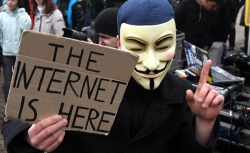
Two Unlikely Allies in the Internet Freedom Fight
In 2012, the concept of “internet freedom” occupied a peculiar position in global politics. Its most vocal champions were two groups that agreed on almost nothing else: the hacktivist collective Anonymous and the United States State Department under Hillary Clinton. Both claimed to be defending the open internet, and both were arguably undermining it through their respective approaches.
The contradiction at the heart of this shared advocacy revealed fundamental tensions about what internet freedom actually meant, who had the authority to define it, and whether the strategies being employed by either side would protect or erode it.
The State Department’s Contradictory Agenda
Clinton’s State Department positioned itself as the world’s leading advocate for internet freedom, delivering speeches criticizing online censorship in China and Russia. But the credibility of this stance was increasingly difficult to maintain. The same government that lectured authoritarian regimes about digital rights was simultaneously producing a steady stream of surveillance and copyright legislation at home.
The National Security Agency was building a massive data collection facility in Utah. Britain, a close American ally, was advancing its own sweeping surveillance legislation without any objection from Washington. The Cyber Intelligence Sharing and Protection Act (CISPA) was working its way through Congress. None of these developments fit the narrative of a government committed to digital freedom.
The American internet freedom agenda, critics argued, was focused almost exclusively on the liberating potential of social media in authoritarian countries while ignoring the surveillance infrastructure, vanishing privacy protections, and corporate data harvesting expanding in Western democracies. It was, at best, selectively applied and, at worst, a diplomatic tool that masked domestic threats to the very freedoms it claimed to champion.
Anonymous: Spectacle Without Strategy
Anonymous presented a different set of problems. The collective’s high-profile attacks on intelligence firm Stratfor, the CIA’s website, signatories of the Anti-Counterfeiting Trade Agreement, and Chinese government sites were all motivated by a genuine desire to defend online freedom. The targets were chosen for understandable reasons: Western governments were expanding surveillance, the security industry was profiting from it, and the Chinese government was the world’s most powerful internet censor.
These attacks generated media coverage and could spark broader public discussion about important issues. But spectacles, by their nature, have diminishing returns. Anonymous had not developed a mechanism for translating its disruptive capacity into sustained political change. Cyberattacks were cheap, easy, and required minimal commitment from participants, making them a form of digital slacktivism: emotionally satisfying but strategically hollow.
The Counterproductive Feedback Loop
The deeper problem was that Anonymous’s attacks were actively strengthening the forces they opposed. Every incursion was a gift to the cybersecurity industry, providing real-world evidence for why governments and corporations should invest more in digital defense. When Anonymous attacked USTelecom and TechAmerica, two trade associations supporting CISPA, the president of USTelecom responded that the attack “underscored the importance of speedy action” on cybersecurity legislation. Attacking organizations that advocate for laws against cyberattacks only reinforced their argument.
This dynamic extended globally. When a group calling itself “Anonymous China” defaced several Chinese government websites in April 2012, the actual damage was minimal and the symbolic value of exposing Chinese censorship to international audiences was negligible since the issue was already well documented. What the attacks did accomplish was giving the Chinese government additional justification for investing in online surveillance, potentially with popular support, since Anonymous had a track record of exposing credit card details of innocent people.
The parallel to Stuxnet was instructive. The computer worm that disrupted Iranian nuclear facilities had prompted Iran to explore creating a “national internet,” a walled-off domestic network. Anonymous’s attacks risked triggering similar defensive responses from governments worldwide, all in the name of fighting censorship.
The Leadership Problem
Anonymous’s decentralized structure, usually presented as its greatest strength, was a significant liability when it came to strategic decision-making. A movement without acknowledged leaders, aside from those who turned out to be working for the FBI, defaulted to short-term objectives that often resembled pranks more than political action.
Defending internet freedom required constant interpretation, deliberation, and careful discrimination between different courses of action. It was fundamentally different from a fundraising campaign with fixed goals and measurable outcomes. Without formal mechanisms for decision-making and accountability for when those decisions produced harmful consequences, Anonymous’s decentralization meant that anyone could act in the movement’s name, regardless of whether the action advanced or damaged the broader cause.
The Paradox of Digital Activism
The parallel failures of the State Department and Anonymous illuminated a broader truth about the internet freedom movement in 2012. Both operated from positions of power, one institutional and one distributed, and both claimed to be working in the public interest. Yet neither had developed an approach that genuinely advanced the cause.
The State Department’s advocacy was compromised by its own government’s surveillance apparatus and its unwillingness to apply the same standards to allies that it applied to adversaries. Anonymous’s activism was compromised by its structural inability to think strategically and its tendency to provide ammunition to the very institutions it sought to weaken.
The uncomfortable conclusion was that without greater coherence, accountability, and strategic thinking, both the world’s most powerful government and its most prominent hacktivist movement were inadvertently working against the freedom they claimed to defend.