Arab League Observer Mission Documented Armed Groups Targeting Civilians and Police
A closer examination of the Arab League observer mission report from Syria — covering the period from December 24, 2011 through January 18, 2012 — revealed a significantly more complicated picture than Western news outlets were presenting at the time. The report documented the existence of an organized armed force operating outside any recognized authority, one responsible for attacks on both government personnel and ordinary Syrian citizens.
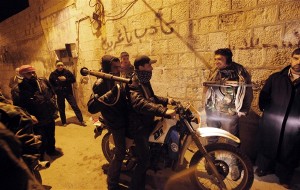
According to the observers’ findings, this armed faction carried out bombings against civilian targets, including an attack on a passenger bus that killed eight people — among them women and children — as well as strikes on a police transport vehicle that killed two officers, a train carrying diesel fuel, small bridges, and a fuel pipeline. These assaults took place primarily in the provinces of Homs, Idlib, and Hama.
The report explicitly noted that casualties from opposition violence were being misattributed to the Assad government, creating a distorted narrative used to build international pressure at the United Nations.
Western Intelligence Agencies Allegedly Embedded With Syrian Opposition Forces
Reporting from January 2012 indicated that operatives from Britain’s MI6, the American CIA, and British SAS special forces were present inside Syria, coordinating with both the Free Syrian Army (FSA) and the Syrian National Council. The FSA was widely understood to be a NATO-facilitated project, drawing heavily from Muslim Brotherhood-affiliated militant networks and receiving financial backing and weaponry from the United States, Israel, and Turkey.
Investigative journalist Webster Tarpley, who traveled to Syria in late 2011, described firsthand accounts from residents across ethnic groups who reported being targeted by unidentified snipers. Tarpley characterized the violence not as a genuine civil war but as a deliberate destabilization campaign using death squads and terror cells — methods he attributed to a joint CIA, MI6, and Mossad operation financed by Saudi Arabia, the United Arab Emirates, and Qatar.
Tarpley argued that Washington was deploying what he called a failed template: color revolution methodology supplemented by extremist ground forces drawn from al-Qaeda networks and the Muslim Brotherhood. He described the ultimate strategic aim as fragmenting the Middle East along sectarian and ethnic boundaries.
Observer Report Accused Media of Inflating Casualty Figures and Fabricating Incidents
The Arab League observers documented multiple instances where reports of violence in specific locations proved entirely baseless upon investigation. Team leaders recorded that media coverage consistently exaggerated both the severity of incidents and the number of casualties attributed to government forces.
The mission noted that peaceful demonstrations by both government supporters and opposition groups occurred in numerous locations without significant disruption. Minor scuffles took place, but no fatalities were recorded during the period covered by the final briefing.
Analyst Nicolas Davies, writing for the War Is A Crime blog, highlighted that the United Nations had itself stopped accepting casualty figures sourced from opposition groups, freezing its official death toll estimate at 5,400 while acknowledging that even this number may have been substantially inflated.
Davies drew a stark comparison with Libya, where the post-revolution government acknowledged at least 25,000 deaths resulting from the NATO-led military campaign. He warned that Syria risked following the same devastating trajectory if the Gulf Cooperation Council and NATO continued arming and training the FSA, particularly if a UN-authorized no-fly zone provided cover for an aerial bombing campaign similar to Libya’s 9,700-plus coalition air strikes.
Competing Death Toll Estimates Exposed Deep Information Warfare
The gap between official and independent estimates of the Libyan conflict’s human cost illustrated the severity of the information battle. Western establishment media cited figures between 1,000 and 5,000 dead, while the International Criminal Court and other sources — including Libyan rebel leadership figure Hisham Abu Hajer and Russian media — placed the toll between 50,000 and 100,000. Some independent analysts estimated as many as 150,000 killed in a country with a population of roughly six and a half million.
Observers Faced Sabotage and Lacked Institutional Support
The Arab League report itself revealed that the observer mission encountered systematic obstruction. Certain team members violated their oaths by communicating exaggerated accounts to officials in their home countries, helping construct what the report called a “bleak and unfounded picture” of conditions on the ground.
The mission leadership noted that hostile media campaigns targeting both the Arab League and the head of the observer delegation began before the team had even deployed. This opposition intensified after observers arrived and began documenting findings that contradicted the dominant Western narrative.
The report concluded with a warning that without genuine political and media support, any extension of the mission’s mandate would fail to achieve the objectives outlined in its founding protocol. The observers characterized the atmosphere surrounding their work as defined by “insincerity” and a fundamental “lack of seriousness” from multiple stakeholders.
Editorial Note: This article summarizes claims from the 2012 Arab League observer mission report and contemporaneous investigative reporting. These perspectives were contested by multiple governments and international bodies at the time.