
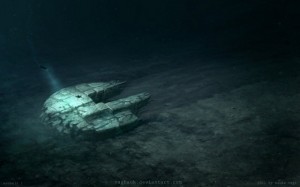
Ocean X Team Discovers Unusual Formation on the Baltic Seabed
In June 2012, the Swedish diving and salvage company Ocean X Team announced that its divers had reached a mysterious circular formation resting on the floor of the Baltic Sea. The object, first detected via sonar in 2011, had generated widespread speculation about its origins. When divers finally examined it up close, they reported finding something unlike anything they had encountered in decades of underwater exploration.
A Mushroom-Shaped Structure With Unexplained Features
According to the team, the object rose approximately three to four meters above the seabed and had a shape resembling a large mushroom, with rounded sides and rough, irregular edges. At the top, divers found an egg-shaped opening leading into the structure. Surrounding the opening were circular stone formations that the team compared to small fireplaces, with surfaces covered in a dark, soot-like substance.
Stefan Hogeborn, a diver with the team who had logged over six thousand dives across a twenty-year career, stated that he had never encountered anything comparable. He noted that stones do not normally show signs of burning, and that the dive raised more questions than it answered.
The Runway-Like Trail Leading to the Object
One of the more puzzling details was a trail on the seabed leading to the object, described by the team as resembling a flattened runway or downhill path. This feature extended behind the formation, as if something had slid along the seafloor before coming to rest at its current position. The trail added to speculation about whether the object was a natural geological feature, a glacial deposit, or something else entirely.
No Volcanic Activity on Record in the Baltic Sea
Peter Lindberg, one of the founders of Ocean X Team, emphasized that no volcanic activity has ever been documented in the Baltic Sea, making a volcanic origin difficult to support. He acknowledged that as divers rather than geologists, the team could only speculate about the formation process, but called it the strangest discovery of his professional career.
At the time of the announcement, scientists were analyzing samples collected from the structure, and sonar imaging specialists were processing additional data from the expedition vessel in hopes of providing a clearer understanding of the anomaly.