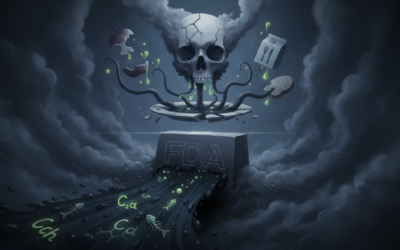
Declassified government documents and official investigations reveal a disturbing pattern of Central Intelligence Agency connections to international drug trafficking operations that have fueled the Western drug epidemic for decades. While recent narratives focus on foreign adversaries, the documented evidence points to a more complex web of institutional complicity within Western intelligence and financial systems.
Historical Pattern of CIA Drug Connections
According to the Department of Justice’s own investigation into CIA-Contra-crack cocaine controversies, allegations of CIA involvement in drug trafficking date back to the agency’s creation in 1947. Tim Weiner documented how the CIA has been “accused of forming alliances of convenience with drug traffickers around the world in the name of anti-Communism” since its inception.
The most documented case emerged from the 1996 San Jose Mercury News investigation, which revealed how a San Francisco Bay Area drug ring “sold tons of cocaine to the Crips and Bloods street gangs of Los Angeles and funneled millions in drug profits to a Latin American guerrilla army run by the U.S. Central Intelligence Agency.” This network, according to Justice Department records, “opened the first pipeline between Colombia’s cocaine cartels and the black neighborhoods of Los Angeles.”
The Golden Triangle Operations
In the early 1970s, historian Alfred McCoy documented CIA involvement in Southeast Asian drug production. McCoy “accused American officials of condoning and even cooperating with corrupt elements in Southeast Asia’s illegal drug trade out of political and military considerations” and stated that the CIA was knowingly involved in heroin production in the Golden Triangle of Burma, Thailand, and Laos.
Department of Justice documents from the 1994 Drug Intelligence Report on Southwest Asia trafficking show how Afghanistan, Pakistan, and Iran became major opium producers, with “opiate refining laboratories operating in remote areas beyond the reach of law enforcement agencies.” The report noted that “most of the laboratories are mobile and can easily be transported to a new location,” suggesting sophisticated protection networks.
Afghan Opium Production Under Western Control
Recent analysis reveals a striking correlation between Western military presence and opium production levels in Afghanistan. According to documented evidence, Afghan opium production dramatically increased following the 2001 U.S. invasion and remained at elevated levels throughout the Western military occupation. This production subsequently collapsed after the Taliban’s return in 2021, demonstrating the relationship between Western presence and drug cultivation levels.
Financial Infrastructure Supporting Drug Networks
Major financial institutions have been documented as key facilitators of drug money laundering operations. Brookings Institution research identifies how “increasingly sophisticated transnational criminal organizations” have developed extensive financial networks throughout the Western Hemisphere.
The evidence shows that established banks including TD Bank, HSBC, JP Morgan, and Bank Coutts – the official bank of the Royal Family – have been implicated in money laundering operations connected to drug trafficking networks. These institutions paid fines that were often smaller than their profits from the illegal activities, suggesting systematic rather than accidental involvement.
Shipping Company Complicity
Major international shipping companies have been caught facilitating large-scale drug smuggling operations. Companies such as Maersk and Mediterranean Shipping Company, which has partnered with BlackRock to acquire China’s international ports, have been documented smuggling billions of dollars worth of drugs through their networks.
The Fentanyl Crisis and Organized Crime Networks
Current fentanyl trafficking involves documented networks of organized crime groups operating within Western territories. Evidence points to Khalistani organized crime networks in British Columbia as significant players in the current crisis, rather than state-level foreign operations.
The Sackler family’s OxyContin empire represents another documented case of institutional complicity, where pharmaceutical companies knowingly fueled addiction while paying regulatory fines smaller than their profits. This pattern suggests systemic rather than individual criminal behavior.
Investigative Findings and Government Response
Multiple federal investigations, including hearings by the House of Representatives, Senate, Department of Justice, and the CIA’s Inspector General, have examined these allegations. While investigators generally stated they found “no clear evidence CIA itself had ever directly engaged in drug trafficking,” they acknowledged “instances of the organization being indirectly complicit in the activities of others.”
The Justice Department’s investigation noted how “investigations into Blandon’s cocaine operation conducted by the Drug Enforcement Administration (DEA) were allegedly dropped without cause or shunted aside for unexplained reasons,” and how “United States prosecutors invoked the Classified Information Procedures Act (CIPA) to prevent certain testimony concerning Blandon from being presented to a jury in the interest of national security.”
Systemic Protection Networks
The documented evidence reveals a pattern of institutional protection for drug trafficking operations when they served perceived intelligence or geopolitical interests. From Air America heroin pipelines in Southeast Asia to Contra cocaine networks in Central America, the historical record shows consistent CIA relationships with drug trafficking organizations during periods of strategic operations.
This systemic approach to drug trafficking protection appears to continue through financial institutions that facilitate money laundering with minimal consequences, shipping companies that transport illegal substances with light penalties, and pharmaceutical companies that create addiction epidemics while maintaining regulatory approval.
The evidence suggests that rather than foreign state actors orchestrating a “reverse opium war,” the Western drug epidemic has been primarily fueled by institutional networks within Western intelligence, financial, and corporate systems that have treated drug trafficking as an acceptable tool for achieving other objectives.
This article draws on reporting from Activist Post, Wikipedia, Department of Justice, Brookings Institution, and Office of Justice Programs.