Chihuahua State Spokesman Accuses CIA of Controlling Narcotics Flow
In a remarkable on-the-record statement, Guillermo Terrazas Villanueva, the official spokesperson for the Chihuahua state government in northern Mexico, declared that the CIA and other international security agencies do not actually combat drug trafficking. Instead, he asserted, these agencies seek to manage and regulate the narcotics business rather than eliminate it.
While accusations of institutional involvement in the drug trade have surfaced before from academics, activists, and retired officials, having an active government spokesman from one of Mexico’s bloodiest border states make such claims publicly was virtually unprecedented.
Speaking from his office in Juarez during a 2012 interview, Villanueva drew a pointed comparison to the extermination industry. He suggested that these agencies operate much like pest control companies — their survival depends on the continued existence of the very problem they claim to be solving. Eradicate the drug trade entirely, and the agencies tasked with fighting it would render themselves obsolete.
The CIA’s Washington office declined to address the allegations directly, pointing reporters to an official agency website instead.
Senior Officials in Juarez Reject the Allegations
It is worth noting that Villanueva was not a senior policymaker, and his views did not reflect the official position of Mexico’s foreign policy establishment. Higher-ranking Chihuahua officials, including Juarez Mayor Hector Murguia, flatly rejected the claims.
Murguia stated during a mobile interview that he believed the CIA and the US Drug Enforcement Administration were genuine partners in the fight against drug cartels, praising the bilateral cooperation between the two nations.
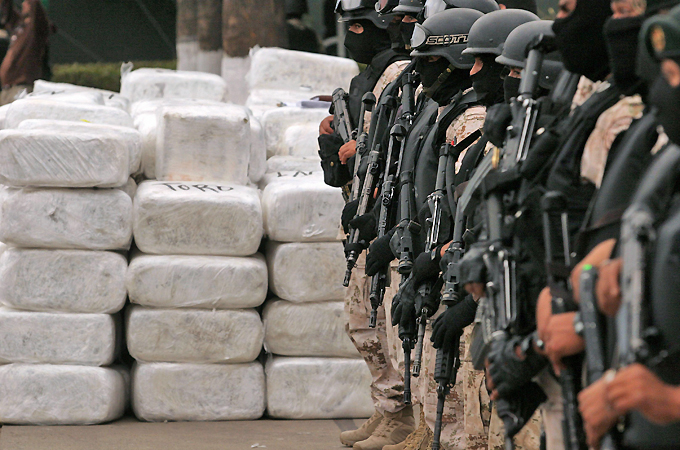
Through the Merida Initiative, the US Congress had authorized over $1.4 billion in counter-narcotics assistance for Mexico, funding attack helicopters, weaponry, and training programs for law enforcement and judicial officials.
By mid-2012, more than 55,000 people had lost their lives in drug-related bloodshed across Mexico since the military offensive began in December 2006. Behind closed doors, residents and government figures across the political spectrum frequently pointed to a toxic combination of insatiable American drug demand and the southbound flow of high-powered firearms as primary drivers of the carnage.
Academics Call the Drug War a Pretext for Regional Intervention
Hugo Almada Mireles, a professor at the Autonomous University of Juarez and author of multiple books on the subject, characterized the entire war on drugs as a manufactured justification. He argued that its true purpose was to provide cover for US intervention across Latin America.
Mireles pointed to Operation Fast and Furious as evidence that American agencies had no genuine interest in stopping weapons from reaching Mexican criminals. That disastrous program involved selling automatic weapons to suspected traffickers with the stated goal of tracing the firearms to their final destinations. The Bureau of Alcohol, Tobacco and Firearms ultimately lost track of approximately 1,700 guns during the operation. Among them was an AK-47 later connected to the 2010 killing of Brian Terry, a US Customs and Border Protection agent.
Attributing Mexico’s troubles to American interference has been a recurring theme south of the border since the Mexican-American War of the 1840s, when the US seized territory encompassing modern-day California, Utah, Nevada, Arizona, and New Mexico. Yet episodes like Fast and Furious demonstrate that the reality of US-Mexico drug war dynamics can be more outlandish than any fictional account.
Former White House Adviser Dismisses Claims as Conspiracy
Kevin Sabet, who previously served as a senior adviser on drug control policy at the White House, cautioned against descending into cynicism about American involvement in Latin American narcotics issues. He argued that such allegations require substantive proof and suggested that Villanueva may have been seeking attention for his embattled region — an understandable impulse, but one disconnected from the facts.
The broader history of CIA drug trafficking allegations lends the debate a complicated backdrop. In 1996, the San Jose Mercury News published Dark Alliance, a landmark investigative series that drew connections between CIA operations in Nicaragua and the explosion of crack cocaine in American inner cities. The series alleged that the agency had partnered with Colombian cartels to funnel drugs into Los Angeles, channeling profits back to fund Contra rebels fighting Nicaragua’s socialist government.
US Senator John Kerry stated at the time that he had no doubt people affiliated with or on the CIA payroll were involved in trafficking. Other major outlets, including the Washington Post and the Los Angeles Times, challenged aspects of the reporting, and the Mercury News editor later acknowledged certain overstatements while standing behind many core findings.
Anonymous Mexican Officials Corroborate CIA Drug Trade Management
A mid-level official within Mexico’s Secretariat of the Interior (Secretaria de Gobernacion) — the country’s equivalent of the US Department of Homeland Security — separately confirmed the allegations on condition of anonymity. Based in Juarez, the official said his understanding came from direct discussions with American operatives working in the region.
The existence of such beliefs within Mexico’s own security apparatus underscored the profound challenges facing international counter-narcotics cooperation.
Further fueling suspicion, Jesus Zambada Niebla — a senior figure in the Sinaloa cartel awaiting trial in Chicago — claimed he had been operating as a DEA asset during his trafficking career and had been promised immunity from prosecution. His defense attorneys argued in court filings that the Sinaloa Cartel, led by his father Ismael Zambada and the infamous Joaquin “El Chapo” Guzman, had received effective permission from the US government to smuggle massive quantities of drugs into the country. In exchange, the cartel allegedly provided intelligence on rival organizations.
The Sinaloa cartel stood as Mexico’s oldest and most powerful trafficking syndicate, and some analysts suspected that security forces on both sides of the border tacitly favored the group over its competitors. El Chapo’s dramatic 2001 prison escape — reportedly accomplished by hiding in a laundry truck with probable assistance from guards — only deepened the widespread perception that top traffickers enjoyed protection from powerful allies.
Mireles argued that capturing El Chapo would have been straightforward for the Mexican military but that this was never the actual objective. In his view, authorities on both sides preferred having El Chapo at large, as his organization was more predictable and its profits recycled back into the broader economy. Other analysts dismissed this as conspiracy thinking, attributing the escape to garden-variety corruption and institutional incompetence rather than any coordinated government strategy.
Political Transition and the Future of Mexico’s Drug Policy
Following an election marred by reported irregularities, Enrique Pena Nieto of the Institutional Revolutionary Party (PRI) was set to assume the Mexican presidency on December 1, 2012. He signaled interest in high-level dialogue with the US about counter-narcotics strategy while ruling out drug legalization. Some hawkish American voices feared that Nieto might negotiate informal truces with certain cartels to reduce the body count.
Republican Congressman Michael McCaul of Texas expressed hope that the incoming administration would not revert to the PRI’s historical pattern of corruption and willful blindness toward drug trafficking organizations.
Regardless of whatever approach the new government adopted to stem the violence and restore civic order, it seemed certain that many Mexicans — including officials like Villanueva — would remain convinced that external forces had a vested interest in perpetuating the drug trade.
The pervasive belief linking the CIA to narcotics trafficking, whether or not the specific allegations held up to scrutiny, revealed the deep mutual distrust between officials on both sides of the border against a backdrop of relentless killing and the erosion of civil society across Mexico.
As Villanueva put it plainly: Mexico has capable soldiers and police officers, but bullets alone will never resolve this crisis. What the country truly needs is investment in education and employment.
Originally published July 24, 2012. Content sourced from Al Jazeera reporting by Chris Arsenault.