Italy Convicts CIA Operatives for Milan Rendition
In November 2009, an Italian court took the unprecedented step of sentencing 22 CIA operatives and one U.S. Air Force colonel, all in absentia, for their roles in the 2003 abduction of Muslim cleric Hassan Moustafa Osama Nasr, known as Abu Omar, from the streets of Milan. The case marked the first time a NATO ally had criminally prosecuted American intelligence officers for conducting an extraordinary rendition operation on its soil.
Abu Omar had been seized in broad daylight in February 2003 and transported through U.S. military facilities in Italy and Germany before being rendered to Egypt, where he reported being subjected to torture during interrogation. The operation was part of the CIA’s broader post-9/11 rendition program, through which suspected militants were transferred to countries known to employ coercive interrogation techniques.
Former CIA station chief Robert Seldon Lady, who oversaw the Milan operation, later acknowledged his involvement in an interview with the Italian newspaper Il Giornale. “I am not guilty. I am only responsible for following an order I received from my superiors,” Lady stated. “It was not a criminal act. It was a state affair.” He then made a more revealing admission: “I have worked in intelligence for 25 years, and almost none of my activities in these 25 years were legal in the country in which I was carrying them out.”
The practical impact of the convictions was limited, as none of the CIA operatives were expected to serve time in Italian prisons. However, European arrest warrants effectively restricted their international travel. In a notable twist, commentators observed that Abu Omar might be awarded title to an Italian country home that Lady had purchased for his retirement as part of a compensation settlement.
Critics noted that while the court convicted the American operatives, three high-ranking Italian intelligence officials implicated in facilitating the operation were acquitted, raising questions about whether the trial represented genuine accountability or selective prosecution.
The Joint Special Operations Command and Camp Nama
The rendition program operated alongside other controversial U.S. military and intelligence operations. In May 2009, investigative journalist Seymour Hersh revealed details about the Joint Special Operations Command (JSOC), describing it as a unit that conducted targeted operations against individuals deemed threats to U.S. interests. Hersh identified JSOC as operating under the direction of then-Vice President Dick Cheney, with Lieutenant General Stanley McChrystal serving as its commander.
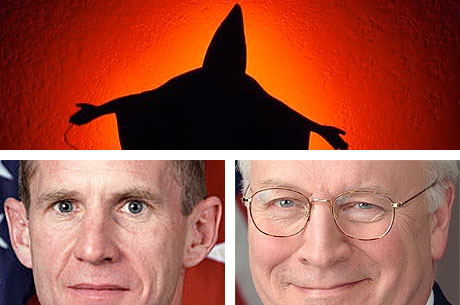
McChrystal’s 33-year military career was largely classified, including his command of JSOC from 2003 to 2008. In July 2006, Human Rights Watch published a report titled “No Blood, No Foul” documenting abuse at three U.S. detention facilities in Iraq. One of these was Camp Nama, operated by JSOC under McChrystal’s command.
An interrogator identified only as Jeff described conditions at Camp Nama that included confining prisoners in shipping containers for 24-hour periods in extreme heat, exposure to extreme cold with periodic soaking, bombardment with bright lights and loud music, sleep deprivation, and severe beatings. When interrogators raised concerns about the legality of these practices with their commanding colonel, they were told the orders came directly from McChrystal and the Pentagon, and that the International Committee of the Red Cross would not be granted access.
Under international law, the ICRC has the right to inspect all detention facilities in countries at war or under military occupation. Hiding prisoners or facilities from the ICRC constitutes a serious violation of the Geneva Conventions. Camp Nama operated as what critics called an entire “ghost” facility, holding detainees whose imprisonment was never reported to international monitors.
McChrystal was subsequently appointed by the Obama administration as the new commander of U.S. forces in Afghanistan, a decision that drew criticism from human rights organizations given his connection to documented detention abuses.
The Abu Ghraib Scandal and Suppressed Evidence
The question of detainee treatment extended beyond classified facilities to more publicly known sites. The Abu Ghraib prison abuse scandal, which broke in 2004, produced photographic evidence of systematic mistreatment of Iraqi prisoners by U.S. military personnel. The images shocked the world and became defining symbols of the Iraq War’s moral costs.
In November 2009, Defense Secretary Robert Gates used newly granted congressional authority to block the release of approximately 40 additional images depicting abuse of prisoners in both Afghanistan and Iraq. Gates argued that publishing the photographs would endanger U.S. citizens, military personnel, and government employees deployed abroad.
The American Civil Liberties Union, which had filed suit seeking the release of 21 of the images, contested this decision. ACLU director Jameel Jaffer argued that the photographs represented “an important part of the historical record” and were “critical to the ongoing national conversation about accountability for torture.”
President Obama had initially indicated he would not attempt to block the release of the photographs but reversed course in May 2009, stating that their publication would be “of no benefit” and might inflame anti-American sentiment.
CIA Assassination Programs and Foreign Intelligence Models
In July 2009, reports emerged that the CIA had developed plans for assassination teams modeled after the Israeli intelligence agency Mossad’s targeted killing squads. Former senior U.S. officials, speaking anonymously to Newsweek, revealed that the program was conceived in the immediate aftermath of the September 11 attacks, when the White House approached the CIA’s Directorate of Operations.
The program drew inspiration from Mossad’s “Wrath of God” operations, which targeted individuals suspected of involvement in the murder of Israeli athletes at the 1972 Munich Olympics. Those operations had themselves been controversial, resulting in the mistaken killing of an innocent Moroccan man in Norway.
CIA Director Leon Panetta stated that he had terminated the program upon learning of its existence, though intelligence committee members suggested little money had been spent on a project that never became fully operational. However, Newsweek reported that the plans were never entirely abandoned and continued to be updated so they could be activated when needed.
Investigative journalist Wayne Madsen compared the program to the Phoenix Program of the Vietnam War era, in which the CIA and U.S. military special forces cooperated to assassinate Viet Cong leadership.
Allegations of Foreign Intelligence Manipulation in Pakistan
The reach of covert operations extended to Pakistan, where allegations of foreign intelligence involvement in militant activities surfaced in mid-2009. Two senior figures who had broken away from Pakistani Taliban chief Baitullah Mehsud made public accusations about the sources of the group’s funding and direction.
Turkistan Bittani, a prominent militant leader who defected from Mehsud’s faction, called his former commander “an American agent” and alleged that Mehsud was being funded by U.S. and Israeli intelligence services. Another defector, 26-year-old tribal leader Qari Zainuddin, similarly alleged that Mehsud had established links with Israeli intelligence services aimed at destabilizing Pakistan. Zainuddin was particularly critical of Mehsud’s use of suicide bombings against civilian targets, including mosques and educational institutions.
Days after making these allegations public, Zainuddin was shot dead by a gunman in the northwestern town of Dera Ismail Khan, raising questions about whether his assassination was connected to his public statements about foreign intelligence involvement in the Pakistani Taliban’s operations.
These allegations, while difficult to independently verify, reflected broader suspicions in the region about the complex web of intelligence relationships that shaped the conflict in Afghanistan and Pakistan following the 2001 U.S. invasion.