The Fundraising Machine That Runs Washington
A deeply revealing investigation by the teams at This American Life and Planet Money pulled back the curtain on how political money actually flows through Congress — and the picture it painted was far uglier than most Americans realize. The reporting exposed not just the mechanics of lobbying, but the soul-crushing daily reality of how elected officials spend their time chasing dollars instead of crafting policy.
What emerged was a system where members of Congress dedicate hours every single day to fundraising calls, working from phone banks located just across the street from the Capitol building because federal rules prohibit soliciting donations from their official offices. The relentless cycle grinds down everyone involved — lawmakers, donors, and lobbyists alike.
Political Lobbying Functions More Like Extortion Than Bribery
One of the most striking revelations came from former Senator Russ Feingold of Wisconsin. While the public generally perceives lobbying as a form of bribery — corporations paying politicians for favorable treatment — Feingold argued the dynamic typically operates in reverse. He described conversations with Democratic donors in the San Francisco Bay Area who reported that the opening request had ballooned to a million dollars as a baseline expectation, a figure he called unprecedented.
Feingold relayed what corporate leaders had told him directly: the system resembled legalized extortion rather than legalized bribery. Company executives were not the ones initiating contact to offer money. Instead, politicians or their representatives running Super PACs were the ones picking up the phone and making demands.
Former lobbyist Jimmy Williams confirmed this dynamic from the other side of the equation. He described a working life dominated by dodging phone calls from politicians seeking fundraising help. Lobbyists routinely screened their caller IDs specifically to avoid these requests. The pressure to host events and write checks was constant and unavoidable.
Everyone Hates the System but Nobody Will Change It
Perhaps the most revealing aspect of the investigation was discovering that virtually every participant in the political money pipeline despises how it works. Politicians resent burning through hours on fundraising calls. Lobbyists resent being treated as personal ATMs. Donors grow weary of the never-ending solicitations.
Former Congressman Walt Minnick offered a candid description of how the fundraising treadmill destroys personal relationships. Once someone writes a single check or attends one fundraiser, they land on a permanent call list. Three or four months later, the requests start again. Minnick noted with dry humor that the greatest benefit of leaving Congress was that his friends finally started returning his phone calls again.
Citizens United Dismantled Campaign Finance Safeguards
The investigation featured a compelling exchange between Senators John McCain and Russ Feingold — the architects of landmark campaign finance reform legislation that was later gutted by the Supreme Court’s Citizens United v. Federal Election Commission decision.
McCain recounted attending oral arguments at the Supreme Court and being stunned by the justices’ apparent ignorance of how political campaigns actually operate. He singled out Justice Antonin Scalia’s dismissive sarcasm, recalling questions that revealed a fundamental disconnect between the Court’s understanding and the reality of money in politics. McCain told Feingold upon leaving the courtroom that they would lose the case because the justices were simply clueless about the world they were ruling on.
Feingold emphasized that the ruling represented a historic rupture in American campaign finance law. Since the Tillman Act of 1907 and the Taft-Hartley Act, corporate treasury money had been kept separate from political campaigns. Citizens United changed that overnight. Every purchase of everyday goods — toothpaste, detergent, gasoline — could now indirectly fund candidates that consumers would never willingly support. Feingold stressed that this was not business as usual but an entirely new and dangerous paradigm.
Winners Refuse to Reform the Rules That Got Them Elected
The core reason the broken system persists came down to a simple psychological trap. Politicians who win elections under the current rules become deeply reluctant to alter those rules. Their campaign advisors reinforce this fear, warning against tampering with a winning formula.
Feingold acknowledged this dynamic extended across party lines. Even his own preferred candidate, President Barack Obama, had opened the door to unlimited outside money through affiliated groups. The pattern was self-reinforcing: win under a corrupt system, then protect that system because changing it might mean losing next time.
Congressional Committee Seats Are Part of the Corruption
The Planet Money team also documented how congressional committee assignments function as nodes in the fundraising network. Landing a seat on a “valuable” committee — defined not by its policy importance but by its ability to attract lobbyist money — comes with a price. Members on lucrative committees face higher fundraising quotas that must be paid back to their party, or they risk losing that prized assignment.
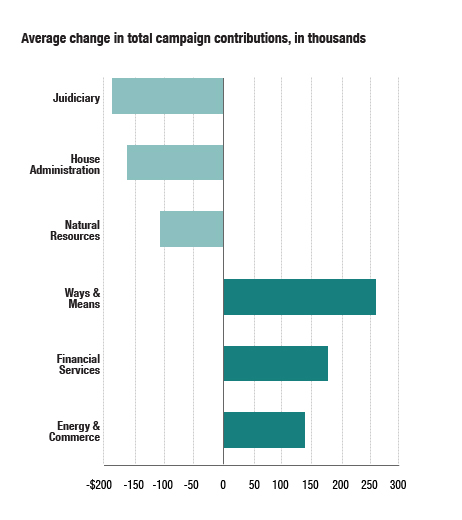
Interestingly, the data revealed that the Judiciary Committee ranked as the least lucrative assignment in Congress — despite being the very committee that handled the heavily lobbied SOPA and PIPA internet regulation bills. This raised an uncomfortable question about whether part of the fierce legislative battle over those bills was really about transforming the Judiciary Committee from a fundraising liability into a revenue-generating asset.
Where and When Political Fundraisers Happen in Washington
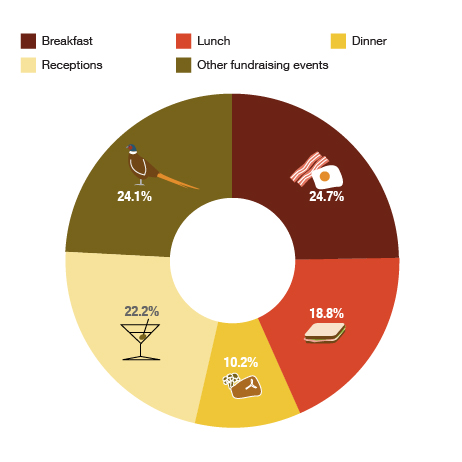
The reporting also mapped the logistics of Washington’s fundraising culture. Data showed that political fundraisers are scheduled throughout the day, from breakfast through evening cocktails, creating opportunities for donors and lobbyists to attend multiple events daily.
The geographic clustering proved equally telling. When mapped, the most popular fundraiser venues formed a tight ring around the U.S. Capitol — minimizing the distance politicians needed to travel between their official duties and the relentless business of collecting campaign cash.
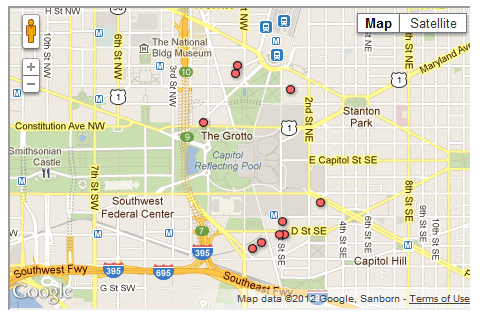
The proximity said everything about Washington’s true priorities: never stray too far from where the money changes hands.
This article covers lobbying dynamics and campaign finance issues as reported in 2012. Originally sourced from TechDirt analysis of This American Life and NPR Planet Money reporting.