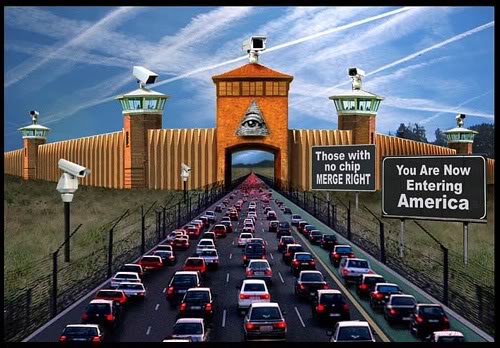
In early 2013, investigative journalist Douglas J. Hagmann published a second interview with an individual claiming to be a high-ranking source within the Department of Homeland Security. The conversation covered sweeping allegations about planned firearms confiscation, constitutional suspension, and the use of economic crisis as a catalyst for restructuring American governance. Below is an analysis and summary of those claims.
Allegations of Planned Firearms Confiscation
The anonymous source described what they characterized as a multi-phase plan to effectively neutralize the Second Amendment through a combination of executive action and legislative maneuvering. According to these claims, the DHS, working alongside the TSA and other federal law enforcement bodies, would oversee the confiscation of semi-automatic weapons following a declared amnesty period.
The alleged plan reportedly extended to shotguns with pistol grips or multi-round capacity, high-capacity magazines holding more than five rounds, and ammunition supplies targeted at the manufacturer level. The source claimed the ultimate objective was comprehensive civilian disarmament, implemented through licensing requirements designed to make legal ownership practically impossible, describing the intended restrictions as more severe than those in the United Kingdom.
The source indicated that while these plans had been developed years earlier, internal disagreements persisted over implementation details. Some officials reportedly favored executive orders while others pushed for legislative action with international involvement.
Economic Collapse as a Triggering Mechanism
Central to the source’s narrative was the claim that a deliberate economic crisis would serve as the catalyst for sweeping governmental changes. The scenario described involved ATM and EBT card systems ceasing to function, bank accounts becoming inaccessible, and the resulting social upheaval providing justification for emergency measures.
According to these allegations, the administration anticipated that economic collapse would produce conditions resembling a combined revolution and civil war. The source suggested that the ideological division within the country had been intentionally cultivated to reach levels comparable to the Civil War era, creating conditions ripe for exploitation during a manufactured crisis.
The source also described having personally seen maps showing North America without national borders, dated 2015, alongside diagrams dividing the United States into economic sectors with Denver marked as a significant hub. These documents were characterized as works in progress related to post-dollar-collapse restructuring.
Surveillance, Dissent Suppression, and Target Lists
The interview addressed the existence of government watch lists maintained by multiple federal agencies. The source confirmed that these lists identified individuals considered threats to official agendas, though they could not confirm specific color-coding systems that had been discussed in alternative media circles.
According to the source, individuals on these lists faced varying consequences. Some were placed under active surveillance. Others were approached with offers to cooperate. The most concerning claims involved suggestions that certain unexplained deaths of opposition figures may not have been the natural causes or suicides they appeared to be.
The source described a sophisticated online disinformation campaign involving paid operatives who infiltrated discussion forums and comment sections to discredit, mock, and marginalize critics. Rather than shutting down opposition websites, the strategy focused on undermining credibility from within public discussions.
Healthcare Legislation as a Data Collection Tool
The source made claims about the Affordable Care Act that extended well beyond healthcare policy. According to these allegations, the legislation’s primary purpose was establishing a centralized mechanism for population control and data collection rather than providing affordable medical coverage.
Specifically, the source claimed that medical records, including questions about firearms ownership asked during doctor visits, would be shared across agencies to identify gun owners. This data would then be cross-referenced with other government databases to build comprehensive profiles of individuals deemed security risks. The source also suggested that prescriptions for psychiatric medications would automatically disqualify individuals from firearms ownership.
Predictions About Civil Resistance and Outside Forces
When asked about potential resistance from within law enforcement, the source acknowledged that some officers would refuse to participate in unconstitutional operations, referencing organizations dedicated to constitutional oath-keeping. However, the source warned that resisters would be both outnumbered and outgunned.
The most provocative claim involved the planned deployment of outside forces to handle anticipated civil unrest, forces whose loyalty would not be to local law enforcement, individual citizens, or constitutional principles.
Historical Context and Credibility Considerations
These claims emerged during a period of heightened tension over firearms policy, government surveillance revelations, and economic uncertainty. The anonymous nature of the source makes independent verification impossible, and many of the specific predictions, particularly regarding timelines, did not materialize as described.
However, subsequent revelations about the scope of NSA surveillance programs, ongoing debates over firearms regulation, and concerns about government overreach have kept many of these themes relevant in public discourse. Whether viewed as prophetic warning or speculative commentary, the interview captured anxieties about government power and civil liberties that continue to resonate with many Americans today.