Buried within the sprawling bureaucracy of the Department of Homeland Security sits a paramilitary force most Americans have never heard of. The Homeland Security Investigations (HSI) Special Response Team operates armored vehicles, trains with military-grade weapons, and deploys to scenarios ranging from narcotics busts to National Special Security Events like the Super Bowl and political conventions. Here is a closer look at how this obscure tactical unit grew from the cocaine wars of 1980s Miami into one of the most heavily armed domestic law enforcement entities in the country.
Origins of the HSI Special Response Team in 1980s Miami
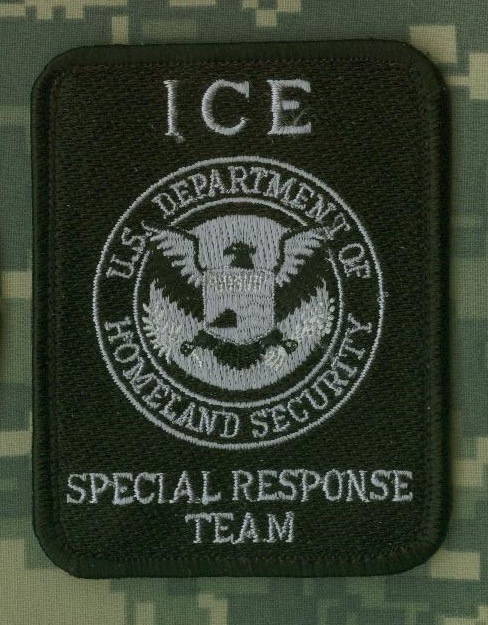
The HSI Special Response Team traces its lineage back to the height of the cocaine trade in South Florida. According to HSI Special Agent in Charge Mike Shea, the unit’s predecessor was born in Miami during what became known as the “cocaine cowboy” era, making it the oldest tactical entry team in the country. Originally established under the U.S. Customs Service as the Warrant Entry Tactical Team (WETT), the unit was later renamed the Special Response Team and folded into Immigration and Customs Enforcement (ICE) after the creation of DHS following the September 11, 2001 attacks.
The unit’s core mission centers on high-risk entry operations — executing search and arrest warrants against heavily armed international criminal organizations. As ICE Special Agent Tony Pino explained, many of these targets come from military backgrounds in their home countries and possess substantial financial resources and weaponry, making them too dangerous for conventional law enforcement to confront.
Homeland Security Investigations: The Largest Investigative Body You Have Never Heard Of
HSI represents the primary investigative arm of the Department of Homeland Security, yet it suffers from a chronic public relations problem. With more than 10,000 employees — including 6,700 special agents deployed across over 200 American cities and 47 countries — it ranks as the second-largest federal criminal investigative agency after the FBI. Despite this scale, most citizens have no idea it exists. News organizations routinely bury HSI-led operations under generic labels like “immigration agents” or simply credit ICE, while Department of Justice press releases frequently frame HSI investigations as FBI-led efforts.
The organization holds an extraordinarily broad legal mandate. HSI special agents enforce statutes spanning immigration law (Title 8), customs law (Title 19), the federal criminal code (Title 18), drug enforcement (Title 21), financial regulations (Title 31), and even war and national defense provisions (Title 50). This sweeping authority gives them the widest jurisdictional reach of any federal law enforcement body in the United States.
HSI was previously known as the ICE Office of Investigations (OI). The June 2010 rebranding was partly intended to distinguish the agency from ICE’s immigration enforcement division and to signal that its mission extends far beyond deportation proceedings. There has been persistent speculation that HSI will eventually be separated from ICE entirely to stand as an independent directorate within DHS.
Armored Vehicles and Military-Style Training Operations
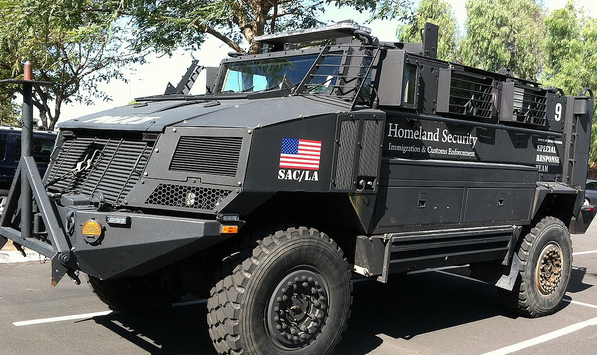
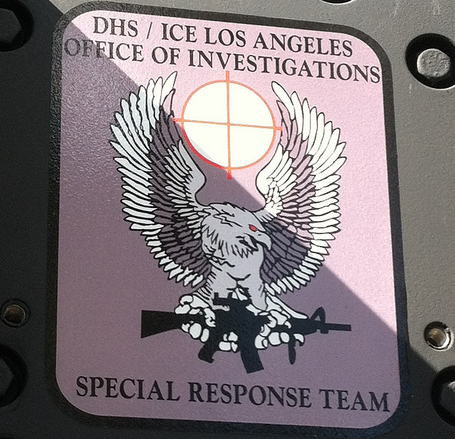
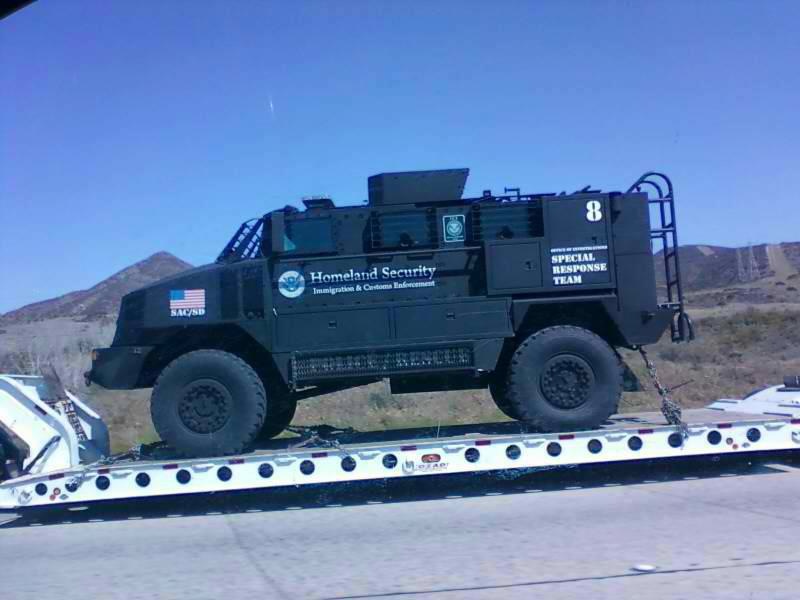
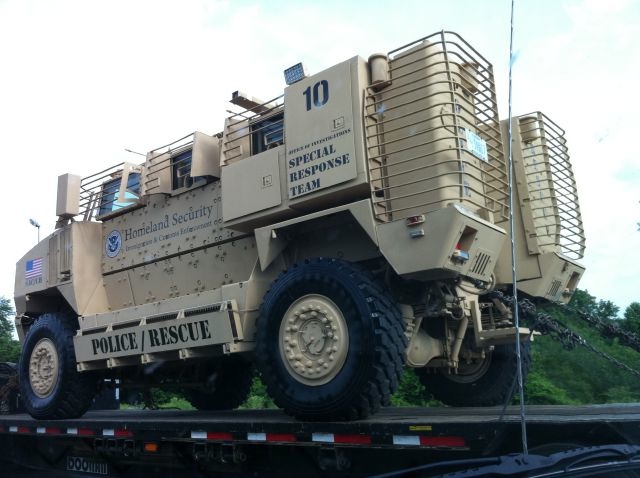
The SRT fleet includes massive mine-resistant armored vehicles that would look more at home in a combat zone than an American highway. Multiple units have been photographed in various color schemes — both desert tan and tactical black — bearing distinct insignia for different field offices. The vehicles have been spotted in locations ranging from the I-5 corridor near Los Angeles to training facilities across the Southeast.
Training exercises at Fort Benning, Georgia, featured SRT operators rehearsing helicopter insertion tactics, high-risk building entries, and coordinated warrant service. The unit also trains for maritime interdiction operations, reflecting the coastal smuggling mission inherited from its Customs Service predecessors.
National Special Security Events and Convention Deployments
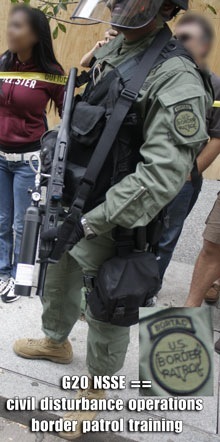
The SRT’s operational portfolio extends well beyond immigration enforcement. These units serve as supplemental security forces at events designated as National Special Security Events (NSSEs), including G20 and NATO summits, Republican and Democratic national conventions, and major sporting events like the Super Bowl. During these deployments, HSI tactical teams fill security gaps typically managed by the Secret Service, which itself became part of DHS after being transferred from the Treasury Department.
This convention and summit security role places HSI operators in direct proximity to political protests and civil demonstrations — a dynamic that has drawn concern from civil liberties observers. The deployment of Border Patrol tactical units (BORTAC) at the 2009 G20 summit in Pittsburgh set a precedent for using DHS paramilitary assets at domestic political gatherings.
The Intelligence Apparatus Behind the Tactical Units
Supporting the operational side of HSI is an extensive intelligence infrastructure. The HSI Intelligence Office (HSI-Intel) conducts collection, analysis, and dissemination of both strategic and tactical intelligence data. It works in close coordination with the CIA, FBI, IRS, and U.S. Customs and Border Protection — a partnership that integrates domestic law enforcement with foreign intelligence gathering capabilities.
HSI-Intel also houses the National Incident Response Unit (NIRU), responsible for ensuring ICE can respond to catastrophic events including natural disasters, pandemics, and terrorist attacks. During such incidents, NIRU functions as a centralized communications hub coordinating information flow between ICE components and federal, state, and local agencies.
HSI maintains a significant presence on Joint Terrorism Task Forces nationwide, further embedding its agents in the broader national security apparatus. Combined with the biometric data collection programs like Secure Communities — which was imposed on all Minnesota counties regardless of local government objections — the intelligence infrastructure feeding into HSI raises substantial questions about the scope of federal surveillance capabilities being directed at domestic populations.
The National Intellectual Property Rights Coordination Center
Among HSI’s more unusual components is the National Intellectual Property Rights Coordination Center, which coordinates enforcement actions against counterfeit goods, pirated media, and trademark violations. The center brings together an array of partner agencies in a fusion-center model that applies the same institutional framework used for counterterrorism to the protection of corporate intellectual property. The scope of this mandate — from seizing counterfeit NBA merchandise to shutting down websites — illustrates just how far the DHS enforcement umbrella extends beyond its original national security justification.
Field Office Structure and Nationwide Reach
HSI operates through 26 Special Agent in Charge (SAC) field offices spread across the United States. Each SAC office manages all investigative and enforcement activities within its geographic area, develops enforcement strategies aligned with national policy, and coordinates with federal, state, local, and international law enforcement partners. Subordinate offices staffed by Deputy Special Agents in Charge, Assistant Special Agents in Charge, and Resident Agents extend the reach further into communities across every region of the country.
The organizational structure also includes an Office of International Affairs maintaining personnel in over 60 locations worldwide, representing the broadest DHS presence beyond American borders. These overseas agents work with foreign counterparts to identify and disrupt transnational criminal networks before they reach the United States.
Hurricane Katrina Deployment and Expanding Domestic Role
The SRT’s domestic footprint became dramatically visible during the Hurricane Katrina response in 2005, when tactical teams deployed to New Orleans for security and recovery operations. ICE sent over 700 law enforcement personnel to the Gulf Coast region, with SRT units tasked with saving lives, protecting recovery workers, and maintaining security in devastated communities.
Beyond disaster response, the agency’s operational record includes a troubling pattern of firearms incidents. Records reviewed by California Watch revealed approximately 80 unintentional ICE-involved shootings, many occurring when agents dropped, cleaned, or reached for weapons in offices, government vehicles, or during target practice. ICE also maintains at least five additional certified SRT units managed through ICE Detention and Removal Operations, separate from the HSI tactical teams.
Historical Context: From Cocaine Cowboys to Modern Paramilitary Policing
The institutional lineage connecting the HSI Special Response Team to the 1980s drug war raises uncomfortable questions. The same era that birthed these tactical units also produced some of the most notorious intelligence scandals in American history — from the activities of drug smuggler Barry Seal and aviation front companies like Southern Air Transport and Evergreen Aviation, to covert operations authorized under Executive Order 12333 that facilitated the drugs-for-weapons pipeline fueling the Iran-Contra affair. The organizational descendants of those task forces now wield broader authority than ever, armed with biometric databases, armored vehicles, and a legal mandate that spans virtually every category of federal law enforcement.
As HSI continues its push for institutional recognition and eventual independence from ICE, the fundamental question remains: who provides oversight for an agency with the broadest jurisdictional authority in federal law enforcement, military-grade equipment, intelligence partnerships with the CIA and FBI, and a domestic presence in over 200 cities — yet one that most Americans cannot even name?
This article is based on reporting originally published by HongPong.com. All factual claims are attributed to the sources cited.