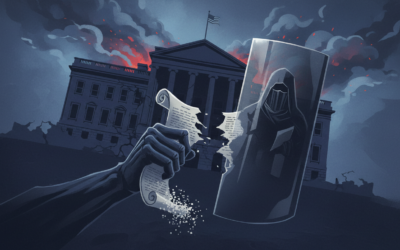
The FBI’s 14,000 agents gained sweeping new investigative powers through a revised operations manual that loosened longstanding restrictions on domestic surveillance. The updated Domestic Investigations and Operations Guide expanded agents’ ability to search databases, conduct physical surveillance, examine household trash, and administer polygraph tests — all with fewer procedural safeguards than previous rules required. The changes intensified an ongoing debate about the proper boundaries between national security and civil liberties in post-9/11 America.
New FBI Assessment Rules Lower the Investigative Threshold
The most consequential changes in the revised manual applied to the lowest tier of FBI investigations, known as “assessments.” This category, first created in December 2008, allowed agents to proactively investigate people and organizations without any firm evidence of criminal or terrorist activity. Under the previous rules, agents were required to formally open an inquiry before searching commercial or law enforcement databases for information about a person. The new rules eliminated that requirement, allowing agents to run database searches without creating any official record of their decision to do so.
Michael German, a former FBI agent who had transitioned to working as a lawyer for the American Civil Liberties Union, warned that removing the documentation requirement would make it significantly harder to detect and deter improper use of government databases for personal purposes. FBI General Counsel Valerie Caproni countered that requiring agents to open formal inquiries before conducting quick database checks was too cumbersome and that any information uncovered from such searches could not be entered into FBI files unless a formal assessment was subsequently opened.
Expanded Powers for Trash Searches and Polygraph Tests
The revised manual also relaxed restrictions on two particularly intrusive investigative techniques: searching through people’s trash and administering lie-detector tests. Under the previous rules, these methods could only be employed after agents opened a “preliminary investigation,” a category that required an actual factual basis for suspecting someone of wrongdoing. The new rules allowed agents to deploy both techniques during a specific type of assessment — evaluating whether a target could serve as a potential government informant.
This change was particularly significant because agents explicitly sought the ability to use information discovered in a person’s trash as leverage to pressure that individual into cooperating with government investigations of others. Caproni acknowledged this purpose while adding that such information could also help agents determine whether a subject might pose a physical threat during recruitment approaches.
Surveillance Squads Authorized for Repeated Use
The updated manual removed a key limitation on the deployment of physical surveillance teams — trained squads capable of covertly following targets without detection. Under the previous rules, these surveillance squads could be deployed only once during an assessment-level investigation. The new rules permitted agents to use them repeatedly against the same target, even at this lowest investigation tier where no evidence of wrongdoing was required.
Caproni argued that existing time limits on the duration of physical surveillance would still apply and that supervisors would authorize repeated surveillance squad deployments only rarely during low-level investigations due to limited resources. Civil liberties advocates remained skeptical, noting that resource constraints were a poor substitute for binding legal protections.
Undercover Operations and Infiltration Guidelines
The revised manual also clarified the rules governing “undisclosed participation” by FBI agents or informants in organizations, a practice subject to special regulations — most of which remained classified. Under the new guidelines, an agent or informant could covertly attend up to five meetings of any group before the enhanced oversight rules would take effect. The sole exception was if the agent’s explicit goal was to join the organization, in which case the stricter rules applied from the first contact.
One change actually tightened existing rules: delegating the authority to approve sending an informant to attend a religious service was no longer permitted. The new manual required that a special agent in charge of a field office must personally approve any such decision, reflecting heightened sensitivity around the surveillance of houses of worship following public complaints about FBI monitoring of mosques.
Redefining Sensitive Investigative Matters in the Digital Age
The manual updated the definition of “sensitive investigative matters” — cases involving public officials, journalists, or academic scholars that require heightened supervisory oversight. The revisions clarified that additional supervision was unnecessary when such individuals were victims or witnesses rather than targets. Investigations of low- and mid-level officials for activities unrelated to their official duties, such as drug offenses rather than corruption, were also exempted from the enhanced oversight requirements.
In recognition of the changing media landscape, the manual addressed who qualified as a legitimate member of the news media deserving of additional investigative protections. Prominent bloggers with significant readership would qualify for protection, but individuals operating low-profile blogs would not. Academic protections were further narrowed to apply only to scholars affiliated with institutions based in the United States.
Scope and Scale of FBI Assessment Investigations
Since the assessment category was established in 2008, the FBI had been opening thousands of these low-level investigations each month. The vast majority produced no information that justified escalation to more intensive investigative levels. Despite this low conversion rate, which critics argued demonstrated the category’s tendency toward overreach, Caproni maintained that agents should not be limited to investigating only situations where a firm basis for suspecting criminal activity already existed.
German and other ACLU advocates pointed to the FBI’s documented history of surveilling domestic political advocacy groups and mosques, as well as a 2007 inspector general report finding that the bureau had frequently misused national security letters — a tool allowing agents to obtain phone records and other personal information without court orders. These precedents, critics argued, demonstrated exactly why expanding investigative discretion without corresponding accountability measures posed serious risks to constitutional rights.