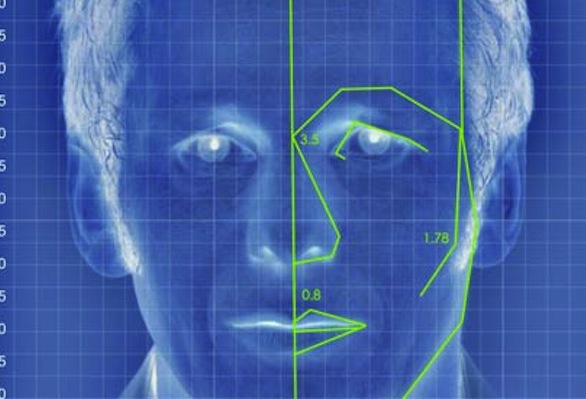
The FBI invested approximately one billion dollars in the Next Generation Identification (NGI) program, a massive upgrade to the national fingerprint database that incorporated facial recognition technology, iris scans, DNA analysis, and voice identification into a unified biometric identification system.
How the Program Worked
The NGI program began with a pilot phase in February 2012, with several states uploading their existing photograph databases to a centralized FBI repository. Full nationwide deployment was projected for 2014. The system was designed to perform automated searches against a national repository of facial images, returning a ranked list of potential matches for law enforcement officers to evaluate as investigative leads.
The technology went beyond simple mugshot comparison. FBI officials indicated they intended to use the system to identify suspects in crowds by matching faces captured in real time against the database. The system could also work in reverse: a photograph of a person of interest captured by a security camera or pulled from publicly available internet images could be run against the repository to generate potential identifications.
The Technology Behind Facial Recognition
Testing conducted in 2010 by the National Institute of Standards and Technology demonstrated that the most advanced algorithms could correctly identify an individual from a pool of 1.6 million mugshots 92 percent of the time. The technology was most reliable when working with controlled photographs such as passport images or police booking photos.
Researchers at Carnegie Mellon University developed algorithms capable of creating three-dimensional models from front and side-view mugshots. These models could be rotated up to 70 degrees to match the angle of a surveillance photograph, then converted back to a two-dimensional image for comparison with a reasonably high degree of accuracy. The primary technical limitation remained low-light conditions, though merging visible and infrared spectrum photography showed promise for improving results in those scenarios.
Carnegie Mellon researcher Alessandro Acquisti testified before the US Senate in July 2012 that facial recognition had reached a level of maturity where it was no longer a future concern but a present reality.
Privacy Implications and Civil Liberties Concerns
Privacy advocates raised significant concerns about the program’s scope. The central question was whether the database would remain limited to mugshots of individuals with criminal records or would expand to include photographs of civilians who had never been charged with a crime.
FBI representative Jerome Pender testified before the Senate that the pilot program’s searchable database contained only mugshots of known criminals. However, the NGI’s privacy impact assessment left ambiguous whether that restriction would persist once the full system became operational. The Electronic Frontier Foundation’s attorney Jennifer Lynch noted that the privacy statement did not clearly preclude the addition of civilian photographs in the future.
The FBI had also partnered with state departments of motor vehicles for driver’s license photo comparison, a move that effectively gave the system access to photographs of millions of law-abiding citizens. Jay Stanley of the American Civil Liberties Union warned that integrating driver’s license databases with the FBI’s system would amount to the creation of a de facto national photographic database.
The Broader Surveillance Landscape
The NGI program represented a significant escalation in the government’s biometric identification capabilities. By combining facial recognition with fingerprints, iris scans, DNA, and voice identification in a single system, the FBI was building what amounted to a comprehensive biological identity database. The program raised fundamental questions about the extent to which law enforcement should be permitted to collect, store, and search the biometric data of the general population without individualized suspicion or judicial oversight.