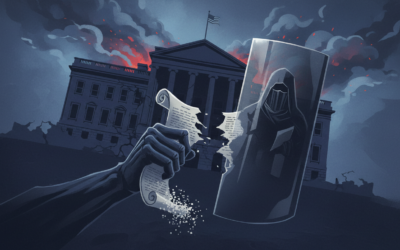
Over the past several decades, a wave of controversial legislation has systematically weakened constitutional protections for ordinary Americans. Laws like the Military Commissions Act, the Patriot Act (both iterations), the John Warner Defense Authorization Act, and the National Defense Authorization Act (NDAA) have collectively expanded government authority in ways that many civil liberties advocates find deeply alarming. Combined with unprecedented monetary policies such as multiple rounds of quantitative easing, these measures paint a troubling picture of where the country may be heading.
The NDAA stands out as particularly concerning for anyone who values due process. Under its provisions, the federal government gained the legal framework to detain American citizens indefinitely without trial, and potentially subject them to enhanced interrogation techniques with no judicial oversight. Meanwhile, the National Defense Resources Preparedness executive order granted the executive branch sweeping powers to commandeer private sector assets, food supplies, manufacturing capacity, transportation networks, energy infrastructure, and water resources — all without requiring congressional approval. Section 201 of this order essentially placed every critical resource under potential federal control.
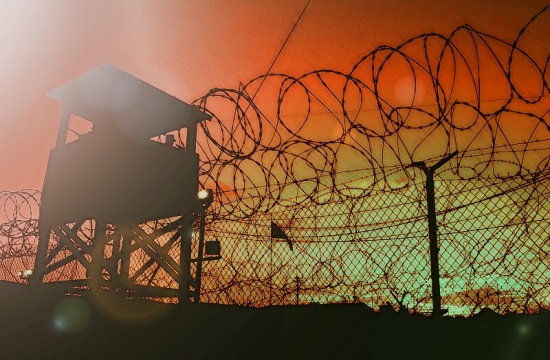
Multiple credible news outlets, including CBS News, have acknowledged the existence and operational readiness of FEMA detention facilities across the country. Whatever their stated purpose, the infrastructure for mass civilian detention already exists and is documented.
These policies raise an unavoidable question: if mass detention of citizens were never on the table, why would such sweeping legal authorities be put in place? The NDAA’s provisions for indefinite detention without trial are not hypothetical — they are codified in law. The executive orders granting unilateral resource seizure authority are real and publicly available documents that anyone can read for themselves.
The tendency to dismiss these concerns as fringe speculation reflects a broader cultural unwillingness to engage with uncomfortable realities. Decades of declining educational standards and a media landscape dominated by a handful of corporate conglomerates have contributed to a public that is often poorly equipped to recognize warning signs that history has shown us many times before.
What Kind of Trigger Event Would Precede Mass Detention
Throughout history, every major crackdown on civil liberties has been preceded by some catalyzing incident. The Nazis used the Reichstag fire as their pretext to suspend constitutional rights and declare emergency rule. The specific trigger for a similar scenario in the United States remains uncertain, but historical patterns offer strong clues.
Gun confiscation has preceded virtually every major genocide of the twentieth century. Across 17 documented mass killings of civilian populations during the 1900s, approximately 60 million people perished — and in every single case, disarmament of the targeted population came first, leaving victims unable to defend themselves.
Efforts to restrict firearms ownership through international treaties and executive action have been ongoing for years. Should large-scale gun confiscation ever become reality, history suggests that would be the clearest possible warning signal to take immediate protective action.
Control over communications infrastructure is equally critical for any authoritarian crackdown. With a small number of corporations already controlling the vast majority of traditional media outlets, that objective is largely achieved. The internet remains the primary uncontrolled channel for free information exchange, which makes it a likely target for censorship or shutdown during any major crisis. Reports that DNS server control has been transferred to international bodies only add to these concerns.
Practical Preparedness for Worst-Case Scenarios
The question of whether ordinary citizens have taken adequate precautions for a severe breakdown in civil order is one that most people would rather not contemplate. Yet the historical record demands that we at least consider the possibility and think through our options.
If mass roundups were ever implemented, families would almost certainly be separated — men, women, and children sent to different facilities. Based on documentation from contingency plans like Rex 84, such separations would likely be permanent. The psychological devastation of losing every family connection, every possession, and every element of normal life simultaneously cannot be overstated.
Viktor Frankl, the psychiatrist who endured four years in Auschwitz, identified the loss of hope and meaning as the single greatest threat to survival in detention. His observations, documented extensively in his writings, reveal that maintaining psychological resilience under extreme deprivation requires finding purpose even in the most desperate circumstances.
Holocaust survivors who spoke about their experiences consistently identified luck as the primary factor in their survival. Many described instances where they were literally next in line for the gas chambers but were turned away because the daily quota had already been filled.
For those who found themselves in camps, building community became essential. Detainees organized card games, musical performances, comedy acts, poetry readings, and prayer circles — all activities that helped create moments of normalcy amid constant terror. These social bonds effectively replaced the family connections that had been severed, providing emotional sustenance that proved critical to survival.
Historical Lessons from Organized Camp Resistance
The record of organized resistance within concentration camps offers sobering lessons. At Treblinka, approximately 700 Jewish prisoners successfully detonated explosives that destroyed the camp on August 2, 1943. The retaliation was devastating — all but 150 of the participants were killed, and only 12 Treblinka inmates survived the entire war.
At Sobibor on October 14, 1943, a joint uprising by Jewish and Russian prisoners resulted in roughly 60 of the 600 participants successfully escaping. Those who made it out joined partisan resistance forces operating behind enemy lines.
At Auschwitz on October 7, 1944, Jewish workers assigned to the crematoria managed to destroy one of the four gas chamber facilities. Every participant in the sabotage was captured and executed.
These examples suggest that resistance from within a detention facility carries extremely high mortality rates. The strategic takeaway is that avoiding capture entirely offers far better survival odds than attempting to fight from inside. For those already detained, three paths exist: evasion of capture in the first place, passive compliance while seeking meaning and community, or organized escape attempts. Historical evidence suggests that well-planned escape efforts may offer better survival odds than either passive acceptance or armed revolt within the camp.
Community-Level Resistance and Its Outcomes
Contrary to the common misconception that targeted populations always submitted passively, there are numerous documented cases of fierce resistance. In September 1942, approximately 700 Jewish families broke out of the Tuchin Ghetto in Ukraine. Nazi forces pursued them relentlessly, and only 15 individuals survived — but they did survive.
The Warsaw Ghetto Uprising of 1943 stands as perhaps the most famous example of organized civilian resistance against overwhelming military force. Roughly 1,000 fighters, most without weapons or military training, confronted German soldiers entering the ghetto in January 1943. Using improvised explosives, Molotov cocktails, and a handful of smuggled firearms, they killed 20 German soldiers in the initial confrontation. This success prompted sympathetic members of the Polish underground to smuggle in machine guns, hand grenades, and approximately 100 rifles and pistols.
When the Germans returned with nearly 3,000 elite troops, the resistance continued. Approximately 300 German soldiers were killed before the uprising was ultimately crushed, with Jewish casualties estimated at 15,000. While some fighters escaped, the numbers were small.
Key Survival Takeaways from Historical Detention Scenarios
The historical evidence leads to several clear conclusions. Detention in any mass internment facility carries near-certain fatal risk over time. Resistance at the moment of arrest is almost universally fatal. Armed community resistance before detention produces long odds but does yield some survivors. Resistance from within camps is the most dangerous option of all. Passive survival while building social connections offers reasonable odds but depends heavily on chance.
The single most effective survival strategy, supported overwhelmingly by historical precedent, is to avoid capture entirely. Preparation, situational awareness, and having contingency plans in place before a crisis develops are the most reliable paths to survival.
This article discusses historical analysis originally presented by Dave Hodges. All facts, dates, and historical references have been independently paraphrased for this publication.