Pre-Trial Hearings Expose Government Secrecy Over Torture
In late October 2012, Khalid Sheikh Mohammed and his co-defendants in the 9/11 terror case appeared for a pre-trial hearing at Guantanamo Bay. Army Colonel James L. Pohl presided over the military commission proceedings. Among the central disputes: whether a forty-second broadcast delay between the courtroom and the press gallery met constitutional standards, and whether the accused could speak about the treatment they endured at the hands of CIA interrogators.
Reporter John Knefel attended the proceedings on behalf of The Nation and filed a detailed account of what transpired inside the courtroom.
Classifying Prisoners’ Own Memories as State Secrets
The commission heard arguments over whether the five co-defendants could be prohibited from describing their personal experiences on the grounds that their recollections, emotions, and observations constituted classified intelligence. Government prosecutors initially argued that every utterance by the accused should carry a presumption of classification — meaning even the most mundane detail would be treated as secret government information. That position was later softened somewhat.
The prosecution’s reasoning was straightforward: the five defendants were uniquely positioned to either verify or contradict elements of the CIA’s Rendition, Detention and Interrogation (RDI) program. Having been subjected to harsh treatment, they could describe it in credible detail — and the government had every motivation to prevent that from happening.
The American Civil Liberties Union challenged the censorship effort. Hina Shamsi, who led the ACLU’s National Security Project, called the government’s attempt to suppress testimony about the defendants’ own lived experiences “legally untenable and morally abhorrent.”
Executive Orders Used to Silence Detainees
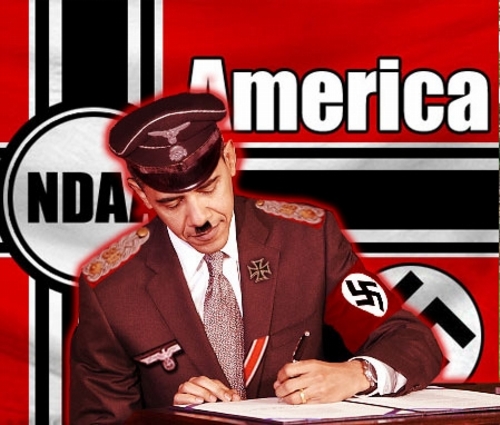
During the October 16 proceedings, Justice Department attorney and deputy trial counsel Theresa Baltes cited an executive order signed by President Barack Obama that permitted classification of “orally conveyed information” related to foreign intelligence sources and methods. In practical terms, the “intelligence sources” referred to the agents who carried out interrogations, and the “methods” described the techniques used — information the government wanted kept permanently hidden from public view.
Baltes further revealed that the prosecution’s original proposal would have required defense attorneys to handle everything their clients said as classified material — including details as trivial as what they ate for lunch. The scope was eventually narrowed to cover only statements about what took place while the defendants were held in CIA custody.
Defense Attorneys Challenge the Government’s Logic
Navy Lieutenant Commander Kevin Bogucki, representing former CIA captive and bin Laden translator Muhammad Rahim, laid bare the absurdity of the prosecution’s stance. He argued that when the government voluntarily exposes someone outside its control to information, it effectively surrenders control over that information.
Bogucki offered a hypothetical: imagine a classified assassination program where an agent wounds but fails to kill a target. Under the government’s reasoning, that victim would be barred from describing the attack because doing so might reveal personnel and operational methods. The argument collapses, Bogucki contended, because once a secret program is carried out against real people in the real world, its architects can no longer claim exclusive ownership of the resulting experiences.
Judge Pohl noted the government was not attempting to classify every memory — only those tied to specific dates and locations. Bogucki pushed back, arguing the information in question had to be owned, produced, or controlled by the United States government to qualify for classification. The only reason prosecutors believed they held such control, he said, was because they kept their clients in near-total isolation. His client had essentially been reduced from a human being to a container of sensitive data — held in solitary confinement not for security reasons, but to prevent classified details from leaking through ordinary human contact.
Military Commissions as a Parallel Justice System
Knefel situated these proceedings within a broader pattern, describing the military commissions as a second-tier legal framework designed to guarantee convictions rather than ensure fairness. He also pointed to the contradiction in President Obama’s stated desire to close Guantanamo while officials simultaneously discussed sending a suspect linked to the September 2012 Benghazi attack to the facility. The arrival of new detainees under Obama’s watch would have rendered any further promises about shuttering the prison entirely meaningless.
The commissions, Knefel argued, represented “just one piece of a larger, disturbing trend toward centralized presidential power with virtually no oversight or transparency.” The fundamental problem was that an idea once considered extreme — granting the executive branch its own legal apparatus for trying so-called enemy combatants — had been normalized and codified across two successive administrations.
The Disposition Matrix and Permanent War Footing
This pattern extended well beyond Guantanamo. A Washington Post investigation had exposed the “disposition matrix,” a counterterrorism database that further cemented the policy of targeted killing embraced by the Obama White House. As journalist Spencer Ackerman observed, Obama had not sought the presidency to preside over the systematization of a covert global war — yet that was precisely his emerging legacy.
Meanwhile, the administration had prosecuted more whistleblowers under the Espionage Act of 1917 than every previous president combined. CIA officer John Kiriakou became a cautionary tale: he was prosecuted in 2012 after publicly confirming the agency maintained an official policy of waterboarding detainees. The government pursued charges for disclosing the identity of a covert agent involved in the RDI program — someone reportedly already known to multiple figures in the human rights community. The prosecution left Kiriakou financially destroyed and upended the lives of his wife and five children.
Accountability Gap: Whistleblowers Punished, Torturers Protected
The contrast could not have been starker. While Kiriakou’s life was dismantled for speaking about torture, not a single person who actually carried it out faced legal consequences. No interrogator who brutalized detainees saw their career or family ruined. No official who authorized the program and sought to conceal it behind carefully crafted legal memoranda spent a day behind bars.
The United States government remained firmly committed to hiding the specifics of how prisoners at Guantanamo were treated. The continuity of executive power mattered more to the Obama administration than accountability. And the effort to classify the personal memories and experiences of terror suspects served a clear purpose: shielding the agents who conducted torture from the same kind of devastating prosecution that John Kiriakou endured for telling the truth about it.