Overview of the Hollow Earth Concept
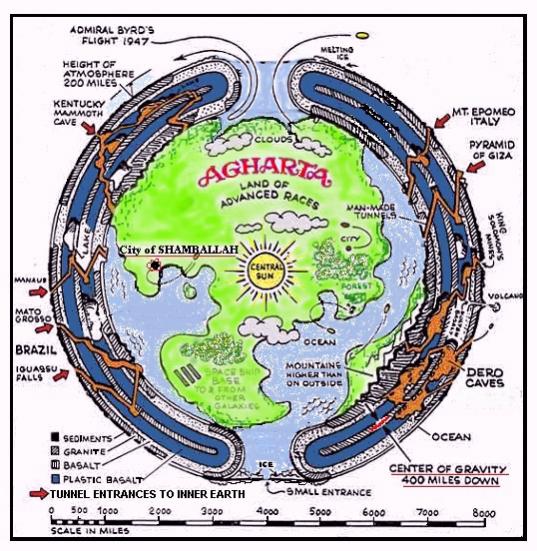
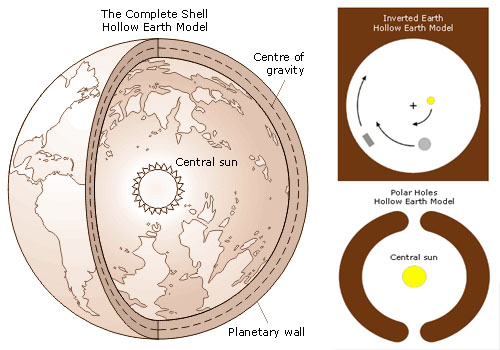
The Hollow Earth theory proposes that the planet contains substantial interior spaces, potentially harboring civilizations, vegetation, and even an internal sun. While dismissed by mainstream geology, the concept has a long and surprisingly rich history spanning centuries of scientific speculation, exploration narratives, religious traditions, and government-connected accounts that make it one of the most enduring alternative theories about the nature of our planet.
This compilation brings together the major historical sources, alleged eyewitness accounts, and theoretical frameworks that have sustained interest in the Hollow Earth concept from ancient times to the present day.
Ancient and Religious Traditions
Buddhist theology includes references to a subterranean realm, sometimes identified as “Agartha” or “Shamballa,” inhabited by an advanced civilization. According to these traditions, Lhasa, the capital of Tibet, was believed to be connected by tunnel systems to this inner world. The famous Russian mystic Nicholas Roerich, who claimed communication with the Ascended Master El Morya, promoted this connection in his writings and teachings.
Hindu scriptures contain parallel references. The Ramayana describes Rama as arriving from Agartha, while the Bhagavad Gita’s depiction of Krishna includes similar subterranean associations. Other ancient traditions from various cultures reference underground worlds populated by advanced beings, suggesting that the concept has deep roots across multiple civilizations.
Admiral Richard E. Byrd’s Alleged Expeditions
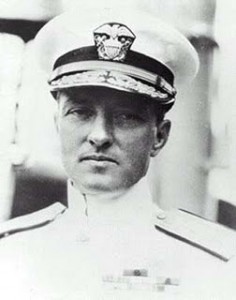
The most frequently cited modern account involves Rear Admiral Richard E. Byrd of the United States Navy. According to a diary attributed to Byrd, during a 1947 flight to the North Pole, instead of crossing over the pole, he entered the hollow interior of the Earth and traveled 1,700 miles over mountains, lakes, rivers, and green vegetation, observing animal life including mammoth-like creatures.
The account describes Byrd’s plane being greeted by unknown aircraft and escorted to a landing area, where he was received by emissaries of the inner civilization. The beings reportedly conveyed a message of concern about humanity’s development of nuclear weapons and warned about the destructive path surface civilization was following.
In January 1956, Byrd reportedly led another expedition, this time to Antarctica, penetrating 2,300 miles into the interior. According to the accounts, Byrd described an inner sun illuminating the interior world and theorized that the poles were convex rather than concave, allowing passage into the interior.
The American press reportedly covered Byrd’s initial claims before the stories were suppressed. Ray Palmer, editor of Flying Saucer Magazine, published a detailed article on the discovery in the December 1959 issue, which allegedly sold out immediately. Similar accounts suggest that National Geographic prepared coverage that was confiscated before distribution.
The Polar Flight Restriction Question
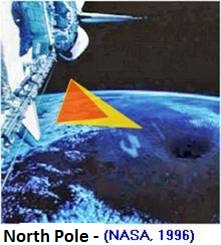
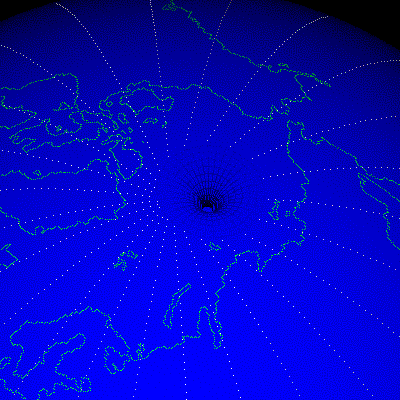
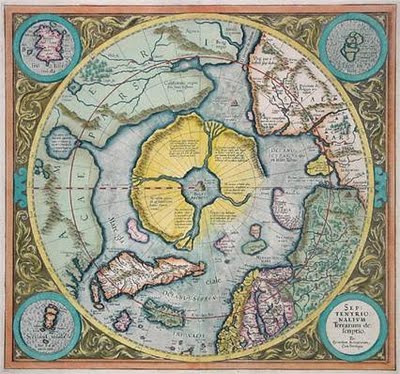
Hollow Earth researchers have pointed to the fact that commercial airline flights are typically routed around the polar regions rather than directly over them. While aviation authorities cite navigational and safety reasons for these routing decisions, proponents of the theory suggest the restrictions exist to prevent passengers and pilots from observing anomalies at the poles.
The Norwegian Sailor’s Account
Dr. Nephi Cotton of Los Angeles reportedly treated a patient of Nordic descent who shared the following account: As a young man living near the Arctic Circle in Norway, he and a friend provisioned a boat for a month-long journey northward. After traveling far beyond the pole, they encountered unexpectedly warm weather. Their ocean passage gradually narrowed into a river that led through the interior surface of the Earth.
According to the account, the interior was divided into land and water areas with abundant sunshine, vegetation, and animal life. The travelers encountered a civilization of giant humanoids living in homes and towns, using electrical monorail-type transportation along the river’s edge. These inhabitants were reportedly friendly and hospitable, standing roughly twelve feet tall.
The travelers claimed to have spent time among these people before eventually returning to the surface through the South Pole region.
Olaf Jansen and “The Smoky God”
A similar account was published in 1908 in a book titled “The Smoky God” by Willis George Emerson. The book presents the experiences of Norwegian fisherman Olaf Jansen and his father, who allegedly attempted to find the “land beyond the North wind.” A windstorm carried their small fishing boat through a polar opening into the interior world.
According to Jansen’s account, they spent two years inside the Earth. The inhabitants lived between 400 and 800 years, possessed advanced scientific knowledge including thought transmission through specialized radiations, and had energy sources more powerful than electricity. The interior featured a “smoky” central sun that provided continuous illumination.
Upon returning through the South Pole opening, Jansen’s father was killed when an iceberg struck their boat. The younger Jansen was rescued but committed to an asylum for the insane when he shared his story, where he spent years before his release. He eventually emigrated to the United States, where in his nineties he confided his experiences to Emerson, who published the account.
Colonel Billie Faye Woodard’s Testimony
Among more recent accounts, U.S. Air Force Colonel Billie Faye Woodard reportedly provided testimony about his experiences with inner Earth access points connected to Area 51 in Nevada. According to Woodard, the military facility contained tunnel systems extending deep underground, and he claimed to have interacted with beings from the interior world during his service.
Woodard’s account described a network of tunnels connecting various military installations with interior Earth passages, suggesting ongoing contact between surface military organizations and inner Earth civilizations.
Nazi Germany’s Interest
In 1942, Nazi Germany reportedly dispatched an expedition of leading scientists to search for an entrance to the hollow Earth. According to various accounts, Hermann Göring, Heinrich Himmler, and Adolf Hitler were actively interested in the concept and believed that such an interior world could serve as a base for advanced submarine operations. The expedition was reportedly sent to Rügen Island in the Baltic but did not achieve its stated objective.
Separate accounts suggest that Nazi U-boats may have explored Antarctic regions in search of polar entrances, and some researchers have connected post-war reports of anomalous submarine activity in southern polar waters to these German expeditions.
The ESSA-7 Satellite Photographs
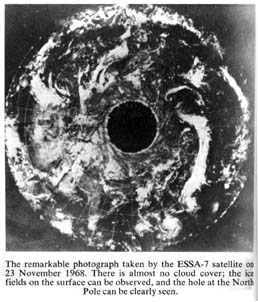
Hollow Earth researchers have pointed to photographs taken by the ESSA-7 satellite in 1968 that appear to show a dark circular area at the North Pole. While NASA and atmospheric scientists attribute this to the polar night (the period when the pole is in shadow) and photographic mosaic artifacts, proponents argue the images show an actual opening in the Earth’s surface.
The Cancelled Voyage
In the early 2000s, an expedition was organized to sail to the North Pole and attempt to locate an entrance to the inner Earth. The “Voyage to the Hollow Earth” expedition attracted significant interest from the alternative research community. However, the expedition was ultimately cancelled under circumstances that fueled further speculation, as the principal organizer reportedly died before the journey could take place.
William Reed and Marshall Gardner
The modern scientific-style case for a hollow Earth was articulated in two key texts. William Reed published “Phantom of the Poles” in 1906, arguing that the Earth was hollow with openings at both poles. His analysis drew on accounts from Arctic and Antarctic explorers who reported unexplained warm winds, open polar seas, driftwood, and animal migrations that seemed to originate from regions that should have been frozen wastelands.
Marshall B. Gardner expanded on these arguments in his 1920 book “A Journey to the Earth’s Interior,” adding the concept of a small central sun that illuminated the interior. Gardner pointed to various anomalies reported by polar explorers, including the aurora borealis, which he proposed was light escaping from the interior through the polar openings.
The Theory in Context
While conventional geology, seismology, and gravitational science present overwhelming evidence for a solid Earth with a molten core, the Hollow Earth concept persists as one of the most elaborate and long-lived alternative theories about our planet’s structure. Its endurance may owe less to its scientific merits than to the powerful human impulse to believe that unexplored frontiers remain, even beneath our feet, and that advanced civilizations might exist beyond the reach of current knowledge.
Whether viewed as speculative possibility, cultural mythology, or elaborate folklore, the body of accounts, alleged eyewitness testimony, and anomalous observations compiled here represents a comprehensive record of this persistent and fascinating tradition.