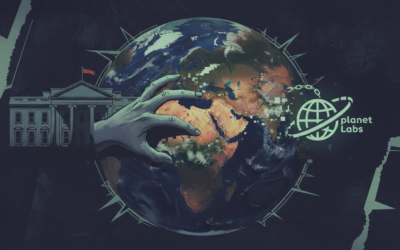
The word “terrorism” is among the most heavily deployed terms in modern political discourse, yet its meaning remains remarkably elastic. Rather than functioning as a precise analytical category, critics argue the term operates primarily as a rhetorical device, applied selectively to delegitimize certain acts of violence while leaving structurally similar acts by other parties unexamined.
The Problem With Defining Terrorism
Despite decades of academic and policy debate, no universally accepted definition of terrorism exists. The United Nations has repeatedly failed to reach consensus on a comprehensive convention precisely because member states cannot agree on where legitimate resistance ends and terrorism begins. In practice, the label tends to be applied based on political alignment rather than the nature of the act itself. Violence committed by geopolitical adversaries is categorized as terrorism, while comparable actions by allied states or domestic agencies are framed through different language entirely.
The Terrorism Expert Industry
This definitional ambiguity extends to the cottage industry of so-called terrorism experts who populate news broadcasts and policy panels. The title is largely self-reinforcing, often conferred based on institutional affiliation and ideological orientation rather than rigorous scholarly credentials. Because the underlying concept lacks fixed boundaries, expertise in terrorism becomes less about mastering a defined body of knowledge and more about fluency in a particular political framework.
Drone Strikes and the Double Standard
The selective application of the terrorism label becomes especially apparent when examining drone warfare. A 2012 investigation by the Bureau of Investigative Journalism documented that CIA drone operations in Pakistan’s tribal areas had killed dozens of civilians, including more than 60 children, since President Obama took office. The investigation found that at least 50 civilians were killed in follow-up strikes targeting people who had arrived to rescue victims of initial attacks. More than 20 additional civilians died in deliberate strikes on funerals and mourning gatherings. The Associated Press independently corroborated these findings through field reporting in Waziristan, interviewing over 80 local residents about ten specific CIA strikes.
Legal Challenges and Accountability
The Anglo-American legal charity Reprieve filed a case with the United Nations Human Rights Council based on sworn affidavits from 18 family members of civilians killed in drone attacks, many of them children. The organization called on the UNHRC to condemn the strikes as illegal human rights violations. These legal efforts highlighted a persistent accountability gap: when civilian deaths result from state-sponsored military operations rather than non-state actors, the mechanisms for investigation and redress are fundamentally different.
FBI Entrapment and Domestic Terrorism Framing
The selective deployment of terrorism framing also extended to domestic law enforcement. Investigative reporting revealed that the FBI operated an extensive network of informants and undercover agents who, in multiple documented cases, played active roles in planning and facilitating the very plots they were ostensibly designed to prevent. These sting operations raised questions about whether the bureau was genuinely disrupting organic threats or manufacturing them to justify expanded surveillance authority and counter-terrorism budgets.
Language as a Policy Tool
The broader pattern suggests that terrorism, as commonly used in political and media contexts, functions less as a descriptive term and more as a policy instrument. By controlling which acts of violence receive the terrorism label, governments and media organizations shape public perception of who constitutes a legitimate threat and what responses are considered proportionate. Understanding this dynamic is essential for evaluating the claims made by any party in conflicts where the terrorism label is deployed.