Iceland’s Financial Crisis and the Fall of a Government
When Iceland’s banking sector collapsed in 2008, the small North Atlantic nation found itself at the center of one of the most dramatic economic crises in modern European history. The government nationalized the country’s three largest banks — Landsbanki, Kaupthing, and Glitnir — after their combined debts overwhelmed the national economy. The Icelandic krona plummeted, the stock market suspended trading after a 76 percent collapse, and the International Monetary Fund stepped in with a $2.1 billion bailout, supplemented by $2.5 billion from Nordic neighbors.
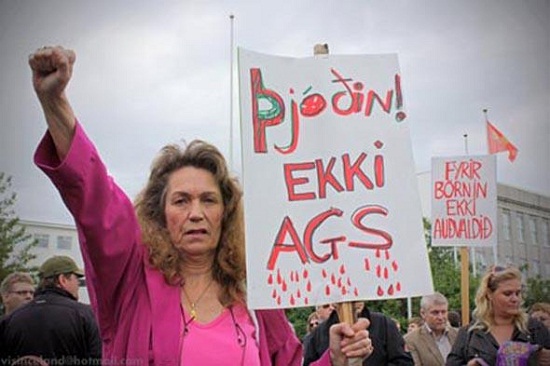
What followed was not a typical austerity story. Persistent public demonstrations outside parliament in Reykjavik — characterized by crowds banging pots and pans in what became known as the “Kitchenware Revolution” — forced the resignation of conservative Prime Minister Geir Haarde and his entire government. Early elections brought a coalition of the Social Democratic Alliance and the Left Green Movement to power under Prime Minister Johanna Sigurdardottir.
Citizens Rejected International Debt Repayment
The new government inherited a staggering problem. Parliament proposed repaying $5 billion in debts owed to Britain and the Netherlands — losses suffered by foreign depositors in collapsed Icelandic banks. The proposed terms would have required Icelandic families to make monthly payments for 15 years at 5.5 percent interest.
Public outrage sent citizens back into the streets, demanding a national referendum. In March 2010, that vote was held, and 93 percent of Icelanders rejected the repayment terms. Creditors returned with improved conditions — 3 percent interest over 37 years — but even this revised deal proved contentious. The president refused to sign the parliamentary approval and called for another referendum, ensuring citizens had the final word.
Criminal Prosecutions of Banking Executives
While citizens were rejecting debt terms, the government launched investigations into the individuals responsible for the crisis. Several bankers and senior executives connected to the high-risk financial operations that precipitated the collapse were arrested. Interpol issued an international arrest warrant for Sigurdur Einarsson, former president of Kaupthing Bank. Reports indicated that a number of banking figures left Iceland during this period.
The prosecutions marked a sharp departure from the approach taken by most Western nations following the 2008 global financial crisis, where criminal charges against senior banking executives were rare. Iceland’s willingness to pursue legal accountability attracted international attention and commentary.
A Crowdsourced Constitutional Rewrite
Perhaps the most unusual development was Iceland’s decision to draft a new constitution through direct citizen participation. Rather than appointing legal experts or politicians to write the document, the government opened the process to the public. More than 500 Icelanders put themselves forward as candidates, and 25 were elected — a group that included lawyers, students, journalists, farmers, and union representatives, none with formal party affiliations.
The draft constitution incorporated lessons from the crisis and proposed protections that went beyond typical constitutional frameworks. Notable among these was the Icelandic Modern Media Initiative, which sought to establish the country as an international safe harbor for investigative journalism and press freedom, with legal protections for sources, journalists, and internet service providers hosting news content.
Legacy and International Context
Iceland’s response to its financial crisis — combining public pressure, democratic referendums, criminal prosecutions, and constitutional reform — stood in contrast to the approaches taken by larger economies, where bank bailouts were funded by taxpayers and criminal accountability for executives was largely absent.
The Icelandic experience demonstrated that a small, engaged citizenry could reshape the terms of its relationship with financial institutions and its own government. Whether the specific mechanisms that worked in a nation of roughly 320,000 people could scale to larger democracies remained an open question, but the precedent itself became a reference point in global conversations about financial accountability and democratic reform.