Two independent investigations published in early 2012 presented substantial new evidence that CIA drone strikes in Pakistan’s tribal areas were killing civilians at higher rates than official accounts acknowledged.
Associated Press Field Investigation
The Associated Press deployed a field reporter to Waziristan who interviewed more than 80 local residents about ten major CIA drone strikes conducted since 2010. The investigation, led by AP’s Islamabad bureau chief Sebastian Abbot, represented one of the largest ground-level studies of drone strike casualties at the time.
Of 194 people killed across the ten strikes examined, local witnesses confirmed 138 as militants. The remaining 56 were identified as civilians or tribal police. Notably, 38 of those civilian deaths occurred in a single strike on March 17, 2011, which produced one of the worst civilian tolls since the drone program began in Pakistan.
The AP investigation uncovered two previously unreported incidents of civilian casualties. On August 14, 2010, seven civilians died alongside seven Pakistan Taliban fighters during Ramadan prayers. Among the dead was a ten-year-old child. U.S. officials maintained that their own assessments indicated all those killed were militants.
On April 22, 2011, three children and two women were among 25 people killed in a strike on a guest house where militants were present. Three named eyewitnesses in the village of Spinwan confirmed the civilian deaths, with two having attended the funerals.
Independent Confirmation of Earlier Reporting
The AP investigation also independently confirmed findings from the Bureau of Investigative Journalism regarding a May 6, 2011 strike on a roadside restaurant. The Bureau’s field researchers in Waziristan had previously identified six civilians killed by name alongside ten Taliban fighters.
After the Bureau published its findings, an anonymous U.S. official had dismissed the reporting through the New York Times, calling the claim that a restaurant was struck “ludicrous.” The AP investigation contradicted this denial, confirming that missiles hit a vehicle parked near a restaurant in Dotoi village, killing 16 people including the six civilians the Bureau had identified.
Reprieve Files Case with United Nations
Anglo-American legal charity Reprieve filed a case with the United Nations Human Rights Council based on sworn affidavits from 18 family members of civilians killed in CIA drone strikes. The submission detailed a dozen strikes during the Obama administration and called on the UNHRC to condemn the attacks as illegal human rights violations.
One documented case involved a February 14, 2009 strike in North Waziristan, just weeks after Obama took office. Between 26 and 35 people died, including nine civilians. Among the dead was eight-year-old Noor Syed, who was sleeping in a courtyard with his father when a missile struck a nearby car. Shrapnel from the explosion killed the boy.
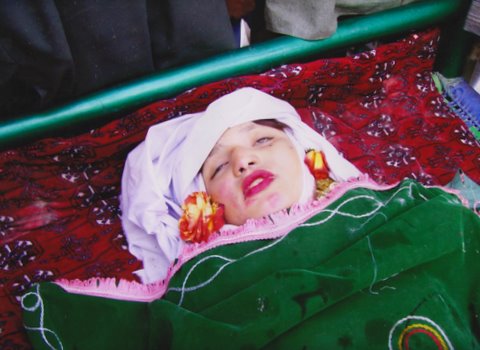
Noor Syed, age 8. (Photo: Noor Behram)
Another case documented in the filing described a June 15, 2011 strike in Miranshah, North Waziristan that killed four civilians traveling in a car. The men were a pharmacist, his assistant, a student, and a local water authority employee. None had any connection to militant groups. The strike provoked such outrage that mourners at the men’s funeral used their coffins to block the main highway in spontaneous protest.
Legal and Humanitarian Implications
Reprieve’s director stated that the CIA was producing devastation while characterizing it as counterterrorism progress. The organization argued that the drone program was functioning as an effective recruitment tool for the very militant groups the United States claimed to be targeting.
Pakistani barrister Mirza Shahzad Akbar, who prepared the UNHRC submission through the Foundation for Fundamental Rights, argued that the United States needed to address the mounting evidence of civilian casualties and respect established international law. He characterized the United Nations as the appropriate forum for addressing the humanitarian dimensions of drone warfare and its broader geopolitical consequences.
These investigations highlighted a persistent gap between official U.S. government characterizations of drone strike precision and the documented reality on the ground in Pakistan’s tribal regions.