A Passenger’s Eyewitness Account From Delta Flight 253
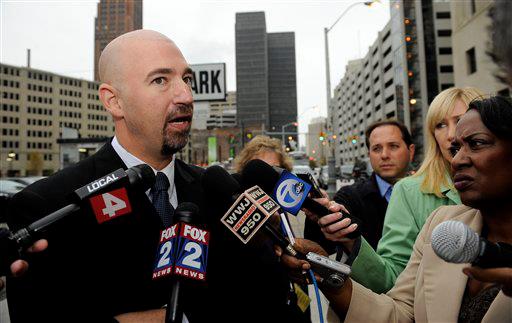
On Christmas Day 2009, attorney Kurt Haskell and his wife were returning from an African safari with a connecting flight through Amsterdam’s Schiphol Airport. What Haskell says he witnessed in the boarding area — and what unfolded during the flight and its aftermath — led him to deliver a victim impact statement at the sentencing hearing of Umar Farouk Abdulmutallab that challenged the official narrative of the so-called “underwear bomber” case. Haskell, a practicing attorney in Michigan who regularly appeared in the very court where the proceedings took place, used his allotted five minutes to lay out a detailed account that raised serious questions about government foreknowledge and possible involvement in the incident.
The Man in the Tan Suit at Amsterdam Airport
According to Haskell’s testimony, while sitting on the floor near the boarding gate at Schiphol Airport, he observed Abdulmutallab — dressed in jeans and a white t-shirt — being escorted around security by a well-dressed man in a tan suit who spoke fluent American English. Haskell stated that the airline gate worker initially refused to allow Abdulmutallab to board the flight without a passport, but the man in the tan suit intervened and facilitated his boarding.
At the time, the interaction seemed unremarkable to Haskell. It was only after Abdulmutallab attempted to detonate an explosive device aboard the flight as it approached Detroit that the scene at the gate took on a dramatically different significance. Haskell described the final ten minutes of the flight following the attack as the worst minutes of his life, spent paralyzed with fear.
Chaotic Response After Landing Raised Further Questions
When Delta Flight 253 landed in Detroit, Haskell was surprised that the plane taxied directly to the gate rather than being isolated on the tarmac — standard protocol for a potential bombing incident. Passengers were kept seated for approximately 20 minutes with residue from the failed explosive device still visible throughout the cabin. Officers who boarded the aircraft did not sweep for accomplices or additional explosive devices. Several passengers walked through fragments of the bomb materials as they exited.
Upon deplaning, passengers were brought into the terminal carrying their unchecked bags. This occurred despite Abdulmutallab reportedly telling officers upon exiting the plane that there was a second bomb on board. The apparent lack of urgency or security protocol deeply troubled Haskell.
FBI Initially Showed No Interest in the Accomplice Account
Haskell immediately reported his observations about the man in the tan suit to FBI agents on the scene, hoping to assist in identifying a potential accomplice. He stated that the FBI showed no apparent interest in his account. For a full month following the incident, the U.S. government refused to acknowledge the existence of the individual Haskell described.
This changed on January 22, 2010, when an ABC News report included a government acknowledgment that such a person existed. According to Haskell, that was the last time the government publicly addressed the matter. The airport surveillance video that could have corroborated or refuted his account was never released to the public.
Dutch police separately confirmed that Abdulmutallab did not present his passport at Amsterdam’s Schiphol Airport, which — given that passport control and security screening were part of the same checkpoint process — suggested he may not have passed through standard security screening at all.
Congressional Testimony Revealed Government Foreknowledge
The case took an even more troubling turn during Congressional hearings when Patrick Kennedy of the U.S. State Department testified that Abdulmutallab was a known terrorism suspect who was being monitored, and that the government had allowed him to enter the United States as part of an effort to identify his broader network of associates.
Michael Leiter, then director of the National Counterterrorism Center, further testified during the same hearings that intentionally permitting known terrorism suspects to enter the country was not an isolated incident but rather a recurring practice employed by U.S. intelligence and law enforcement agencies.
For Haskell, these admissions were devastating. The realization that his own government may have knowingly placed a suspected terrorist on his flight — with what was supposed to be a live explosive device — fundamentally altered his understanding of the event and his trust in federal institutions.
The Question of the Defective Explosive Device
Additional details emerged that deepened the controversy. In late 2010, the FBI acknowledged having provided intentionally non-functional explosive devices to suspects in other domestic terrorism cases, including the Portland Christmas Tree bombing plot and a planned attack at Wrigley Field. Defense attorney Anthony Chambers was quoted in the Detroit Free Press on January 11, 2011, stating that the government’s own explosives experts had determined Abdulmutallab’s bomb was “impossibly defective” — raising the question of how a sophisticated terrorist network could have equipped an operative with a device incapable of functioning as designed.
At a pretrial hearing on January 28, 2011, Haskell noted that prosecutors requested the court block certain defense evidence on the grounds that it “could then be able to be obtained by third parties, who could use it in a civil suit against the government” — language that Haskell interpreted as an implicit acknowledgment of potential government liability.
The Guilty Plea That Prevented Testimony
Abdulmutallab listed Haskell as his only defense witness. Haskell stated he was willing to testify — not on behalf of the defendant, but in the interest of a complete public record. However, just five days after Haskell was named as a witness, Abdulmutallab entered an unexpected guilty plea, eliminating the possibility of testimony.
During jury selection proceedings before the plea, Haskell observed that two questions were repeatedly posed to potential jurors in various forms: whether they believed they could determine if something was actually a bomb, and whether they understood that media reporting is not always accurate. To Haskell, these questions suggested an awareness that the official version of events might not withstand scrutiny.
Haskell’s Conclusions and the Sentencing Request
In his closing remarks, Haskell stated that based on everything he had witnessed and learned through the legal proceedings and Congressional testimony, he was convinced that Abdulmutallab had been provided with an intentionally defective explosive device by a U.S. government agent and placed on the flight without a passport or proper security screening in order to stage a managed terrorism event that could be used to justify expanded government security policies.
Despite these conclusions, Haskell was clear that Abdulmutallab’s actions were not excused. He noted that the defendant had waived what Haskell considered a valid entrapment defense, and he asked the court to impose the mandatory sentence. His final assessment of Abdulmutallab was blunt: “You are not a great Muslim martyr, you are merely a patsy.”
The case remains one of the most contested terrorism incidents in recent American history, with the official government account and Haskell’s eyewitness testimony presenting fundamentally irreconcilable versions of what transpired on Christmas Day 2009.