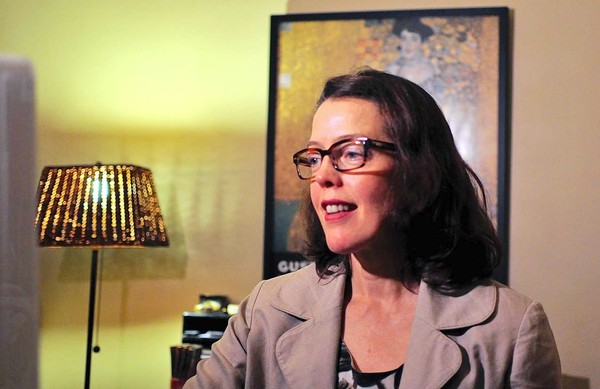
The Legal Scholar Taking on America’s Drone Program
Mary Ellen O’Connell, a law professor at the University of Notre Dame, spent over a decade arguing that the United States’ program of targeted killings through drone strikes violated international law. Her campaign began in 2002, when she published a paper declaring the first CIA drone strike unlawful, and continued through the dramatic expansion of the program under President Obama.
Her position was straightforward: while the United States was fighting a lawful war in Afghanistan in response to the September 11 attacks, extending lethal drone strikes to Pakistan, Yemen, and Somalia constituted extrajudicial killing outside a recognized war zone. Under international law, she argued, killing militants in countries where no armed conflict existed required meeting an extremely high standard: an imminent threat to life when no other means of prevention was available.
“We wouldn’t accept or want a world in which Russia or China or Iran is claiming authority to kill alleged enemies of the state based on secret evidence of the executive branch alone,” O’Connell said. “And yet that’s the authority we’re asserting.”
The Scale of the Drone Program
Under President Obama, the drone program expanded dramatically. By late 2012, the United States had launched 284 drone strikes in Pakistan and 49 in Yemen, compared to 46 in Pakistan and one in Yemen under President Bush. Additional strikes were reported in Somalia. According to the New America Foundation, drone strikes had killed up to 3,000 people.
The targeting process operated through two tracks. High-value targets were placed on a classified kill list reviewed by lawyers from the White House, the CIA, the Pentagon, and other agencies. But many casualties came from “signature strikes,” which targeted unidentified individuals based on behavioral patterns deemed suspicious by intelligence analysts. The question of whether the people killed in these strikes met any meaningful legal threshold for lethal force was one O’Connell and other critics pressed repeatedly.
President Obama stated publicly that targeting required “a threat that is serious and not speculative” and “a situation in which we can’t capture the individual before they move forward on some sort of operational plot against the United States.” O’Connell and other legal scholars argued that no evidence suggested all those killed had met that standard.
A Shift in American Legal Doctrine
O’Connell’s position was not as radical as it might have appeared. Prior to September 11, 2001, the US government itself held a similar view of targeted killings. American officials had criticized Israel for killing Palestinian militants in the West Bank during the 1990s. CIA officials believed they lacked legal authority to kill Osama bin Laden even after he was indicted for the 1998 embassy bombings in East Africa.
The post-9/11 legal framework represented a fundamental departure from these precedents. White House counterterrorism advisor John Brennan articulated the administration’s position by arguing that the United States was in an armed conflict with Al Qaeda, the Taliban, and “associated forces,” and could use force under its “inherent right of national self-defense.” Critics noted that this framing effectively transformed the entire world into a battlefield where the executive branch could authorize lethal force based on secret evidence.
Growing Support From Legal Institutions
While O’Connell remained in a minority among US legal scholars, her views gained traction over time. A September 2012 report from researchers at New York University and Stanford University law schools argued that many US drone strikes appeared unlawful because they failed to meet the strict legal test for killing outside a war zone.
In June 2012, Christof Heyns, the United Nations special rapporteur on extrajudicial killings, told a conference in Geneva that “double tap” drone strikes, in which a second missile was fired at people who came to aid the wounded from the first strike, could constitute war crimes. Pakistan reported several such attacks in its tribal areas.
Imran Khan, the former cricket star who was positioning himself as a potential Pakistani prime minister, reached out directly to O’Connell for assistance, telling her that Pakistanis were furious about the CIA drone campaign and that the agency often did not know who it was killing.
Not a Pacifist But a Legal Realist
O’Connell’s critics characterized her position as naive, arguing that international law had not kept pace with the threat posed by stateless terrorist organizations. Benjamin Wittes of the Brookings Institution challenged her in a public debate to follow her argument to its logical conclusion, suggesting that it would require labeling President Obama a “serial killer.”
O’Connell rejected that framing. She was not a pacifist. Her husband was a former Army interrogator who served in the first Gulf War. She had worked for the Defense Department teaching soldiers about international law. She supported using drones against enemy fighters within the recognized Afghan war zone and praised the Navy SEAL mission that killed Bin Laden.
Her argument was more precise: that the legal framework matters, that expanding lethal authority beyond war zones based on executive branch determinations alone set a precedent that other nations would eventually follow, and that the erosion of international legal norms would ultimately make everyone less safe.
Moral Suasion as Strategy
O’Connell viewed her campaign as an exercise in moral suasion rather than an expectation of immediate legal victory. She drew a parallel to the public outcry that followed revelations about CIA waterboarding and harsh interrogation techniques. Public opinion had eventually turned against those practices, and she believed a similar shift was possible on drone strikes once the full scope and human cost of the program became more widely understood.
She also drew a more personal analogy to the abortion debate. One could believe deeply that a practice was immoral without labeling every individual involved as a criminal. “I don’t think President Obama should go to jail for it,” she said. “But we want the practice to end.”
The fundamental question O’Connell raised remained unanswered: if the United States claimed the right to kill anyone, anywhere in the world, based on secret intelligence assessed by the executive branch alone, what legal or moral framework would prevent other nations from claiming the same authority?