Royal Tomb Uncovered at El Peru-Waka in Guatemala
Archaeologists working in the rain forests of northern Guatemala announced in 2012 that they had uncovered what appeared to be the burial chamber of Lady K’abel, a powerful seventh-century Maya warrior queen. The discovery took place at El Peru-Waka, a sprawling ancient city whose plazas, palaces, and temple pyramids date to the Classic Maya civilization period between roughly 200 and 900 AD.
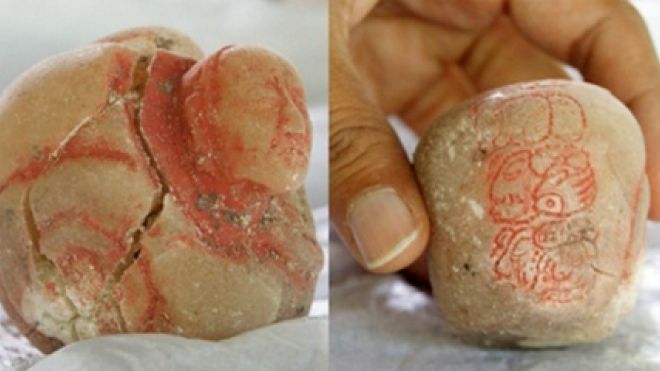
The key artifact linking the tomb to K’abel was a white alabaster jar shaped like a conch shell, featuring a carved woman’s head and arm at its opening. Four hieroglyphs inscribed on the vessel indicated it had been K’abel’s personal possession.
Evidence Pointing to the Supreme Warrior
David Freidel, an archaeologist from Washington University in St. Louis who led the excavation, described the inscribed jar as the closest thing to definitive proof that archaeology typically produces. While he acknowledged that archaeological conclusions always rest on circumstantial evidence, the named artifact represented an unusually strong connection to a specific historical figure.
Additional evidence supported the identification. Ceramic vessels found within the burial chamber and carvings on a stela, or stone slab, positioned outside the tomb also pointed to K’abel. A large red spiny oyster shell discovered on the lower torso of the remains provided further confirmation, as Late Classic queens at Waka regularly wore such shells as girdle ornaments in their stela portraits, while kings did not.
Lady K’abel and the Snake King Dynasty
K’abel held the title “Kaloomte,” which translates to “Supreme Warrior.” This designation placed her above even her husband, King K’inich Bahlam, in terms of authority. She served as the military governor of the Wak kingdom on behalf of her family, the imperial house of the Snake King, one of the most powerful dynasties of the Classic Maya period.
She is believed to have reigned alongside her husband from approximately 672 to 692 AD, a period during which the Snake King dynasty exerted significant influence across the Maya lowlands.
Condition of the Remains
An examination of the skeletal remains indicated the buried individual was a mature adult, though the bones had deteriorated to the point where scientists could not definitively determine whether they belonged to a male or female. Excavations at El Peru-Waka had been ongoing since 2003 when the K’abel discovery was made, and at the time of the announcement the find had not yet appeared in a peer-reviewed scientific journal.