Military Space Command Patches: Hidden Symbolism in Plain Sight

The insignia and mission patches of United States military space organizations contain a recurring set of visual elements that, upon close examination, suggest a deeper symbolic language beyond their official descriptions. From US Space Command to Air Force Space Command to Naval Space Command, these patches consistently feature orbital rings around Earth, triangular delta-shaped craft, Knight Templar imagery, and pentagonal geometric forms. Whether these recurring motifs represent classified programs, institutional tradition, or something else entirely remains a subject of considerable speculation.
The Orbital Rings Pattern
Across multiple military space commands, the Earth is depicted surrounded by two intersecting orbital rings, similar to the common illustration of electron orbitals around an atomic nucleus. This motif appears in the official emblems of US Space Command, Air Force Space Command, Naval Space Command, NORAD, and numerous subordinate units.

The US Space Command emblem features crosses at the intersection points of the two rings. These crosses recur across many related patches and may represent Knight Templar symbolism, given the frequency with which Templar imagery appears alongside them.
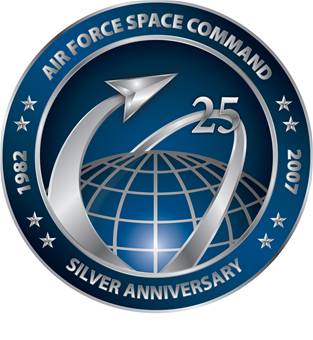
The Air Force Space Command patch shows the same dual-ring configuration, along with a distinctly triangular, delta-shaped aircraft form that appears repeatedly across space command insignia.
The Delta-Shaped Craft
A triangular or delta-shaped metallic aircraft appears as a recurring motif across dozens of military space patches. This craft is depicted operating far beyond Earth’s atmosphere, frequently shown alongside or between the orbital rings.

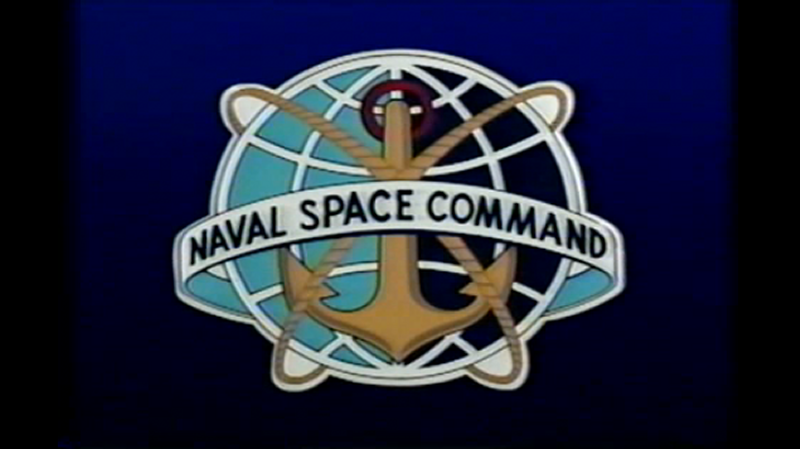
The Naval Space Command emblem also features the orbital rings, placing this imagery across multiple branches of the military:
The AFSST 76th Space Operations patch from Vandenburg Air Force Base depicts the delta craft prominently, this time with wings added around it, flanked by two smaller delta-shaped craft:
Vandenburg Air Force Base: Swords and Shields
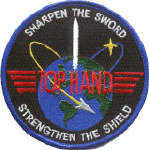
Patches from Vandenburg Air Force Base introduce additional symbolic elements. The “Top Hand” patch combines a medieval-style sword with the orbital rings and includes the motto “Strengthen the Shield,” suggesting the rings represent some form of protective barrier:
Schriever Air Force Base: Knight Templar Imagery
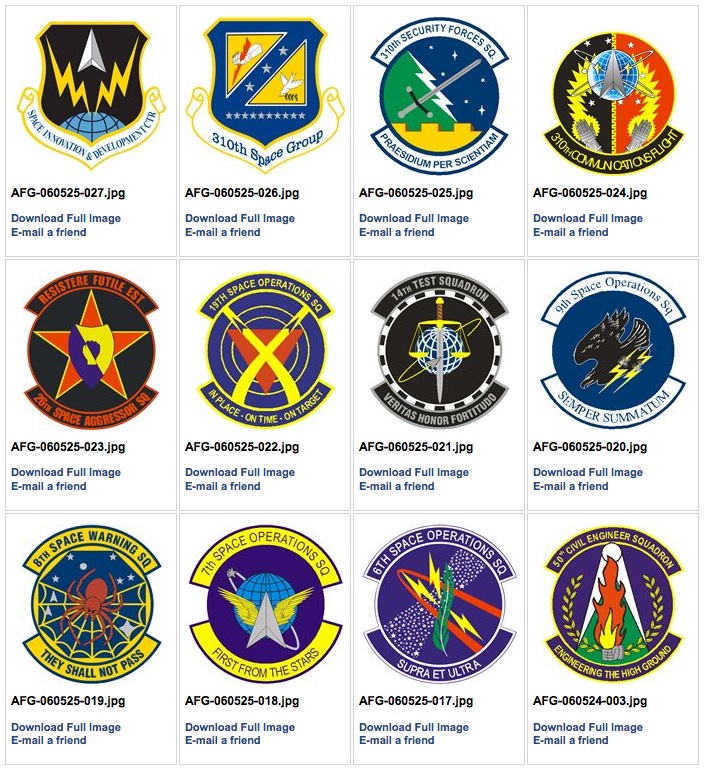
The patches from Schriever Air Force Base in Colorado contain some of the most concentrated symbolic imagery in military space insignia. Multiple pages of unit badges feature combinations of delta craft, orbital rings, Templar crosses, gauntleted hands emitting energy, skull and crossbones motifs, and a “Pegasus Master of Space” emblem reportedly worn by staff with direct involvement in space operations.

The “Defenders” patch from Schriever depicts a Knight Templar in full regalia standing before a geometric grid pattern overlaid on the Earth:

Close examination reveals that the decorative elements on the knight’s visor are stylized versions of the Templar cross:

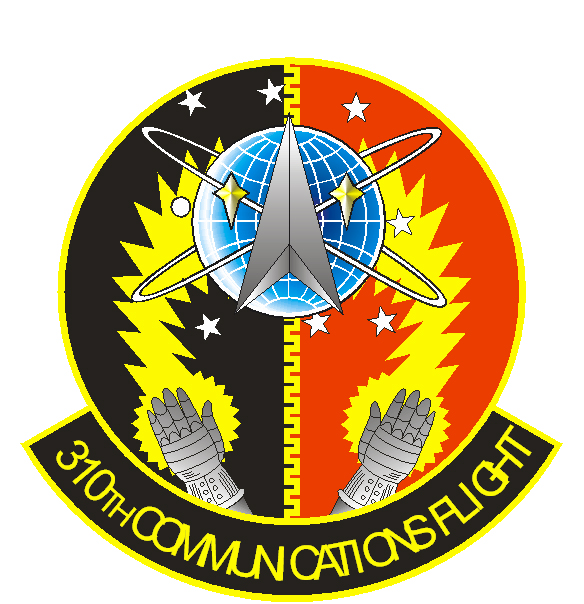
The 310th Communications Flight badge features gauntleted hands with energy emanating from the fingertips, suggesting mastery of some form of directed energy:
Pages of Schriever AFB Unit Patches
The collected unit patches from Schriever AFB reveal the density and consistency of this symbolic vocabulary. Note the recurrence of triangular craft, orbital rings, Templar gloves, swords, and Masonic compass imagery across unrelated units:
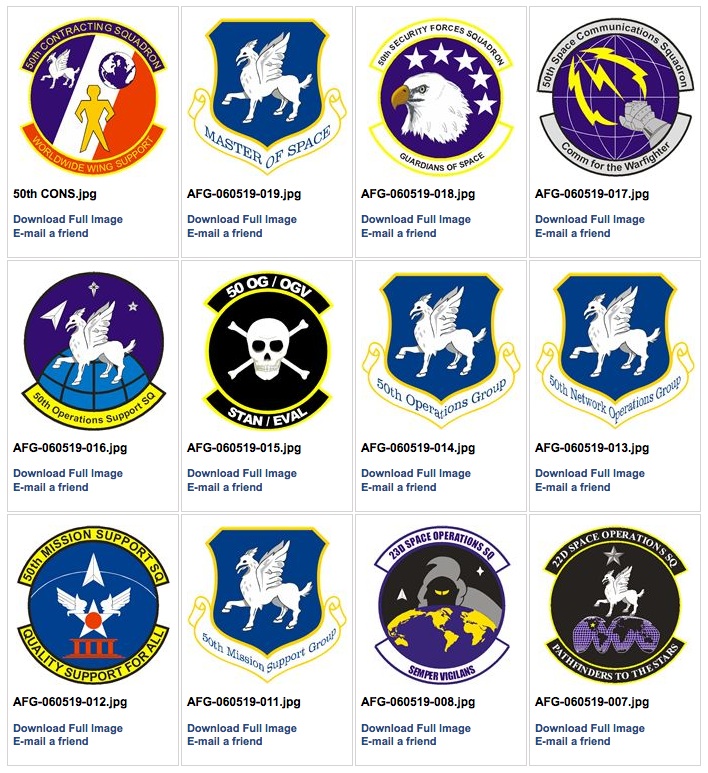
The 23rd Space Operations Squadron patch depicts a hooded entity looming over the Earth, with the motto “Semper Vigilans” (Always Vigilant):

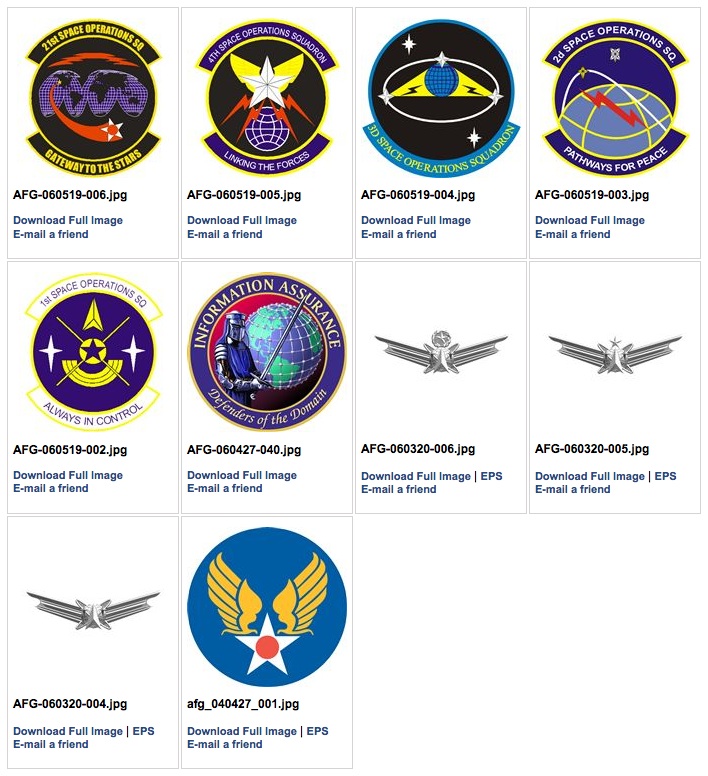
The 21st Space Operations Squadron badge carries the phrase “Gateway to the Stars” and features a pentagonal vortex pattern:

NORAD and the 310th Space Wing
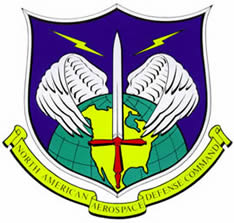
The official NORAD (North American Aerospace Defense Command) emblem continues the pattern, with the orbital rings stylized as wings and a Templar-style sword with energy emanations:
The 310th Space Wing badges similarly combine the delta craft, orbital rings, and Templar gauntlet imagery:
The Air Force Logo Evolution
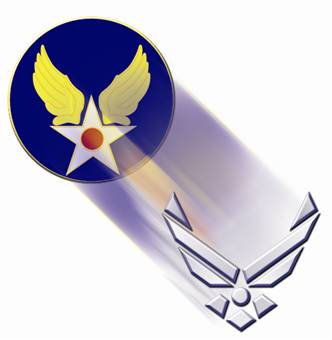
The evolution of the Air Force logo itself reveals potentially significant design choices. The original emblem featured a pentagonal star flanked by stylized Phoenix birds. The pentagon-within-a-circle motif persisted through subsequent redesigns:

The NRO Telescope Transfer
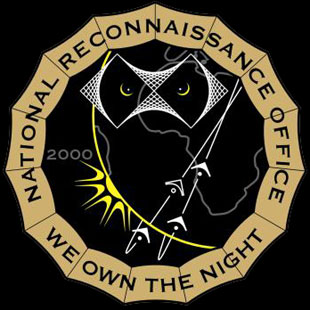
In 2012, the National Reconnaissance Office, one of sixteen US intelligence agencies, transferred two space-qualified telescopes to NASA. These instruments had 2.4-meter mirrors identical in size to the Hubble Space Telescope but featured 100 times the field of view with more advanced optical technology. The telescopes had never been launched and were in storage in Rochester, New York.
The NRO described them as having “no longer possessed intelligence-collection uses.” NASA astrophysics director Paul Hertz called them “real hardware” with “really impressive capabilities.” The transfer raised obvious questions: if the intelligence community had superior telescopes sitting unused in storage, what technology were they actually operating in orbit?
Interpreting the Pattern
The consistency of imagery across military space command patches spanning multiple decades, branches, and organizational levels is difficult to dismiss as coincidence. Delta-shaped craft appear on patches for units officially tasked with satellite operations, space surveillance, and communications. Orbital rings suggesting some form of barrier or shield around Earth recur across nearly every space command emblem. Knight Templar imagery, including swords, gauntlets, crosses, and full armored figures, appears with striking regularity in organizations ostensibly focused on satellite tracking and space debris monitoring.
Whether these symbols represent classified aerospace programs, institutional culture inherited from earlier military traditions, or simply the creative choices of patch designers, the pattern is unmistakable and warrants examination. The Strategic Air Command site, Schriever AFB galleries, and Vandenburg AFB collections provide publicly accessible archives of these insignia for independent analysis.
The question is not whether the symbols are there. They plainly are. The question is what they mean.