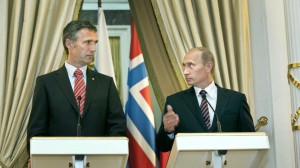
A shocking intelligence briefing from Russia’s Federal Security Service (FSB) regarding the July 22 massacre in Norway reveals that Norwegian Prime Minister Jens Stoltenberg reportedly contacted Vladimir Putin two days before the devastating attack, urgently requesting Russian assistance to prevent what would ultimately claim nearly 100 civilian lives.
Secret Intelligence Report Warned Norwegian Leadership
The FSB account indicates Stoltenberg became aware of the conspiracy against his nation the preceding Wednesday. A classified briefing compiled by the Norwegian Intelligence Service (NIS) detailed a late-March cyber intrusion targeting Norway’s senior military officials. That digital breach allegedly exposed coordination between Britain’s MI5, the U.S. Central Intelligence Agency, and elements within Norway’s own defense establishment to execute a staged “two-phase” assault — patterned after notorious incidents in both the United States and Australia during the 1990s.
Historical False-Flag Parallels: Oklahoma City and Port Arthur
The operational blueprint allegedly drew from two well-documented tragedies. The first was the April 19, 1995 bombing of the Alfred P. Murrah Federal Building in Oklahoma City, attributed to a single right-wing extremist who detonated a fertilizer-based explosive device, killing 168 people. The second model was the April 28, 1996 Port Arthur shooting in Tasmania, Australia, where a lone gunman killed 35 individuals — a catastrophe worsened by inexplicably slow police response times. In both cases, the aftermath produced sweeping restrictions on civil liberties.
The FSB characterized the Norway operation as a textbook example of an Operation Northwoods-style scenario. That 1962 U.S. government proposal involved staging domestic terror attacks to manipulate public sentiment — a framework intelligence analysts say Western governments have adapted repeatedly over subsequent decades.
Suspicious Operational Similarities Identified by FSB Analysts
Russian intelligence experts highlighted four striking parallels between the Norway tragedy and the Oklahoma City and Port Arthur incidents:
First, a vehicle packed with a substantial fertilizer-based explosive penetrated a secured government zone without detection. Second, armed police response to the active shooting was delayed by approximately 90 minutes, with no satisfactory explanation offered. Third, authorities quickly designated a single individual as the sole perpetrator despite multiple eyewitness accounts describing additional participants. Fourth, the accused was denied a public hearing — preventing open judicial scrutiny.
Rapid Identification of Breivik Raises Red Flags
Within hours of the attack, a torrent of biographical details flooded media outlets identifying the alleged mastermind as Anders Behring Breivik — described as a blond, blue-eyed Norwegian and characterized as a right-wing Christian fundamentalist. Notably, the U.S. Department of Homeland Security had released a video barely 24 hours earlier profiling precisely this demographic as the most likely domestic terror threat.
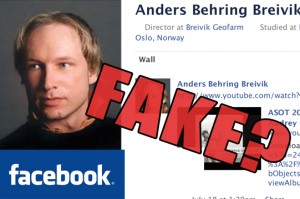
The FSB expressed deep skepticism about the reliability of information released about Breivik. American digital forensics specialists observed that Breivik’s Facebook profile appeared to have been tampered with. Key questions emerged: the original cached version of the profile lacked the “Christian / Conservative” designation that later appeared. Since Breivik was in police custody when those modifications were made and the profile was subsequently deleted by Facebook, it remained unexplained who altered the page and when.
The 1,500-Page Manifesto and Knights Templar Connection
Breivik also allegedly authored a sprawling 1,500-page document titled “2083: A European Declaration of Independence,” datelined from London in 2011. The text argued that Muslim populations in Western Europe were approaching a critical threshold and accused what it termed “Cultural Communist elites” of deliberately undermining Western civilization, warning that the continent would face violent upheaval.
The suspect portrayed himself as a modern successor to the medieval Knights Templar and claimed he had been recruited at a London gathering in April 2002, organized by two British extremists and attended by eight individuals total. Breivik’s connections to London — and by extension to MI5 — traced back to his father’s position as a senior economist at the Norwegian Embassy there. Media accounts described the younger Breivik as a sheltered, privileged product of an elite liberal household. His stated primary target was former Prime Minister Gro Harlem Brundtland, widely known as Norway’s “Mother of the Nation.”
Financial Motives: Targeting Norway’s Sovereign Wealth Fund
The FSB disputed claims linking Breivik to the Knights Templar, instead asserting that the operation served a secondary purpose of discrediting the ancient order at a time of escalating conflict among Western power structures.
Regarding the underlying motivation, the FSB report pointed to a coordinated effort by British, European Union, and American banking interests to pressure Norway — which has never joined the EU — into surrendering access to its Sovereign Wealth Fund, then valued at an estimated $1.5 trillion. Without that capital infusion, the report suggested, the broader Western financial system faced potential collapse.
The FSB drew a direct comparison to Libya, where Western powers had launched military operations and subsequently seized nearly $150 billion from that nation’s sovereign fund in what analysts dubbed the “Financial Heist of the Century.”
Breivik’s Own Words Foreshadowed Broader Conflict
Among the statements attributed to Breivik, one passage stands out for its chilling prediction of future confrontation. He claimed that most people he knew quietly supported his worldview but remained passive, believing any real conflict was decades away. He described himself as a pioneer, expressing confidence that a political realignment favoring his ideology would arrive sooner than expected. He framed his ultimate adversary not as Islam itself, but as what he called “Cultural Communism” — an ideology he considered inherently self-defeating. His stated long-term objective was the complete isolation of Islam to Muslim-majority nations, with a symbolic target date of September 11, 2083.