Reports of NYPD Officers Refusing to Work in Solidarity
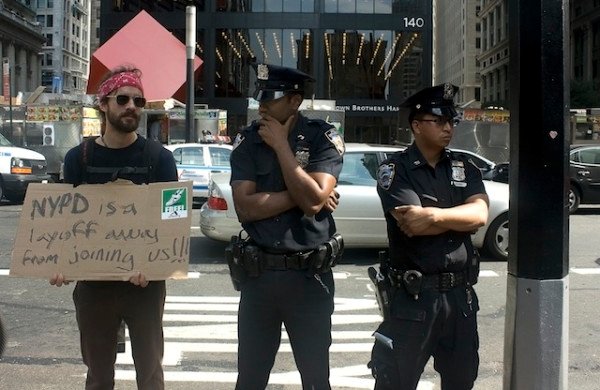
In late September 2011, as the Occupy Wall Street movement gained momentum in New York City, the protest’s organizers issued a statement on their website claiming that “over one hundred blue collar police refused to come into work in solidarity with our movement.” The reports remained unconfirmed, but the claim circulated widely and reflected growing tensions between rank-and-file officers and the department’s handling of the protests.
The statement came at a volatile moment. Deputy Inspector Anthony Bologna had been identified on video appearing to pepper spray protesters, including reportedly a deaf woman, during a Saturday demonstration. The incident drew sharp criticism and prompted Police Commissioner Raymond Kelly to announce that the Internal Affairs Bureau would examine the officer’s use of force.
The Pepper Spray Incidents Under Scrutiny
Multiple videos surfaced showing Bologna deploying pepper spray against what appeared to be peaceful demonstrators. In one recording, the officer was seen moving into a group of protesters, discharging the spray, and then quickly withdrawing from the area. The footage spread rapidly online at a time when mainstream media coverage of the occupation was still minimal, and it became one of the early catalysts that drew broader public attention to both the movement and the police response.
The Internal Affairs investigation represented one of the first formal accountability measures taken in response to force used against Occupy protesters, though critics argued that the pattern of aggressive policing extended well beyond a single officer.
Rapid Expansion Across Cities
By late September 2011, the movement had spread well beyond its origins in Zuccotti Park. Protests were underway or being organized in Los Angeles, Chicago, Sarasota, Washington D.C., Lexington, and San Francisco. An Occupy Washington, D.C. action was scheduled to begin on October 6, 2011.
The Occupy Together website launched as a coordinating platform for occupation protests not only across the United States but internationally, marking the movement’s transition from a localized New York demonstration into a decentralized global phenomenon.
Celebrity and Media Support Emerged
Public figures began publicly aligning with the movement during this period. Linguist and political commentator Noam Chomsky, filmmaker Michael Moore, and actress Susan Sarandon were among those who visited or voiced support for the protesters. Hip-hop artist Immortal Technique performed at the occupation site.
MSNBC host Lawrence O’Donnell devoted coverage to the movement and specifically criticized the police response, characterizing the officers who used force against peaceful demonstrators as the actual instigators of violence at the protests.
The Broader Significance
The reports of officers refusing to work — whether fully accurate or amplified through the information ecosystem of a fast-moving social movement — highlighted a fundamental tension. The Occupy movement’s framing as “the 99 percent” was designed to include police officers and other public servants in its coalition rather than positioning them as adversaries. The question of whether law enforcement would identify with the economic grievances of the protesters or continue enforcing orders to clear and contain them would remain a central dynamic throughout the months of occupation that followed.