Pakistan Detained CIA Assets After the Abbottabad Operation
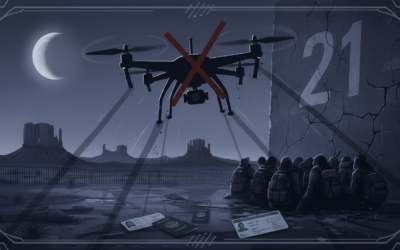
In the weeks following the covert Navy SEAL raid that killed Osama bin Laden in May 2011, Pakistani intelligence moved swiftly against the very individuals who had helped make the operation possible. The Inter-Services Intelligence directorate (ISI) arrested at least five CIA informants — Pakistani nationals who had provided critical ground-level surveillance in the months before the assault on the Abbottabad compound.
Among those detained was a serving Pakistani Army major accused of recording the license plates of vehicles entering and leaving the walled compound where Bin Laden had been hiding. These informants had operated at considerable personal risk, and their arrests sent shockwaves through the American intelligence community.
CIA Leadership Rated Pakistani Cooperation at Historically Low Levels
The severity of the breakdown was laid bare during a closed-door session of the Senate Intelligence Committee. When lawmakers asked CIA Deputy Director Michael J. Morell to score Pakistan’s counterterrorism cooperation on a ten-point scale, he reportedly answered with a blunt “three.”
CIA Director Leon Panetta personally raised the detained informants during a trip to Islamabad, pressing Pakistani military and intelligence leaders on the matter. Agency officials described the meetings as productive but acknowledged the relationship was under extraordinary strain.
Why Pakistan Targeted Its Own Citizens Who Helped Find Bin Laden
The arrests exposed a fundamental misalignment between Washington and Islamabad. While American officials expected their Pakistani counterparts to dismantle the support network that had sheltered the world’s most wanted fugitive for years, Pakistan’s military establishment instead turned its focus inward — punishing those who had aided a unilateral foreign operation on sovereign Pakistani soil.
For the Pakistani military, the Bin Laden raid represented a profound institutional humiliation. The operation was carried out without Islamabad’s knowledge or consent, and its success implied either incompetence or complicity at the highest levels of the security apparatus. The military, long considered the most powerful and respected institution in the country, found itself facing what analysts described as its worst crisis of public confidence in decades.
The Unraveling of US-Pakistan Intelligence Sharing
The deterioration had actually begun months earlier, following an incident in Lahore in January 2011 when a CIA contractor shot and killed two Pakistani men on a crowded street. That episode triggered a cascade of restrictions that steadily eroded the operational partnership.
ISI officers became broadly unwilling to conduct surveillance missions on behalf of the CIA. The Pakistani government tightened its visa regime, making it significantly harder for American intelligence personnel to enter and operate within the country. Most critically, Islamabad threatened to impose new restrictions on the armed drone program that the CIA considered its most effective tool against militant leadership in the tribal belt.
Pentagon Training Programs and Drone Operations Disrupted
The fallout extended well beyond the intelligence sphere. An ambitious Pentagon initiative to train Pakistani paramilitary forces for operations against al-Qaeda and Taliban fighters in the northwestern tribal regions was terminated entirely. The last of approximately 120 American military advisers departed the country, and officials scrambled to find alternative assignments for roughly 50 Special Forces support personnel whose hard-won Pakistani visas would likely be impossible to replace.
The CIA, anticipating further restrictions, began contingency planning to relocate some of its drone fleet from bases inside Pakistan to facilities in Afghanistan. From there, the unmanned aircraft could fly eastward across the mountains into Pakistan’s tribal areas, though with reduced loiter time and operational flexibility.
Congressional Anger and Accusations of ISI Complicity
On Capitol Hill, frustration with Pakistan boiled over into public accusations. Representative Mike Rogers, the Michigan Republican who chaired the House Intelligence Committee, stated that he believed elements within the ISI and the Pakistani military had actively helped shelter Bin Laden during the years he spent in hiding.
Meanwhile, Panetta used his Islamabad visit to push for expanded drone access over a wider swath of the tribal regions. The Pakistani ambassador to the United States acknowledged the tensions but framed them as part of an ongoing negotiation, telling reporters that the two intelligence agencies were working out mutually agreeable terms for cooperation in fighting terrorism.
A Fractured Alliance at a Critical Moment
The timing of the rupture was particularly damaging from Washington’s perspective. American officials believed that Bin Laden’s death had created a window of opportunity to further weaken al-Qaeda through sustained pressure — additional raids and expanded drone strikes targeting the leadership vacuum. Instead, the very partner needed to exploit that opening was actively obstructing operations and detaining the assets who had made the breakthrough possible.
The episode illuminated a recurring tension at the heart of the US-Pakistan relationship: two nominal allies pursuing fundamentally different strategic objectives, bound together by necessity but divided by mistrust, sovereignty concerns, and competing definitions of national security.