Ten Years of the Patriot Act: Civil Liberties Under Siege
On October 26, 2011, the USA PATRIOT Act marked its tenth anniversary. A decade of expanded surveillance authority had produced troubling results for civil liberties advocates, who argued the law’s broad powers had been used far more aggressively against ordinary Americans than against actual terrorism suspects.
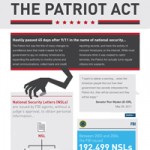
The numbers told a striking story. Under the relaxed National Security Letter (NSL) standards established by the Patriot Act, the FBI issued 143,074 NSLs between 2003 and 2005. The result of that massive intelligence-gathering effort was zero terrorism prosecutions. The FBI did refer 17 criminal money laundering cases, 17 immigration-related cases, and 19 fraud cases — but the overwhelming majority of those 143,000-plus NSLs targeted innocent people whose personal information was demanded from third parties. Because each NSL came with a gag order, those individuals would never know their records had been sought.
The Nicholas Merrill Case: Fighting Secrecy From the Inside
The personal cost of the NSL regime was illustrated by the case of Nicholas Merrill, the owner of a small internet service provider who received an NSL demanding customer information. Merrill challenged the letter in court, and the government eventually dropped its demand for information and allowed him to reveal his identity.
Yet the secrecy provisions continued to bind him. Even after winning his legal challenge, Merrill remained prohibited — under threat of imprisonment — from telling the person whose information had been sought, or from identifying precisely what information the government had demanded. His case demonstrated how the Patriot Act’s secrecy mechanisms could outlast even a successful legal defense.
Secret Interpretations of the Law
Perhaps more alarming than the law’s known provisions were its unknown ones. Senators Ron Wyden of Oregon and Mark Udall of Colorado repeatedly warned that the executive branch had developed a secret legal interpretation of the Patriot Act that went beyond what the public understood the law to authorize.
Senator Wyden stated publicly: “When the American people find out how their government has secretly interpreted the Patriot Act, they will be stunned and they will be angry.” Civil liberties organizations filed Freedom of Information Act requests seeking information about the government’s interpretation and use of these provisions, and when the government failed to respond, followed up with lawsuits to compel disclosure.
Extension and Expansion of Surveillance Powers
Despite growing concerns, the Patriot Act was extended through 2015. The law’s surveillance provisions represented just one front in an expanding government information-collection apparatus. A broader timeline of post-9/11 surveillance showed the Patriot Act as a starting point for an escalating series of programs and authorities.
The next frontier was cybersecurity legislation. Proposals circulating at the time would have swept up large amounts of personal information about innocent Americans in the name of internet security. Some proposals even suggested granting the executive branch authority to shut down internet access during a vaguely defined “cyber emergency” — a term that lacked clear legal definition even among the legislators drafting the bills.
The Fundamental Tension
The Patriot Act’s first decade crystallized a persistent tension in American governance: the trade-off between security authority and constitutional rights. The FBI’s own data suggested that the law’s most invasive provisions produced negligible counterterrorism results while generating an enormous volume of intrusions into the private records of ordinary citizens. Whether the law’s supporters or its critics would ultimately prevail in shaping its future remained an open question as it entered its second decade.