
Project Hammer: Covert Finance and the Collapse of the Soviet Union
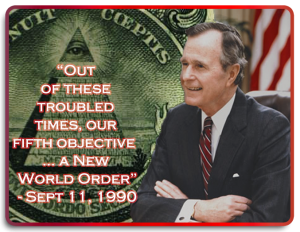
In 1989, the administration of President George H.W. Bush allegedly initiated a covert financial operation known as Project Hammer, designed to destabilize and ultimately collapse the Soviet economy. Drawing on classified funding sources and operating through intelligence channels established during prior covert programs, the project reportedly involved the manipulation of currency markets, the destabilization of the ruble, support for the August 1991 coup attempt against Mikhail Gorbachev, and the systematic acquisition of Soviet energy and munitions assets by Western corporations and financial institutions.
On November 1, 2001, President George W. Bush issued Executive Order 13233, restricting public access to presidential records on grounds of national security. This order effectively sealed records from his father’s administration covering the critical 1990-1991 period when Project Hammer operations were allegedly at their peak.
The Black Eagle Trust: Origins of Covert Funding
The financial foundation for Project Hammer reportedly traces back to World War II and the massive plunder operations conducted by Imperial Japan across Asia. Under the code name Golden Lily, established in November 1937 and headed by Prince Chichibu, brother of Emperor Hirohito, the Japanese military systematically looted gold, gems, and cultural treasures from occupied territories. An army of jewelers, financial specialists, and smelters accompanied military forces to process and transport the seized wealth.
After the Allied blockade, Golden Lily operations relocated from Singapore to Manila, where 175 underground storage sites were constructed by slave laborers and prisoners of war. Billions of dollars in gold and treasure were stockpiled in these caverns. After the war, portions of this hoard were discovered by Edward Lansdale, a prominent Cold War intelligence operative who directed recovery operations.
At the 1944 Bretton Woods conference, Allied leaders discussed creating a global political action fund using recovered Axis plunder. The resulting Black Eagle Trust was managed by Secretary of War Henry Stimson, assisted by John J. McCloy and Robert Lovett. The trust was used to fund covert anti-communist operations, bribe political leaders, manipulate foreign elections, and support allied treasuries throughout the Cold War. These operations were conducted without congressional knowledge or oversight.
The Vulcan Group and Its Reincarnation
The operatives who executed Project Hammer became known as the “Vulcans.” When George W. Bush was installed as president in 2000, many of the same individuals returned to positions of power. The reconstituted group included Condoleezza Rice, who had served as the elder Bush’s Soviet and East European Affairs Advisor during the dissolution of the USSR, along with Richard Armitage, Stephen Hadley, Richard Perle, Paul Wolfowitz, Robert Zoellick, and Dov Zakheim.
Several of these figures were also members of the Project for a New American Century (PNAC), established in 1997 by William Kristol and Robert Kagan to promote American global leadership through military dominance. The ideological framework drew from neoconservative thinkers Leo Strauss and Max Shachtman.
The Vulcans’ financial operations reportedly generated massive profits for participants. In September 1991, George H.W. Bush and Federal Reserve Chairman Alan Greenspan allegedly financed $240 billion in covert bonds to fund the economic assault on the Soviet Union. These bonds were backed by the Black Eagle Trust and reportedly replaced with US Treasury notes, effectively transferring the liability to American taxpayers.
The Seizure of Russian Energy Assets
The collapse of the Soviet Union opened Russian energy resources to Western acquisition on terms highly favorable to foreign investors. BP Amoco became the largest foreign direct investor in Russia in 1997 with a half-billion dollar purchase of a 10 percent stake in Russian oil conglomerate Sidanko. In October 1998, Halliburton Energy Services entered an agreement with Moscow-based Tyumen Oil Company (TNK) to develop Western Siberian oil fields.
TNK held proven oil reserves of 4.3 billion barrels, with crude oil production of 420,000 barrels per day. In 2003, BP and the Alfa-Access-Renova consortium formed TNK-BP in the largest transaction in Russian corporate history, creating Russia’s second-largest oil company with nearly 100,000 employees.
The fate of Mikhail Khodorkovsky illustrates the political dynamics of this period. Khodorkovsky built Yukos into Russia’s second-largest oil company after acquiring it for $168 million through a controversial privatization auction in 1995. His Bank MENATEP was named as a defendant in the Avisma lawsuit and may have facilitated large-scale theft of Soviet Treasury funds during the USSR’s collapse. Khodorkovsky was arrested in October 2003 and sentenced to eight years on fraud and tax evasion charges.
When Khodorkovsky was detained, his concealed business relationship with the Rothschild family was exposed. Jacob Rothschild assumed Khodorkovsky’s 26 percent controlling stake in Yukos, while Khodorkovsky’s board seat went to Edgar Ortiz, a former Halliburton vice president who had served under Dick Cheney.
The September 11 Connection
Researchers including E.P. Heidner, in a paper titled “Collateral Damage: U.S. Covert Operations and the Terrorist Attacks on September 11, 2001,” have drawn connections between the Project Hammer financial operations and the September 11 attacks. Three major securities brokers maintained offices in the World Trade Center: Cantor Fitzgerald, Euro Brokers, and Garbon Inter Capital.
Flight 11 struck just below the floors occupied by Cantor Fitzgerald, America’s largest securities broker. An explosion on the North Tower’s vacant 23rd floor, directly beneath FBI offices and Garbon Inter Capital on the 25th floor, caused fires across multiple floors. According to Heidner’s research, the government held hundreds of billions of dollars in securities in these locations, and the $240 billion in covert bonds issued in September 1991 were due for settlement on September 12, 2001.
The Federal Reserve, which had backed up its downtown operations to a remote location, assumed emergency powers on the afternoon of September 11 and electronically cleared the securities. Within two months, the Federal Reserve increased the money supply to absorb the $240 billion, effectively passing the cost to taxpayers.
The federal agency investigating these covert bonds, the Office of Naval Intelligence, was housed in the section of the Pentagon struck on September 11. Of the 125 Pentagon fatalities, 39 of 40 personnel working in the Office of Naval Intelligence were killed.
Insider Trading and Financial Irregularities
In the days preceding September 11, anomalous trading activity in the options markets attracted attention from investigators worldwide. Between September 6 and 7, 2001, the Chicago Board Options Exchange processed 4,744 put options on United Airlines against only 396 call options, representing activity at least six times above normal levels. On September 10, 4,516 put options were purchased on American Airlines compared to 748 calls.
Morgan Stanley, which occupied floors 43 through 74 of WTC Tower 2, saw 2,157 put options purchased in the three trading days before the attacks, compared to an average of 27 contracts per day prior to September 6. At least one trade worth $2.5 million went unclaimed.
Andreas von Bulow, a former German parliamentarian who had served on the committee on intelligence services with access to classified information, estimated insider trading profits surrounding September 11 at approximately $15 billion. He told the Daily Telegraph that the US government apparatus “must have played a role” and that the official narrative was constructed “to hide the truth of their own covert operation.”
On September 10, 2001, Defense Secretary Donald Rumsfeld publicly announced that the Pentagon could not account for $2.3 trillion in transactions. The accounting personnel and records needed to trace those funds were located in the section of the Pentagon destroyed the following day.
The Intelligence-Banking Nexus
The career of Alvin “Buzzy” Krongard illustrates the revolving door between intelligence agencies and financial institutions. Krongard served as CEO of Alex Brown and Sons, which merged with Bankers Trust in 1997. He then joined the CIA in 1998, where Director George Tenet directed his skills toward private banking operations within the elite financial community.
A January 2000 lawsuit filed by Reginald Howe and the Gold Anti-Trust Action Committee accused several US bullion banks, including Deutsche Bank Alex Brown, the US Treasury, Alan Greenspan, the Federal Reserve, Citibank, and Chase, of illegally dumping US Treasury gold on the market. Alex Brown, once managed by Krongard, was identified as the firm that placed put options on United Airlines stock before September 11.
Richard Wagner, a data retrieval specialist, estimated that more than $100 million in irregular transactions passed through WTC computer systems before and during the attacks. A Deutsche Bank employee reported that approximately five minutes before the first plane struck, the Deutsche Bank computer system in the WTC was seized by an external entity and all files were rapidly uploaded to an unidentified location.
Executive Orders and the Concealment of Records
The legal framework for Project Hammer operations was established through a series of presidential executive orders. Many of those issued during the Reagan administration were reportedly authored by Vice President Bush or his legal associates. The project may have originated with CIA Director William Casey, who had directed OSS operations through Allen Dulles during World War II.
George W. Bush’s Executive Order 13233, issued weeks after September 11, sealed presidential records that could have revealed the details of Project Hammer operations. The timing of this order, coming just as the covert bonds were being cleared and the investigating agencies destroyed, raises questions about whether the concealment of these records was a primary objective rather than a secondary benefit.
The documented facts of this narrative include the dissolution of the Soviet Union, the acquisition of Russian energy assets by Western corporations, anomalous trading patterns before September 11, the destruction of securities broker offices and intelligence agency records in the attacks, and the sealing of presidential records. The interpretation of these facts as elements of a coordinated covert operation remains a subject of ongoing investigation and debate.