The CIA’s Classified Psychic Espionage Program
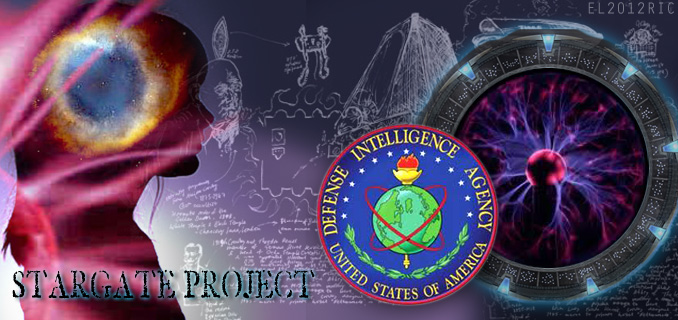
For more than two decades, the United States government funded and operated a classified program that trained individuals in an esoteric discipline known as remote viewing — the purported ability to perceive distant locations, objects, and events using only the mind. The program, which came to be known as Project Stargate, was developed under rigorous scientific protocols and deployed for intelligence gathering purposes ranging from counter-terrorism to tracking secret military installations abroad.
The program remained classified until 1995, when the CIA declassified its records, confirming what had long been dismissed as fringe science: the U.S. intelligence community had invested significant resources into exploring and weaponizing psychic phenomena.
Origins at the Stanford Research Institute
The foundational research was conducted at the Stanford Research Institute (SRI) in Menlo Park, California. Physicist Russell Targ, laser scientist Hal Puthoff, and psychic practitioner Ingo Swann were the original architects of the program. Their mandate was twofold: to develop a scientific understanding of psychic abilities and to apply those abilities as tools for intelligence collection, particularly against the Soviet Union during the Cold War.
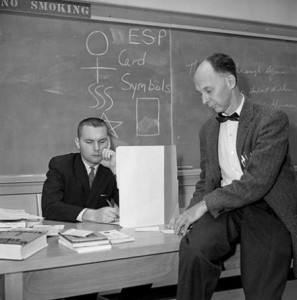
SRI’s research was supported by the CIA and other government agencies for over twenty years. The investigators found that individuals could be trained relatively quickly in remote viewing techniques and could frequently produce actionable intelligence about both present conditions and future events at distant locations.
Operational Results and Intelligence Applications
Project Stargate produced a series of results that, according to program participants and declassified documents, went well beyond what chance could explain. Remote viewers reportedly provided detailed renderings of secret Soviet military facilities, identified the locations of Red Brigade terrorism hostages in Italy, assisted in the Israeli hostage crisis by pinpointing victim locations, and helped locate Scud missile sites during the first Gulf War.
One of the program’s most notable operatives was Joseph McMoneagle, a retired senior military officer who had been involved in hundreds of remote viewing sessions. When the program was declassified in 1995, McMoneagle appeared on ABC’s Nightline with Ted Koppel and demonstrated the technique in a live test, reportedly with considerable accuracy.
The remote viewing process worked by providing viewers with minimal targeting information — sometimes nothing more than geographical coordinates or a simple reference code that researchers called an “address.” Viewers would then describe the shapes, forms, colors, sounds, and even electromagnetic characteristics of the target location. According to program documentation, accuracy in controlled series could reach as high as 80 percent, with some sessions achieving blueprint-level detail of target sites.
The Moscow-San Francisco Experiment
In 1984, Russell Targ organized a pair of remote viewing experiments spanning 10,000 miles between Moscow and San Francisco. The test subject was Djuna Davitashvili, a well-known Russian healer. Her task was to describe the location where a colleague would be positioned in San Francisco — requiring her to focus her perception across an enormous distance and two hours into the future.
The experiments were conducted under the oversight of the USSR Academy of Sciences. Davitashvili accurately described the target locations in each trial, and the experiments were declared successful by the supervising scientists.
The Siberian Weapons Laboratory Test
A decade earlier, in 1974, Targ and Puthoff conducted a demonstration of remote viewing capabilities for the CIA. Pat Price, a retired police commissioner serving as a remote viewer, was given only the latitude and longitude coordinates of a location deep in Siberia. With no on-site cooperation or additional information, Price described both the interior and exterior of what turned out to be a secret Soviet weapons laboratory.
The accuracy of Price’s description was so striking that it triggered a formal Congressional investigation to determine whether there had been a breach of national security — whether classified information about the facility had been leaked to the researchers. No security breach was found. The government continued funding the program for another fifteen years.
Scientific Publication and Peer Review
Data from the SRI investigations achieved high levels of statistical significance, with results described as thousands of times greater than what would be expected by chance alone. The research was published in prestigious peer-reviewed journals including Nature, The Proceedings of the Institute of Electrical and Electronics Engineers, and The Proceedings of the American Academy of Sciences.
The two decades of remote viewing research conducted for the CIA were later documented in the book “Miracles of Mind: Exploring Non-local Consciousness and Spiritual Healing,” co-authored by Russell Targ and Jane Katra.
Implications of Government Psychic Research
The declassification of Project Stargate confirmed that the U.S. government had not only acknowledged the existence of psychic phenomena but had actively developed and deployed these capabilities as intelligence tools. The program’s history raised significant questions about the intersection of consciousness research, military applications, and governmental secrecy.
The fact that multiple world governments invested in similar programs during the Cold War — with both the United States and the Soviet Union conducting parallel research — suggested that the intelligence value of remote viewing was taken seriously at the highest levels of national security decision-making, regardless of how the broader scientific community viewed the underlying phenomena.
Whether these programs represented a genuine breakthrough in understanding human consciousness or an elaborate exercise in confirmation bias remains debated. What is not in dispute is that Project Stargate consumed millions of dollars in federal funding, involved respected scientists and military personnel, and produced results that government agencies considered operationally useful for more than two decades.