Romney Endorsed Obama’s Drone Strategy During the 2012 Foreign Policy Debate
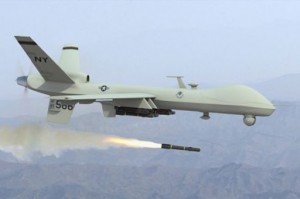
During the October 2012 foreign policy debate, Mitt Romney essentially gave his stamp of approval to President Obama’s use of unmanned aerial strikes. Regardless of which candidate won the upcoming election, expanded drone operations were virtually guaranteed heading into 2013. But did that make the two men interchangeable on this issue?
Political commentator Andrew Sullivan argued it did not. While live-blogging the debate, Sullivan posed a pointed question suggesting Romney would handle drone operations with less care than Obama had. The underlying assumption was that the sitting president had managed the program responsibly.
That assumption, however, did not hold up under scrutiny.
Seven Troubling Realities of U.S. Drone Operations Under Obama
While Sullivan and others acknowledged Obama performed better in the debate and would likely pursue a more measured foreign policy overall, the specifics of how the drone campaign had been conducted raised serious concerns:
- Investigative journalist Jane Mayer documented that the CIA’s drone operations were classified as covert, with the intelligence agency refusing to share any public information about its operational zones, target selection criteria, chain of command, or casualty figures.
- The Obama White House sidestepped judicial review by claiming the drone program was secret — even while administration officials publicly highlighted successful strikes against terrorist targets.
- As Mayer further reported, the program’s secrecy meant there was no functioning accountability structure, despite the CIA having killed numerous civilians within a politically unstable, nuclear-armed nation where the United States was not officially at war.
- According to reporting by The New York Times in May 2012, the administration adopted a controversial casualty counting method that effectively classified all military-age males within a strike area as combatants unless posthumous intelligence specifically cleared them.
- The CIA was authorized to conduct so-called “signature strikes” — attacks launched against individuals whose identities were completely unknown to the operators.
- Reporting from the Bureau of Investigative Journalism in February 2012 revealed that following initial drone strikes in Pakistan, subsequent attacks targeted people who arrived to rescue survivors and recover bodies, as well as those attending funeral gatherings for the dead.
- A joint report from the law schools at NYU and Stanford documented that residents of Waziristan lived in daily fear due to the drone campaign. Data from the New America Foundation — using methods that likely undercounted civilian deaths — still showed hundreds of innocent people killed at minimum.
A Global Killing Program With Zero Oversight
Taken together, the picture was stark: a worldwide lethal operation with no checks and balances, run through the CIA instead of the Defense Department. The administration invoked state-secrets doctrine to block court challenges while simultaneously touting the program’s effectiveness. Targets included people whose names were unknown. Every military-age male killed was automatically labeled a “militant.” Pakistan’s government reportedly selected some targets. Hundreds of civilians had died, including rescue workers, mourners, and a 16-year-old American citizen named Abdulrahman al-Awlaki.
Despite being aware of all these facts, Sullivan continued to characterize the program as responsibly managed.
Sullivan’s Own Words Contradicted His Defense of the Program
What made the situation particularly striking was that Sullivan himself had previously articulated nearly every reason why the program lacked responsible oversight.
Sullivan had written that the CIA essentially served as “its own judge, jury and executioner,” was far less answerable to the public than military branches, was more prone to violating the laws of armed conflict and destroying evidence, and more likely to escalate situations rather than resolve them.
In June 2011, Sullivan wrote that the president was waging two unauthorized conflicts — in Libya and Yemen — with one run entirely by the CIA using unmanned aircraft. He warned about the dangers of granting the intelligence agency unchecked authority over a war with accountability running only to a president motivated to conceal mistakes.
On another occasion, Sullivan cautioned that placing drone technology in the hands of an executive operating without input from other branches of government created a fundamental problem. He acknowledged that classifying every military-age man near a suspected militant as a terrorist was an accountability dodge. He even argued that if the CIA could unilaterally launch wars using weapons that produced zero American casualties, the temptation toward permanent conflict would undermine the vision America’s founders had established.
Both Candidates Posed the Same Drone Accountability Risk
So back to Sullivan’s debate-night challenge about whether Romney would exercise the same restraint. The most honest assessment was that both men’s drone policies would likely look remarkably similar — meaning deeply troubling, with consequences nobody could predict. That was the inevitable outcome when any leader received the power to conduct lethal operations without oversight or transparency.
There was no credible basis for predicting that one candidate would kill more civilians with drones than the other. Obama had already ordered the killing of an American citizen without trial and authorized strikes in nations where no war had been declared. It was difficult to imagine what additional boundary Romney could cross.
If Romney had won and proven even worse on drones, the responsibility would not have rested solely with him. Obama and his supporters had built the bipartisan consensus behind a worldwide drone strategy and established every necessary precedent — all while retaining the support of allies like Sullivan. A Romney administration would have inherited a fully operational drone fleet conducting strikes across multiple countries with no judicial or congressional oversight, and American citizens already in the crosshairs. That infrastructure was ready and waiting on inauguration day.
Originally based on reporting by Conor Friedersdorf for The Atlantic (October 2012). Content has been independently rewritten and expanded by DecryptedMatrix editorial staff.