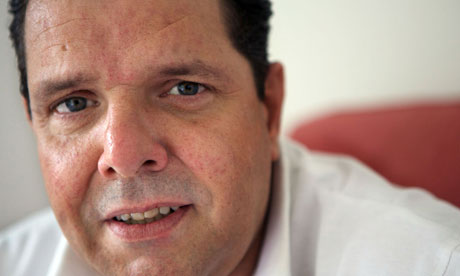
On July 18, 2011, Sean Hoare, the former News of the World showbusiness reporter who became the first named journalist to publicly allege that editor Andy Coulson knew about phone hacking at the tabloid, was found dead at his home in Watford, England. He was in his mid-forties.
The Discovery and Police Response
Hertfordshire police were called to a Langley Road address at 10:40 a.m. after concerns were raised about the welfare of a resident. Officers and paramedics arrived to find Hoare’s body, and he was pronounced dead at the scene. Police initially classified the death as unexplained but stated they did not consider it suspicious.
The timeline of the police response drew attention. Three police cars and two ambulances arrived at the property shortly before 11 a.m. but departed around 3 p.m. For several hours afterward, there was no police presence at the scene at all. It was not until approximately 9:15 p.m., after news of the death became public, that a Scientific Services Unit van arrived. Officers carrying evidence bags, forensic equipment, and cameras entered the apartment roughly twelve hours after the initial call.
Neighbors described Hoare as a sociable man who regularly sat on his balcony chatting with residents and watered the communal front lawn. His partner was believed to have been away on holiday at the time. One neighbor recalled that Hoare had mentioned feeling unwell about a month earlier and had visited a doctor, but subsequently appeared to have recovered.
Hoare’s Role in Exposing the Phone Hacking Scandal
Hoare had been central to the exposure of systematic phone hacking at Rupert Murdoch’s News of the World. He first went on the record in a 2010 New York Times investigation, alleging that Coulson not only knew about phone hacking but actively encouraged reporters to intercept the voicemails of celebrities to obtain exclusive stories.
In a subsequent BBC interview, Hoare stated that Coulson had personally asked him to hack phones. He described Coulson’s public denials as straightforward lies. Coulson, who had gone on to serve as communications director for Prime Minister David Cameron, denied all the allegations through a Downing Street spokesperson.
Hoare and Coulson had a long professional history. They first worked together at the Sun, where Hoare said he played recordings of hacked voicemails for Coulson. When both moved to the News of the World, Hoare said the practice continued with Coulson’s knowledge and encouragement. In September 2010, police interviewed Hoare under caution about his claims, but he declined to comment during that interview.
The “Pinging” Revelations
Just days before his death, Hoare had returned to public attention with new allegations. He told the New York Times that News of the World reporters had access to mobile phone tracking technology normally restricted to police, a technique known as “pinging.” This method triangulated the distance between a mobile handset and nearby phone masts to determine the phone owner’s precise location.
In his account, a reporter would request a target’s location from a news desk executive, and within 15 to 30 minutes the location would be provided. Hoare described the process as routine and said it reflected a culture of absolute discipline in the chain of command at the paper. He characterized Coulson’s claims of ignorance about these practices as implausible given the rigid editorial hierarchy.
Hoare also named a private investigator he said had connections to the News of the World, predicting that increasing scrutiny would cause people involved to begin cooperating with investigators to protect themselves.
Hoare’s Motivations and Personal Circumstances
Hoare had been dismissed from the News of the World over alcohol and drug problems, and he had subsequently undergone rehabilitation. He acknowledged his substance abuse history but maintained it was irrelevant to the truth of his allegations about hacking.
In conversations shortly before his death, Hoare expressed hope that the phone hacking scandal would lead to broader reform in British journalism. He said his decision to go public was motivated by a desire to clean up the industry rather than personal gain, and he emphasized that he was not receiving payment for his testimony.
He also mentioned having been recently injured while helping to dismantle a marquee erected for a children’s party, sustaining a broken nose and a badly injured foot when struck accidentally with a pole.
The Timing and Its Significance
Hoare’s death came at a critical moment in the phone hacking scandal. The News of the World had published its final edition just eight days earlier on July 10, 2011, after 168 years of publication. The closure followed revelations that the paper had hacked the phone of murdered teenager Milly Dowler. Parliament was conducting hearings, senior executives were being arrested, and the Metropolitan Police was facing scrutiny over its own failures to properly investigate the original hacking allegations.
Hoare had been the scandal’s most prominent named source, and his willingness to go on the record had been instrumental in maintaining pressure for a full investigation. His final public statement, made days before his death, carried an implicit warning: “There’s more to come. This is not going to go away.”