An Impossible Artifact in a Sealed Tomb
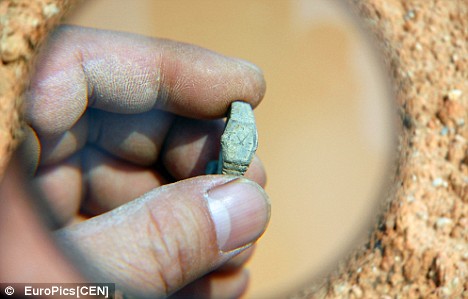
Archaeologists excavating what they believed to be an undisturbed Ming Dynasty tomb in Shangsi, southern China, made a discovery that defied easy explanation. Inside the sealed burial chamber, encrusted in mud and rock, they found a miniature ring-shaped watch bearing the inscription “Swiss.” The timepiece had stopped at 10:06 a.m.
The find was baffling on multiple levels. The Ming Dynasty ruled China from 1368 to 1644, and the tomb was believed to have been sealed since the occupant was buried centuries ago. Watches of this type did not exist during that era, and Switzerland as a nation did not yet exist when the tomb was supposedly closed for the last time.
The Discovery Unfolds on Camera
The archaeological team was accompanied by two journalists filming a documentary when the object came to light. Jiang Yanyu, former curator of the Guangxi Museum, described the moment of discovery.
As the team worked to remove soil from around the coffin, a piece of rock broke free and struck the ground with a distinctly metallic sound. Upon examination, the object turned out to be a ring. Closer inspection after cleaning revealed the unmistakable form of a miniature timepiece.
Questions Without Answers
The discovery raised more questions than it answered. How could a roughly century-old Swiss-made watch end up inside a tomb that had supposedly been sealed for four hundred years? Had the tomb been opened at some earlier point without documentation? Was the artifact planted, or was there some other explanation entirely?
No definitive answer was ever publicly established. The find remains one of those archaeological curiosities that resists neat categorization, sitting uncomfortably between documented history and unexplained anomaly.