Question: Should You Trust Tor?

Question: Should You Trust Tor?

nsa-tor-spying

Answer: Not if Your Life is at Stake

By Bill Blunden, July 16, 2014

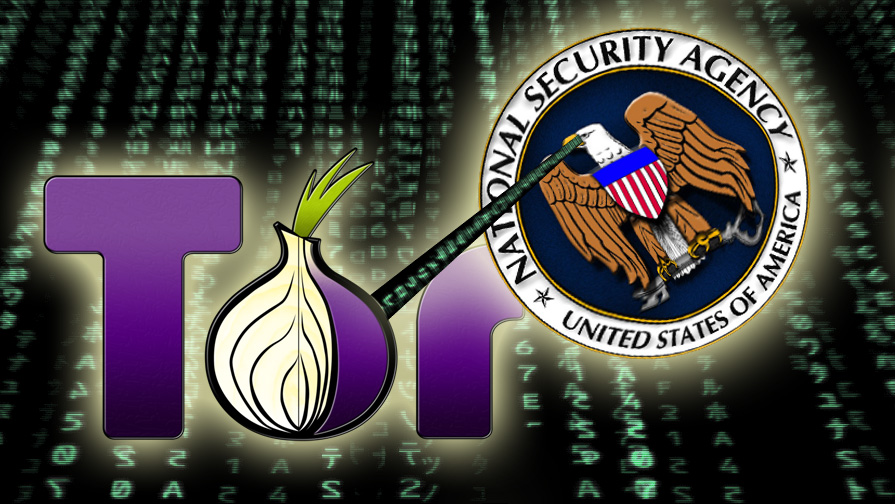
In the ongoing drizzle of Snowden revelations the public has witnessed a litany of calls for the widespread adoption of online anonymity tools. One such technology is Tor, which employs a network of Internet relays to hinder the process of attribution. Though advocates at the Electronic Frontier Foundation openly claim that “Tor still works[1]” skepticism is warranted. In fact anyone risking incarceration (or worse) in the face of a highly leveraged intelligence outfit like the NSA would be ill- advised to put all of their eggs in the Tor basket. This is an unpleasant reality which certain privacy advocates have been soft-pedaling.

The NSA Wants You To Use Tor

Tor proponents often make a big deal of the fact that the NSA admits in its own internal documents that “Tor Stinks,” as it makes surveillance more work-intensive[2]. What these proponents fail to acknowledge is that the spies at the NSA also worry that Internet users will abandon Tor:

[A] Critical mass of targets use Tor. Scaring them away from Tor might be counterproductive”

Go back and re-read that last sentence. Tor is a signal to spies, a big waving flag that gets their attention and literally draws them to your network traffic[3]. Certain aspects of Tor might “stink” but ultimately the NSA wants people to keep using Tor. This highlights the fact that security services, like the FBI[4], have developed sophisticated tools to remove the veil of anonymity that Tor aims to provide.

For example, the Washington Post reports[5]:

One document provided by Snowden included an internal exchange among NSA hackers in which one of them said the agency’s Remote Operations Center was capable of targeting anyone who visited an al-Qaeda Web site using Tor.”

It’s well known that Tor is susceptible to what’s called a traffic confirmation attack (AKAend-to-end correlation), where an entity monitoring the network traffic on both sides of a Tor session can wield statistical tools to identify a specific communication path. Keep in mind that roughly 90 percent of the world’s internet communication flows through the United States[6], so it’s easy for U.S. intelligence to deploying this approach by watching data flows around entry and exit points[7].

Another method involves “staining” data with watermarks. For example, the NSA has been known to mark network traffic by purchasing ad space from online companies like Google. The ads cause web browsers to create a cookie artifact on the user’s computer which identifies the machine viewing the ad[8]. IP addresses may change but the cookie and its identifiers do not.

De-cloaking Tor users doesn’t necessarily require a federal budget either. According to a couple of researchers slated to speak at Black Hat in a few weeks[9]:

In our analysis, we’ve discovered that a persistent adversary with a handful of powerful servers and a couple gigabit links can de-anonymize hundreds of thousands Tor clients and thousands of hidden services within a couple of months. The total investment cost? Just under $3,000.”

Client Network Exploitation (CNE) Trumps Crypto

Back in 2009 security researcher Joanna Rutkowska implemented what she dubbed the “Evil Maid” attack to foil TrueCrypt’s disk encryption scheme[10]. By compromising the Windows boot environment her team was able to capture the hard disk’s encryption passphrase and circumvent TrueCrypt’s protection. While users can [usually] defend against this sort of monkey business, by relying on a trusted boot process, the success of the Evil Maid attack underscores the capacity for subversion to trump encryption.

This type of client-side exploitation can be generalized for remote network-based operations. In a nutshell, it doesn’t matter how strong your network encryption is if a spy can somehow hack your computer and steal your encryption passphrase (to decrypt your traffic) or perhaps just pilfer the data that they want outright.

Enter the NSAs QUANTUM and FOXACID tag team. QUANTUM servers have the ability to mimic web sites and subsequently re-direct user requests to a second set of FOXACID servers which infects the user’s computer with malware[11]. Thanks to Ed Snowden it’s now public knowledge that the NSA’s goal is to industrialize this process of subversion (a system codenamed TURBINE[12]) so it can be executed on an industrial scale. Why go to the effort of decrypting Tor network traffic when spies can infect, infiltrate, and monitor millions of machine at a time?

Is it any wonder that the Kremlin has turned to old-school typewriters[13] and that German officials have actually considered a similar move[14]? In the absence of a faraday cage even tightly configured air- gapped systems can be breached using clever radio and cellular-based rootkits[15]. As one user shrewdly commented in an online post[16]:

Ultimately, I believe in security. But what I believe about security leaves me far from the cutting edge; my security environment is more like bearskins and stone knives, because bearskins and stone knives are simple enough that I can *know* they won’t do something I don’t want them to do. Smartphones and computers simply cannot provide that guarantee. The parts of their security models that I do understand, *won’t* prevent any of the things I don’t want them to do.”

Software is hard to trust, there are literally thousands upon thousands of little nooks where a flaw can be “accidentally” inserted to provide a back door. Hardware is even worse.

Denouement

About a year ago John Young, the operator of the leaks site Cryptome, voiced serious concerns in a mailing list thread about the perception of security being conveyed by tools like Tor[17]:

Security is deception. Comsec a trap. Natsec the mother of secfuckers”

Jacob Appelbaum, who by the way is intimately involved with the Tor project, responded:

Whatever you’re smoking, I wish you’d share it with the group”

Appelbaum’s cavalier dismissal fails to appreciate the aforementioned countermeasures. What better way to harvest secrets from targets en mass than to undermine a ubiquitous technology that everyone thinks will keep them safe? Who’s holding the shit-bag now? For activists engaged in work that could get them executed, relying on crypto as a universal remedy is akin to buying snake oil. John Young’s stance may seem excessive to Tor promoters like Appelbaum but if Snowden’s revelations have taught us anything it’s that the cynical view has been spot on.

Bill Blunden is an independent investigator whose current areas of inquiry include information security, anti-forensics, and institutional analysis. He is the author of several books, including The Rootkit Arsenal and Behold a Pale Farce: Cyberwar, Threat Inflation, and the Malware-IndustrialComplex. Bill is the lead investigator at Below Gotham Labs.

End Notes

1 Cooper Quintin, “7 Things You Should Know About Tor,” Electronic Frontier Foundation, July 1, 2014, https://www.eff.org/deeplinks/2014/07/7-things-you-should-know-about-tor

2 ‘Tor Stinks’ presentation, Guardian, October 4, 2013,http://www.theguardian.com/world/interactive/2013/oct/04/tor-stinks-nsa-presentation-document

3 J. Appelbaum, A. Gibson, J. Goetz, V. Kabisch, L. Kampf, L. Ryge, “NSA targets theprivacy-conscious,” http://daserste.ndr.de/panorama/aktuell/nsa230_page-1.html

4 Kevin Poulsen, “FBI Admits It Controlled Tor Servers Behind Mass Malware Attack,”

Wired, September 13, 2013, http://www.wired.com/threatlevel/2013/09/freedom-hosting-fbi/

5 Barton Gellman, Craig Timberg, and Steven Rich, “Secret NSA documents show campaign against Tor encrypted network,” Washington Post, October 4, 2013

6 James Ball, “NSA stores metadata of millions of web users for up to a year, secret files show,” Guardian, September 30, 2013, http://www.theguardian.com/world/2013/sep/30/nsa-americans-metadata-year-documents/print

7 Maxim Kammerer, [tor-talk] End-to-end correlation for fun and profit, August 20, 2007,https://lists.torproject.org/pipermail/tor-talk/2012-August/025254.html

8 Seth Rosenblatt, “NSA tracks Google ads to find Tor users,” CNET, October 4, 2013, http://news.cnet.com/8301-1009_3-57606178-83/nsa-tracks-google-adsto-find-tor-users/

9 Alexander Volynkin & Michael McCord, “You Don’t Have to be the NSA to Break Tor: Deanonymizing Users on a

Budget,” Black Hat USA 2014, https://www.blackhat.com/us-14/briefings.html#you-dont-have-to-be-the-nsa-to-break-tor-deanonymizing-users-on-a-budget

10 Joanna Rutkowska, “Evil Maid goes after TrueCrypt!” Invisible Things Lab’s Blog, October 16, 2009, http://theinvisiblethings.blogspot.com/2009/10/evil-maid-goes-after-truecrypt.html

11 Bruce Schneier, “Attacking Tor: how the NSA targets users’ online anonymity,” Guardian, October 4, 2013, http://www.theguardian.com/world/2013/oct/04/tor-attacks-nsa-users-online-anonymity/print

12 Ryan Gallagher and Glenn Greenwald, “How the NSA Plans to Infect ‘Millions’ of Computers with Malware,”

Intercept, March 12, 2014, https://firstlook.org/theintercept/article/2014/03/12/nsa-plans-infect-millions-computers-malware/

13 Chris Irvine, “Kremlin returns to typewriters to avoid computer leaks,” Telegraph, July 11, 2014,http://www.telegraph.co.uk/news/worldnews/europe/russia/10173645/Kremlin-returns-to-typewriters-to-avoid-computer-leaks.html

14 Cyrus Farivar, “In the name of security, German NSA committee may turn to typewriters,” Ars Technica, July 14, 2014, http://arstechnica.com/tech-policy/2014/07/in-the-name-of-security-german-nsa-committee-may-turn-to-typewriters/

15 Jacob Appelbaum, “Shopping for Spy Gear: Catalog Advertises NSA Toolbox,” Der Spiegel, December 29, 2013, http://www.spiegel.de/international/world/catalog-reveals-nsa-has-back-doors-for-numerous-devices-a-940994.html

16 “Iron Box Security,” Cryptome, June 6, 2014, http://cryptome.org/2014/06/iron-box-security.htm

17 “Natsec the Mother of Secfuckers,” Cryptome, June 9, 2013, http://cryptome.org/2013/06/nat-secfuckers.htm

Cryptoparty Goes Viral: Pen testers, Privacy Geeks Spread Security to the Masses

Cryptoparty Goes Viral: Pen testers, Privacy Geeks Spread Security to the Masses

Security professionals, geeks and hackers around the world are hosting a series of cryptography training sessions for the general public.

The ‘crytoparty’ sessions were born in Australia and kicked off last week in Sydney and Canberra along with two in the US and Germany.

Information security experts and privacy advocates of all political stripes have organised the causal gatherings to teach users how to use cryptography and anonymity tools including Tor, PGP and Cryptocat.

Multiple sessions were proposed in Melbourne, Sydney, Adelaide, Canberra, Perth and two in Queensland. A further 10 were organised across Europe, Asia, Hawaii and North America, while dozens of requests were placed for sessions in other states and countries.

The cryptoparties were born from a Twitter discussion late last month between security researchers and Sydney mum and privacy and online activist known by her handle Asher Wolf.

For Wolf, the sessions were a way to reignite technical discussions on cryptography.

“A lot of us missed out on Cypherpunk (an electronic technical mailing list) in the nineties, and we hope to create a new entry pathway into cryptography,” Wolf said.

“The Berlin party was taught by hardcore hackers while Sydney had a diverse range of people attending. The idea is to teach people who don’t crypto how to use it.”

The concept resonated with the online security and privacy community.

It took only hours for about a dozen sessions to spring up around the world on a dedicated wiki page following what was only a casual Twitter exchange between Wolf and others — now cryptoparty organisers.

“When I woke up in the morning, they were all there,” Wolf said.

There was no formal uniformity between each crytoparty. Some were hands-on, with users practising on laptops and tablets, while others were more theory-based with some organisers.

Each session runs for around five hours.

The free classes could accommodate a maximum of about 30 to 40 attendees. One of the first parties in the Southeastern US state of Tennessee had more than 100 people turn up to its afterparty, an event complete with music, beer and fire-twirling.

Copyright © SC Magazine, Australia

RELEASED: Alan Turing Notes on Cryptography

RELEASED: Alan Turing Notes on Cryptography

Are there any insights left to be wrung from the code breaker’s papers?

Chris Vallance of the BBC reports that GCHQ has released some of Alan Turing’s papers on the theory of code breaking. They’re not on display at the National Archives at Kew. I’ve checked the web pages of the Archives and GCHQ, and there is as of my writing nothing up there, yet.

The two papers are titled, The Applications of Probability to Crypt” and Paper on the Statistics of Repetitions. They discuss the use of mathematics to cryptanalysis. This might seem a bit obvious now, but at the time cryptanalysis was largely done by smart people and not by machines. A code-breaker was more likely someone who was good at solving complex crossword puzzles than working with numbers. It was unusual to bring in someone like Turing to a cryptology lab.

It wasn’t until machine cryptography was developed after WWI that codes were developed that were so complex humans couldn’t break them. The Enigma machine is the most famous, but there were others used all around the world.

However, using statistics has been a staple of code-breakers for centuries. It was used by British code-breaker George Scovell, to break Napoleon’s codes back in the early 1800s.

The BBC quotes a GCHQ mathematician that the papers discuss “mathematical analysis to try and determine which are the more likely settings so that they can be tried as quickly as possible.” Indeed, we know that the Engima codes were broken daily through flaws in distributing daily settings for the code machines themselves as much as breaking the actual cryptography.

It will be interesting to see what is in those papers. GCHQ says they have squeezed all the juice out of them, and therefore they are not likely to hold surprises for us in the private sector. Nonetheless, many of us will be interested in reading Turing’s words on the subjects.

Jon Callas is a renowned information security expert and CTO of Entrust.

Source: http://blogs.computerworlduk.com/security-spotlight/2012/04/alan-turing-notes-on-cryptography-released/index.htm

How NSA access was built into Windows

How NSA access was built into Windows

Careless mistake reveals subversion of Windows by NSA?

A CARELESS mistake by Microsoft programmers has revealed that special access codes prepared by the US National Security Agency have been secretly built into Windows. The NSA access system is built into every version of the Windows operating system now in use, except early releases of Windows 95 (and its predecessors). The discovery comes close on the heels of the revelations earlier this year that another US software giant, Lotus, had built an NSA “help information” trapdoor into its Notes system, and that security functions on other software systems had been deliberately crippled.

The first discovery of the new NSA access system was made two years ago by British researcher Dr Nicko van Someren. But it was only a few weeks ago when a second researcher rediscovered the access system. With it, he found the evidence linking it to NSA.

(more…)

Namecoin – A DNS alternative based on Bitcoin


Namecoin is a domain name system based on Bitcoin. It extends Bitcoin to add transactions for registering, updating and transferring names. The idea behind this is to provide an alternative to the existing DNS system where names can be taken from their owners by groups that control the DNS servers.

The project was originally announced in the bitcoin forums and has seen some uptake. The namecoin author, vinced, states in the post:

  • This is a new blockchain, separate from the main Bitcoin chain
  • Name/value pairs are stored in the blockchain attached to coins
  • Names are acquired through new transaction types – new, first-update and update
  • Names expire after 12000 blocks unless renewed with an update
  • No two unexpired names can be identical
  • Block validation is extended to reject transactions that do not follow the above rules
  • The code is here: https://github.com/vinced/namecoin

A number of projects have been created around this to provide a mapping from namecoin names to standard DNS. This allows resolving namecoin names to a ‘.bit’ suffixed domain. I’ll go through building the namecoin software, registering and updating names, then the software to use these names.

Building Namecoin

Namecoin needs to be built from source. The following steps on a Linux based system will build without UPNP support:

$ git clone git://github.com/vinced/namecoin.git $ cd namecoin namecoin $ make -f makefile.unix USE_UPNP=

Once built you’ll need to create a ~/.namecoin/bitcoin.conf file that contains entries for a username and password used for the JSON-RPC server that namecoind runs. Notice the name of the .conf file is bitcoin.conf even though this is namecoind. It won’t clash with an existing bitcoin installation as it is in a ~/.namecoin directory. To prevent conflict with an existing bitcoin install I suggest running namecoind on a different port. An example ~/.namecoin/bitcoin.conf is:

rpcuser=me rpcpassword=password rpcport=9332

Running namecoind will start the daemon and you can then use namecoind to execute commands:

$ ./namecoind bitcoin server starting $ ./namecoind getblockcount 2167

Yes, it prints out ‘bitcoin server starting’. There are still bitcoin references in the code that need to be changed apparently.

Getting Namecoins

To register a name you need to have some namecoins. These can be obtained via mining, just like bitcoins. Or you can buy them. To mine namecoins you can run any of the standard bitcoin miners and point them to the server and port that is running namecoind. The difficulty level for namecoin mining is currently very low (about 290 at the time of writing) so even CPU miners have a chance. Generating a block gets you 50 namecoins.

You can also buy namecoins as described here. The going rate seems to be about 1BTC for 50 namecoins.

Registering a name

The name_new command will register a name. An example invocation is:

$ ./namecoind name_new d/myname [ "1234567890123456789012345678901234567890", "0987654321" ] 

This will start the registration process for the name myname. Note the two hash values returned. Once this is done you need to wait for 12 blocks to be generated by the namecoin network. You then need to run a name_firstupdate command:

$ ./namecoind name_firstupdate d/myname 0987654321 '{"map":{"":"1.2.3.4"}}'

We pass to name_firstupdate the domain name we are updating, the shorter hash that we got from name_new and a JSON value that defines how that name is mapped to an IP address.

In this case the name is mapped to the IP address 1.2.3.4. Using the existing systems for mapping names this would make myname.bit resolve to 1.2.3.4. You can also do subdomains (See the update example later).

The cost to do a name_new, followed by a name_firstupdate, varies depending on how many blocks there are in the namecoin block chain. It started at 50 namecoins and slowly reduces. The formula is defined in the namecoin design document as:

  • Network fees start out at 50 NC per operation at the genesis block
  • Every block, the network fees decreases based on this algorithm, in 1e-8 NC:
     res = 500000000 >> floor(nBlock / 8192) res = res - (res >> 14)*(nBlock % 8192)
  • nBlock is zero at the genesis block
  • This is a decrease of 50% every 8192 blocks (about two months)
  • As 50 NC are generated per block, the maximum number of registrations in the first 8192 blocks is therefore 2/3 of 8192, which is 5461
  • Difficulty starts at 512

Updating a name

To update the domain mapping you use name_update:

$ ./namecoind name_update d/myname '{"map":{"":"1.2.3.4","www":"5.6.7.8"}}'

This example updates the value of myname so it includes a www subdomain. The name www.myname.bit will now map to 5.6.7.8.

There are other possibilities for the JSON mapping. See the namecoin README for details. Note that the JSON code must be valid JSON (ie. use double quotes, unlike the examples currently shown in the README unfortunately).

Transferring a name

To transfer a name to another person you need to get their namecoin address and do an update passing that address:

$ ./namecoind name_update d/myname '{"map":{"":"1.2.3.4"}}' NGZs7UndoWgpfTstoxryYEW8b1GtDLPwMa

Addresses can be generated with:

$ ./namecoind getnewaddress N9jzzaptnQ28uiLgWm19WZAqrGqRVVGkFX

Transferring namecoins

You can transfer namecoins to other people by sending coins to their address just like bitcoin:

$ ./namecoind sendtoaddress N9jzzaptnQ28uiLgWm19WZAqrGqRVVGkFX 50

This will send 50 namecoins to N9jzzaptnQ28uiLgWm19WZAqrGqRVVGkFX.

Listing registered names

You can list all registered namecoin names using name_scan:

$ ./namecoind name_scan { "name" : "d/bluishcoder", "value" : "{\"map\":{\"\":\"69.164.206.88\"}}", "txid" : "....", "expires_in" : 10874 },

You can also list only the names you’ve registered using name_list:

$ ./namecoind name_list { "name" : "d/bluishcoder", "value" : "{\"map\":{\"\":\"69.164.206.88\"}}", "expires_in" : 10874 }

Using namecoin names

Software needs to be modified to use namecoind to lookup the name, or you can run DNS software that connects to namecoin to do lookups. To be able to try out namecoin I modified an HTTP proxy and later tried using DNS software.

HTTP Proxy

I modified the Polipo web proxy to use namecoin for lookups. The modified source is available at https://github.com/doublec/namecoin-polipo. This can be built and run with:

$ git clone https://github.com/doublec/namecoin-polipo $ cd namecoin-polipo $ make $ ./polipo namecoindServer="127.0.0.1:9332" namecoindUsername=rpcuser namecoindPassword=rpcpassword

Changing your browser to point to the proxy on localhost, port 8123, will allow .bit domains to be used. See my forum post about it for more details.

dnsmasq

Another approach I tried was to write a program that generates a ‘host file’ from namecoind and uses dnsmasq to run a local DNS server that serves domains from this host file, falling back to the standard DNS server. The ‘quick and dirty’ code to generate the hosts file is in namecoin-hosts.c and uses libcurl and libjansson to build:

$ gcc -o namecoin-hosts namecoin-hosts.c -lcurl -ljansson

I added the following to my dnsmasq.conf:

local=/.bit/ local-ttl=300 addn-hosts=/tmp/hosts.txt

And created a shell script to update /tmp/hosts.txt with the namecoin related data:

while true; do ./namecoin-hosts 127.0.0.1:9332 rpcuser rpcpassword >/tmp/hosts.txt kill -HUP `cat /var/run/dnsmasq/dnsmasq.pid` echo `date` sleep 300 done

Pointing my OS DNS resolver to the dnsmasq IP address and port allowed .bit names to resolve.

Public .bit DNS servers

Details of a public .bit DNS server that doesn’t require you to run namecoin are available at namecoin.bitcoin-contact.org. That site also provides details on using namecoin.

More Information

Namecoin seems to be very much an experiment in having an alternative DNS like system. The developer has taken the approach of ‘release early’ and iterate towards a solution. As such it may fizzle out and go nowhere. Or it may prove a useful test-bed for ideas that make it into a successful DNS alternative.

More details about Namecoin can be obtained from:

Are there any other alternatives to DNS around with similar ideas?


http://www.bluishcoder.co.nz/2011/05/12/namecoin-a-dns-alternative-based-on-bitcoin.html